
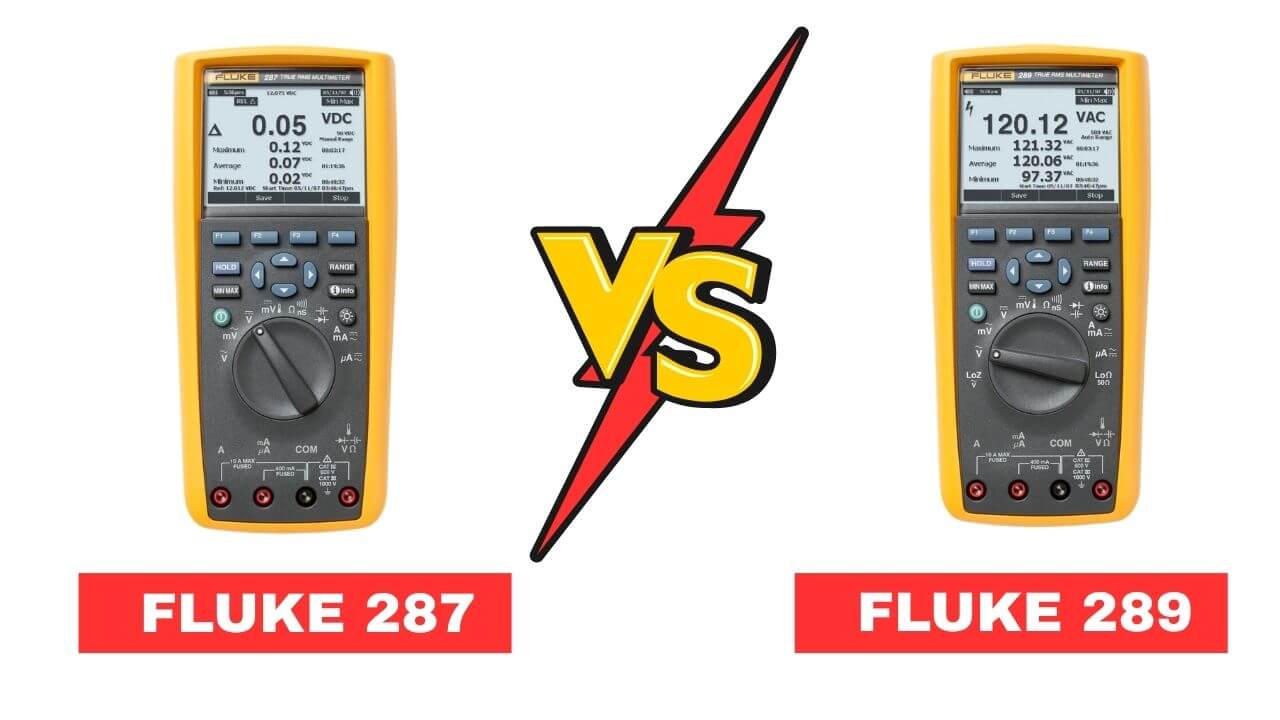
Finding the right test tool takes time. The match of Fluke 287 Vs 289 is vital for daily field work. You want to track electrical faults with confidence.
This guide shows clear technical facts. Read on to pick the right test tool for tough tasks.
Take a fast look at the first test tool.
Fluke 287 Review
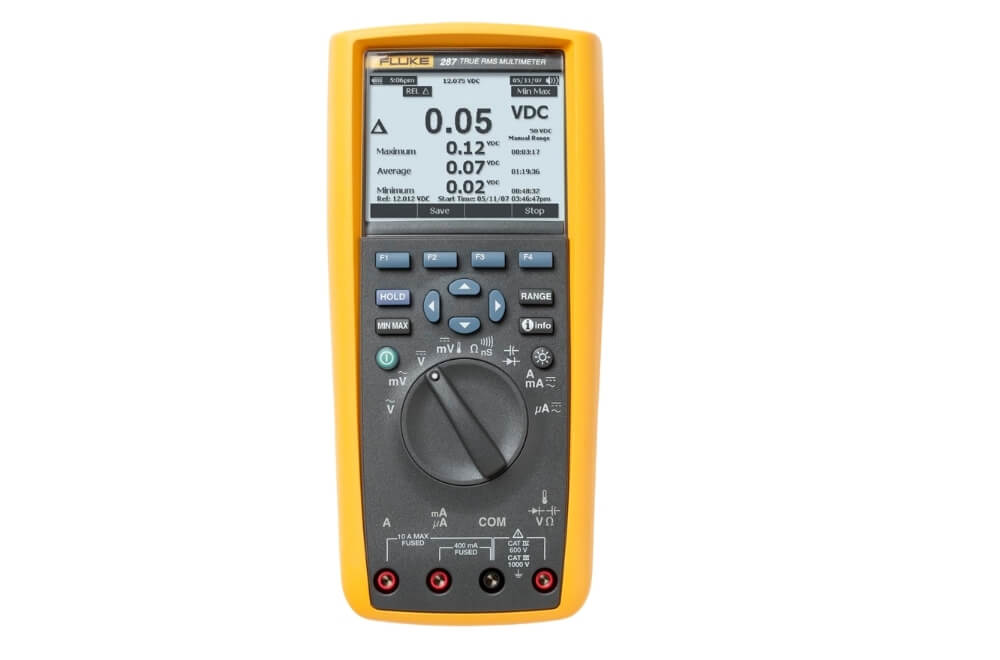
This tool shines for rich trend logs and complex electronics. It tracks deep system shifts over long hours.
Check out the main hits and misses below.
Pros and Cons
Look at these key traits. They show what the tool does best on the bench.
| Type | Feature | Practical Impact |
| Pro | Trend view | Tracks volts over long hours. |
| Pro | High resolution | Offers 1 μV DC resolution. |
| Pro | On-board help | Makes measurement functions easier to understand. |
| Con | No low-pass filter | Lacks the filter designed for noisy motor-drive measurements. |
| Con | Large size | Takes up a lot of bag space. |
See how it acts on real work days.
Real World Performance
This meter excels at tracking fast shifts in test systems. Users find it tracks data clearly over full days. The graph view helps you spot changes and trends in logged readings.
It handles tough lab zones well. The backlit screen keeps readings clear in low-light areas. It handles complex bench work quite well.
| Feature | Field Test | Result |
| Soft keys | Quick press | Menu jumps feel fast. |
| Screen | Dark room | Glass glows clear and bright. |
| Data log | Long shift | Facts save till next day. |
| Tool grip | Wet hands | Tool stays put in palms. |
Find out if this tool fits your daily needs.
Recommendation
See which user groups match this tool best.
| User Type | Recommendation | Reason |
| Tech pros | Good Fit | Checks fine board volts well. |
| System testers | Good Fit | Logs long term shifts clear. |
| Plant hands | Not Ideal | Lacks advanced motor filters. |
| Basic users | Not Ideal | Too complex for simple checks. |
Now check out the next tool for heavy work.
Fluke 289 Review
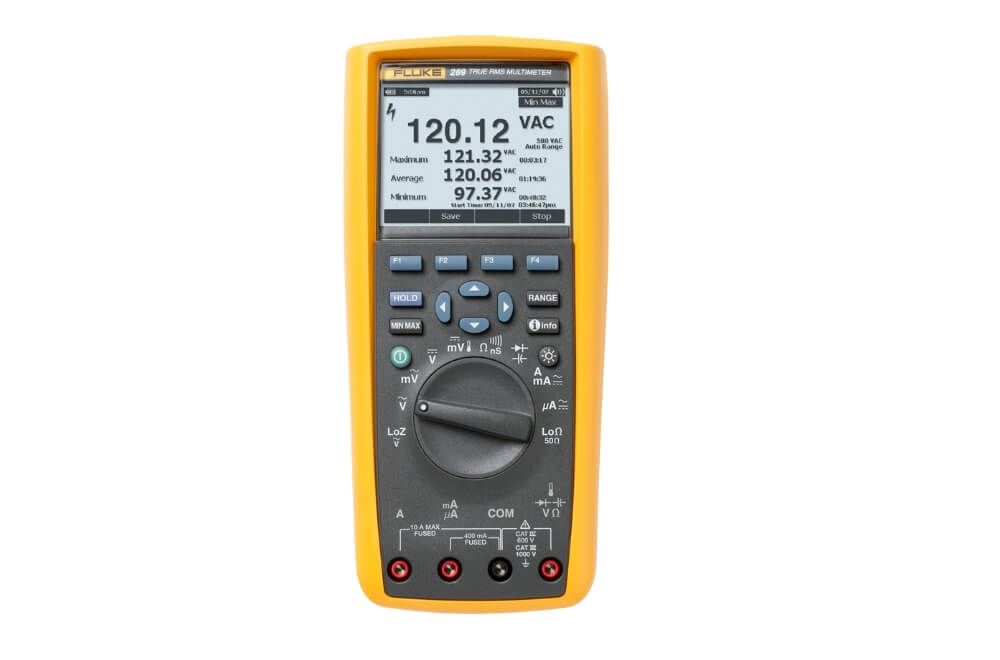
This tool is built for wide field use. It handles complex electronics, plant automation, power distribution, and heavy motor drives.
Read the best and worst parts here.
Pros and Cons
Check out the strong and weak points below.
| Type | Feature | Practical Impact |
| Pro | Low-pass filter | Helps reduce the effects of high-frequency noise from motor drives. |
| Pro | 50 Ω range | Measures and compares motor winding or contact resistance. |
| Pro | LoZ mode | Helps eliminate ghost-voltage readings. |
| Con | High cost | Requires a large tool budget. |
| Con | Bulk scale | Takes up room in small bags. |
See how it acts on tough industrial sites.
Heavy Field Work Needs
Users trust this tool on noisy plant floors and automation sites. Its low-pass filter helps reduce the effects of high-frequency noise from motor drives. The 50 Ω range helps measure motor winding or contact resistance.
The rugged design is suited to demanding field work. The low-pass filter is useful when working around electrically noisy equipment. The six AA batteries provide at least 100 hours of battery life and up to 200 hours in logging mode.
| Feature | Field Test | Result |
| Low-pass mode | Near drive | Shows clean test facts. |
| Rugged case | Drop test | Designed for a 1 m drop. |
| On-board help | New user | Explains measurement functions. |
| 50 Ω range | Motor coil | Helps identify small resistance differences. |
See who should buy this tool now.
Recommendation
Review this list to see if it fits your job.
| User Type | Recommendation | Reason |
| Plant workers | Good Fit | Has strong low pass filters. |
| Motor techs | Good Fit | Measures motor winding resistance. |
| Desk users | Not Ideal | Has more plant modes than needed. |
| Light trades | Not Ideal | High cost for basic tasks. |
Line them up side by side to see the true match.
Detailed Comparison for Fluke 287 Vs 289
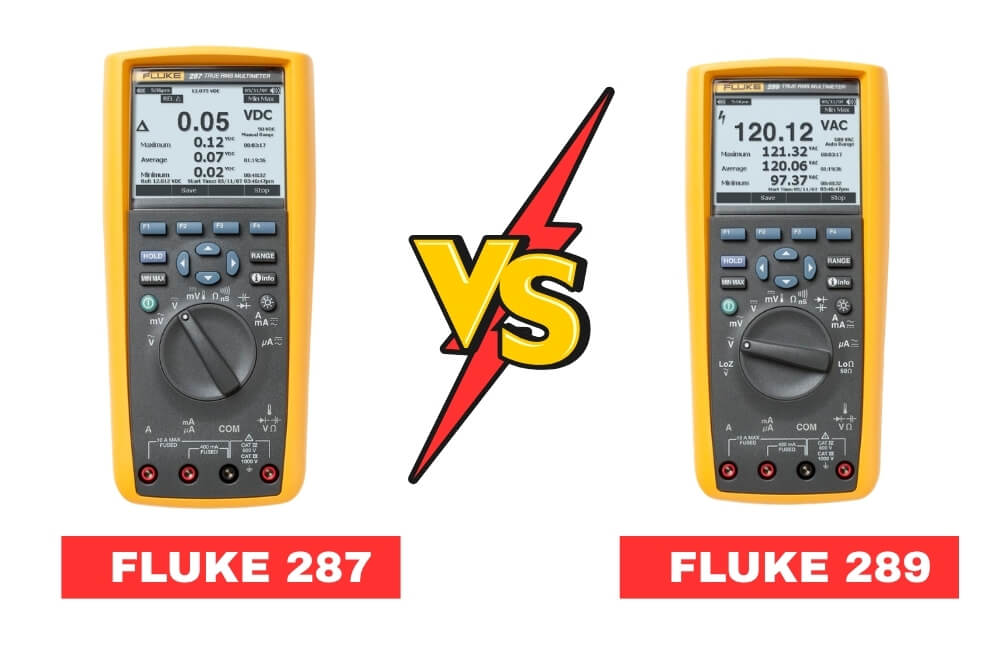
You need to know how these tools match up. Look at five key facts for the Fluke 287 Vs 289 match. Ratings are based on feature balance, usability, and intended use.
Find out which one runs the best tests.
Performance
Both meters measure voltage and current while supporting long-term data logging. They track quick shifts and log full data trends.
The main shift lies in the extra field modes. The second tool adds a low pass filter and a clear LoZ mode. These features are useful when troubleshooting electrically noisy motor-drive systems.
| Feature | Fluke 287 | Fluke 289 |
| Basic reads | High | High |
| Low pass mode | No | Yes |
| LoZ clear test | No | Yes |
| 50 Ω range | No | Yes |
Fluke 287 Rating: 8.5/10
Fluke 289 Rating: 9.5/10
See which tool is a breeze to use.
Ease of Use
Both tools use soft keys and clear text hints. The glass screens show big clear charts and trend lines.
Users can jump to past logs quite fast. The second tool has extra field modes to learn. Both take some time to learn for new hands.
| Feature | Fluke 287 | Fluke 289 |
| Key setup | Soft keys | Soft keys |
| Trend view | Yes | Yes |
| On-board help | Yes | Yes |
| Advanced field functions | Fewer | More |
Fluke 287 Rating: 9/10
Fluke 289 Rating: 8.5/10
Look at how tough the frames are built.
Build Quality
These meters feature tough cases for hard field work. The IP54 rating provides protection against dust and water exposure.
Both meters are rated CAT III 1000 V and CAT IV 600 V for electrical testing. The test probes grip tight and stay firm. Both meters have a 1 m drop specification for demanding field work.
| Feature | Fluke 287 | Fluke 289 |
| IP rating | IP54 | IP54 |
| Drop test | 1 m | 1 m |
| Safety rating | CAT III 1000 V / CAT IV 600 V | CAT III 1000 V / CAT IV 600 V |
Fluke 287 Rating: 9/10
Fluke 289 Rating: 9/10
See how to keep these tools powered.
Maintenance
Both units run on standard cell packs. The six AA batteries provide at least 100 hours of battery life and up to 200 hours in logging mode.
You must swap out old cells when the juice runs low. The back cover can be removed for battery replacement.
| Feature | Fluke 287 | Fluke 289 |
| Power source | 6 AA batteries | 6 AA batteries |
| Minimum battery life | 100 hours | 100 hours |
| Logging battery life | Up to 200 hours | Up to 200 hours |
Fluke 287 Rating: 9/10
Fluke 289 Rating: 9/10
Check which tool brings the most for your cash.
Value for Money
The first meter costs less for rich lab tasks. It gives high value for tech logging and complex boards.
The second tool demands a larger budget. The added motor test modes save tons of time on plant floors. The extra cost pays off for heavy field trades.
| Feature | Fluke 287 | Fluke 289 |
| Upfront cost | Less | More |
| Lab value | High | Good |
| Plant value | Fair | High |
| Kit pieces | Varies | Varies |
Fluke 287 Rating: 9/10
Fluke 289 Rating: 8.5/10
Read the last thoughts before you buy.
Conclusion
Both meters bring strong tools to your test kit. The Fluke 287 is a strong choice for electronics work and long-term data logging. The Fluke 289 is the better fit for industrial troubleshooting, especially around motor drives and electrically noisy equipment.
Here are some fast facts to aid you.
FAQs
Do they read heat well?
Yes. The logging function can record temperature changes over time when the proper temperature probe is used.
Are these tools safe for live lines?
Yes. They meet top CAT III 1000 V and CAT IV 600 V safety ratings for tough work zones.
Do hard cases come with the tools?
The included items can vary a lot by kit. You might need to buy a hard case on its own.
How long do the cells last?
Both meters use six AA batteries. Battery life is rated at 100 hours minimum and up to 200 hours in logging mode.
Can they track quick power drops?
Yes. Both meters can log readings over time and use Trend Capture to show changes and trends. Both meters support fast Min/Max recording for tracking changing readings.
5 thoughts on “Fluke 287 Vs 289: 5 Powerful Differences You Need to Know”