
I used to kill every plant I owned. I always watered them too much. The roots rotted. The leaves turned yellow. It was a sad cycle.
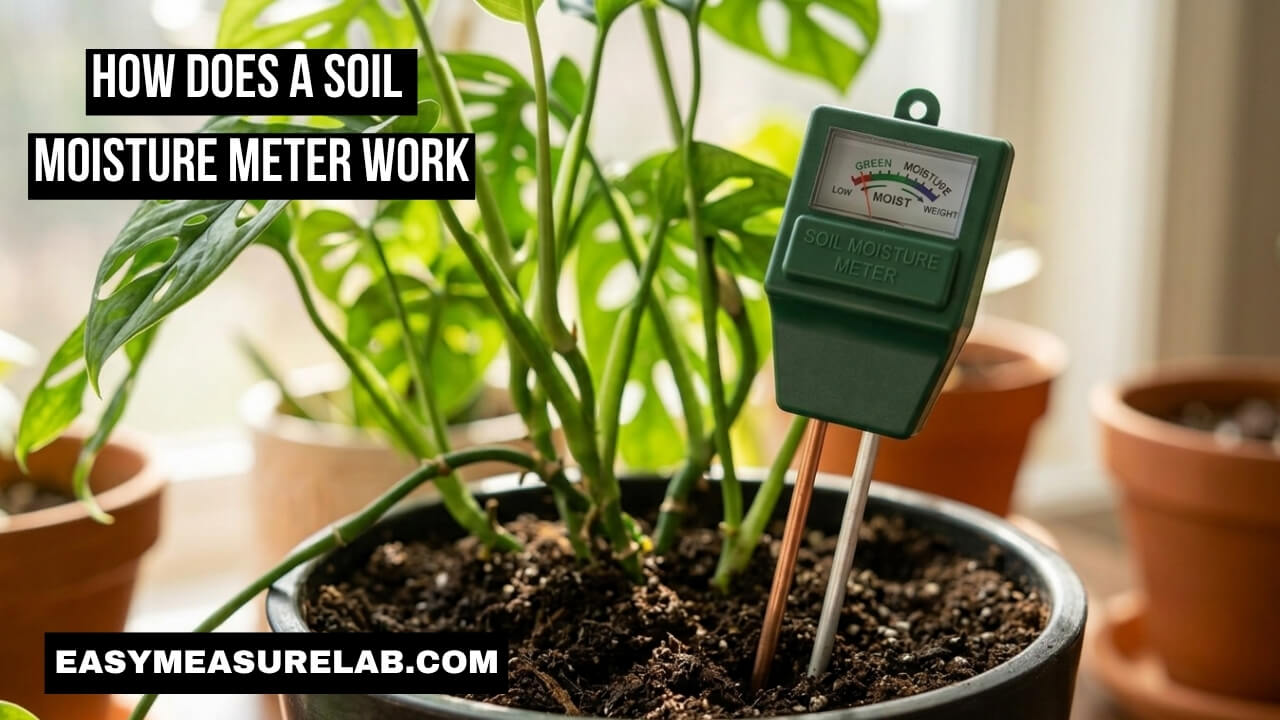
Then I bought a cheap moisture meter. I poked it into the dirt. The needle jumped. It had no batteries at all. This blew my mind. I had to ask, how does a soil moisture meter work?
I spent weeks testing it. I read up on the science. I ruined a few more plants testing my theories. But I finally figured it out. Here is the simple truth I found.
The Big Secret: How Does a Soil Moisture Meter Work?
Most people think these tools feel water. They do not.
These meters actually measure electricity. They use a basic science trick. Water in your soil contains salts and minerals. These minerals conduct electricity.
When the dirt is wet, electricity flows well. When the dirt is dry, electricity stops. The meter reads this flow. It shows you a number based on that electrical charge.
It Measures Electricity, Not Water
This fact confused me at first. I tested my meter in a glass of pure distilled water. The needle did not move. It read “dry.”
I felt tricked. Was my tool broken? No. Pure water has no salts. It does not conduct electricity well.
Your potted plants have soil. Soil has fertilizer and natural salts. When you add water, those salts dissolve. That creates a path for the electrical charge.
| Liquid Type | Conductivity Level | Meter Reading |
| Distilled Water | Very Low | Reads Dry |
| Tap Water | Medium | Reads Moist |
| Wet Potting Soil | High | Reads Wet |
The No-Battery Magic
You might wonder where the power comes from. How does a soil moisture meter work with no batteries?
Look at the probe. It usually has two different metals. One is often copper. The other is zinc or aluminum. The tip acts like a tiny battery.
When you push the probe into wet dirt, the metals react. The wet, salty soil acts like an acid. It creates a very small electrical current.
The needle in the dial moves because of this tiny current. More water means more current. The needle swings to “wet.” It is a brilliant and simple design.
Why My Meter Lied to Me Sometimes
I thought my new tool was perfect. I watered exactly when it said “dry.” But some plants still died.
I learned that meters can lie. You have to know their limits. They are not magic wands. They are simple metal probes.
The Fertilizer Glitch
I love feeding my plants. But I fed them too much. Fertilizer adds lots of salts to the dirt.
Remember how the meter reads electricity? Extra salt makes the soil conduct more electricity.
My meter read “wet” because of the heavy salt. But the dirt was actually dry. My plant died of thirst. I learned to flush my soil with clean water to fix this.
The Soil Density Problem
Loose dirt and hard dirt read differently. I have a snake plant in very loose mix. The meter always read “dry.”
The probe needs to touch the dirt tightly. If there are air pockets, the current stops. Air does not conduct electricity.
If your dirt is very chunky, the meter might give a false reading. You have to press the dirt down slightly around the probe.
| Problem | Likely Cause | My Fix |
| Stays on “Wet” | Too much fertilizer salt | Flush soil with pure water |
| Stays on “Dry” | Chunky soil or air pockets | Try a different spot in the pot |
| Needle bounces | Dirty or rusty metal probe | Wipe probe with a rough cloth |
Types of Meters I Have Used
I bought a few different types over the years. Some are cheap. Some are costly. They all do the same basic job.
The Basic Analog Meter
This is the most common type. It costs less than ten dollars. It has a dial with numbers from one to ten. It needs no batteries.
I love these. They are simple. You can drop them, and they still work. They are perfect for basic house plants.
The Fancy Digital Meter
I bought a digital one later. It uses batteries. It gives you an exact number on a screen.
Some digital meters measure water differently. They use capacitance. They send a tiny wave into the soil. This measures the actual water, not just the salt.
These are very accurate. But they cost more. They also break easily if you leave them outside in the rain.
| Meter Type | Power Source | Best For |
| Analog Probe | None (Galvanic) | Quick checks indoors |
| Digital Meter | Batteries | Exact readings, outdoor gardens |
| Smart Sensors | Batteries & Wi-Fi | Tech lovers who track data |
How to Use a Soil Moisture Meter the Right Way
I made a lot of mistakes at first. I just stabbed the dirt randomly. You have to use the tool correctly to get good data.
Here is the exact method I use now. It saves me a lot of stress.
Clean the Probe First
Always wipe the metal stick before you use it. Dirt and oils build up on the metal. This blocks the electrical current.
I keep a dry rag near my plants. I wipe the probe hard. It needs to be shiny. If it gets dull, I use a bit of fine steel wool.
Go Deep Enough
The top layer of dirt dries out fast. But roots live deep down. If you only poke the top inch, you will water too often.
I push the probe down at least three to four inches. For big pots, I go even deeper. I want to know what the roots feel.
Check Multiple Spots
Roots do not grow perfectly even. Water does not drain perfectly even.
I poke the left side of the pot. Then I poke the right side. Sometimes one side is wet and the other is dry. I take the average of the two numbers.
| Step | Action | Why I Do It |
| 1 | Wipe the metal probe | Removes oil and rust blocks |
| 2 | Push deep into soil | Finds water near the roots |
| 3 | Read instantly | Needle settles in 2 seconds |
| 4 | Pull out and clean | Prevents rust damage |
The Biggest Mistake You Can Make
Never leave the meter in the dirt. I did this once. I thought it would be cool to have a constant reading.
It ruined the tool. The wet soil ate away the cheap metal. The probe rusted. It stopped working in a week.
These tools are made for quick dips. Put it in. Read the dial. Pull it out. Wipe it off. Put it away.
Understanding the Numbers on the Dial
The dial usually shows colors. Red means dry. Green means moist. Blue means very wet. But plants are different.
You cannot treat a cactus like a fern. You need to know what your specific plant wants.
When to Water Dry Plants
Succulents and cacti want dry soil. I wait until the meter hits the red zone. Usually a one or a two.
If I water them in the green zone, they rot. They hate wet feet. I let them stay dry for a few days before I water.
When to Water Tropical Plants
Plants like Monsteras and Pothos like slightly moist soil. I wait until the needle drops to the low green zone. Usually a three or a four.
If it drops to the red zone, the leaves get crispy. I try to catch it right before it dries out completely.
| Plant Type | Wait Until Dial Says | My Watering Habit |
| Cactus / Succulent | 1 or 2 (Red) | Drench fully, then ignore |
| Pothos / Philodendron | 3 or 4 (Low Green) | Water until it drains out |
| Calathea / Fern | 5 or 6 (Mid Green) | Keep soil constantly damp |
How Does a Soil Moisture Meter Work in the Garden?
I mostly use my meter inside. But I tried it in my backyard garden too. It was a different game.
Outdoor soil is very different. It has clay, sand, and rocks. These change the readings.
The Hard Clay Problem
I have thick clay in parts of my yard. Clay holds water tightly. It is very dense.
When I pushed the probe in, it read super wet. The dense dirt made perfect contact with the metal. But the plants looked thirsty.
Clay traps water away from roots. The meter reads the wet clay, but the plant cannot drink it.
The Sandy Soil Issue
Sand drains water instantly. It is very loose. When I test sandy spots, the meter always drops low.
Sand does not conduct electricity well. It does not hold onto salts. The reading looks dry, even right after rain.
You have to learn your specific dirt. The meter is a guide, not a strict rule.
The Finger Test vs The Meter
Some old gardeners laugh at my meter. They say you only need your finger. They just poke the dirt.
They are mostly right. Sticking your finger deep into the dirt works great. You can feel the moisture.
But I hate getting dirt under my nails. Some of my pots are very tight. I cannot get my finger deep enough without snapping roots.
The meter reaches deep. It keeps my hands clean. I use the tool for the deep roots. I use my finger for the top layer.
Trusting Authoritative Sources
When I got confused, I looked up real science. Gardening blogs had too many myths.
I read reports from the University of Maryland Extension. They explain soil structure perfectly. They confirm that simple meters measure conductivity, not pure water.
I also trust the Royal Horticultural Society. They have great guides on plant root zones. They taught me why testing the bottom of the pot matters more than the top.
If you want to dive deep into soil science, the Penn State Extension has amazing free guides on soil salts and fertilizers.
Final Thoughts
Learning how does a soil moisture meter work changed how I garden. It stopped me from drowning my plants. It taught me to think about soil salts and root depth.
The meter is not perfect. It will trick you if you have too much fertilizer or loose dirt. But if you keep the probe clean and test a few spots, it is the best ten dollars you will ever spend.
Do not trust the needle blindly. Look at your plant. If the leaves are droopy and the meter says wet, check the roots. Gardening is about watching and learning. The meter just gives you one extra clue to solve the puzzle.
FAQs
How accurate is a cheap soil moisture meter?
They are accurate enough for home use. They measure electrical conductivity well. But heavy fertilizer or pure water can cause false readings.
Does a soil moisture meter need batteries?
Most analog meters do not. They use two different metals on the probe. The wet soil creates a tiny battery reaction to move the needle.
Why does my meter say dry in a glass of water?
Pure tap or distilled water lacks the heavy salts found in soil. The meter needs those soil salts to conduct electricity and show a reading.
Can I leave the moisture meter in the soil?
No. Never do this. Wet soil will rust the metal probe very fast. The tool will break. Wipe it clean after every use.
How deep should I put the moisture meter?
Push it at least 3 to 4 inches down. You want to measure the dirt near the main roots, not just the top layer which dries out quickly.
2 thoughts on “How Does a Soil Moisture Meter Work? 1 Powerful Secret”