
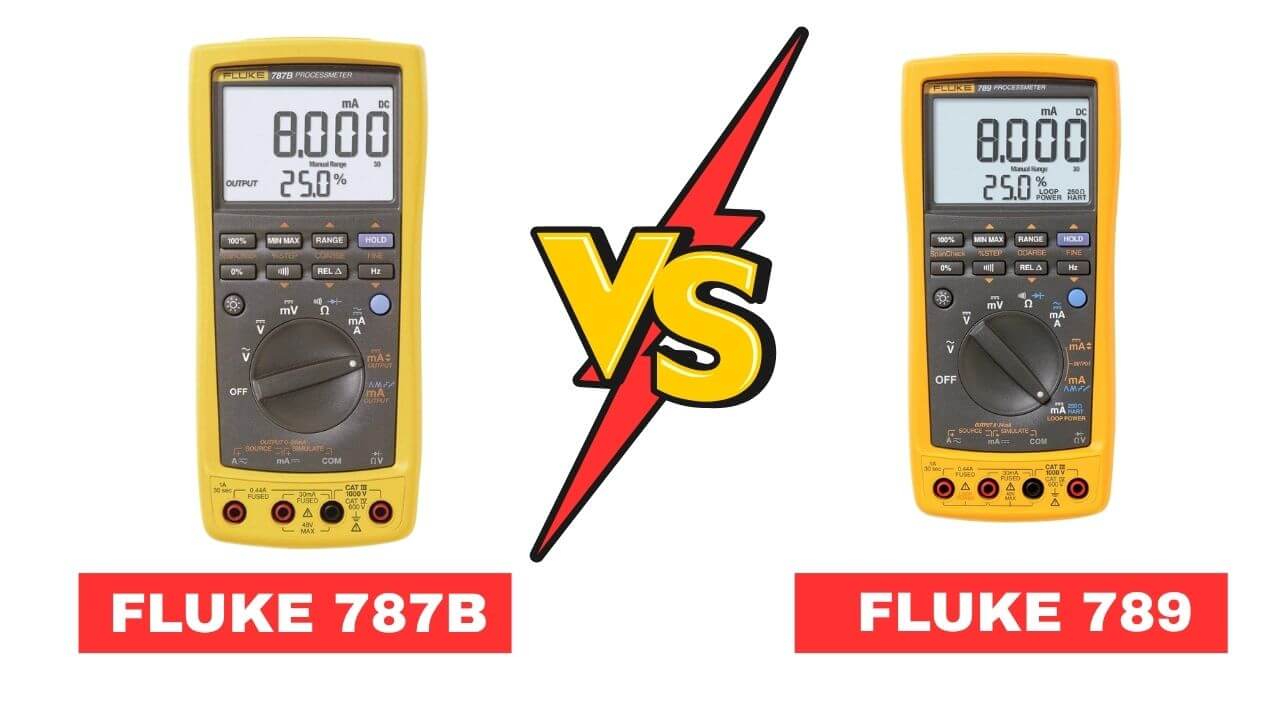
A long service day can make loop checks feel slow. Fluke 787B Vs 789 shows two meters made for this type of work. Both combine a digital multimeter with loop test tools. The main choice comes down to loop power, HART work, display features, and price.
Fluke 787B Review
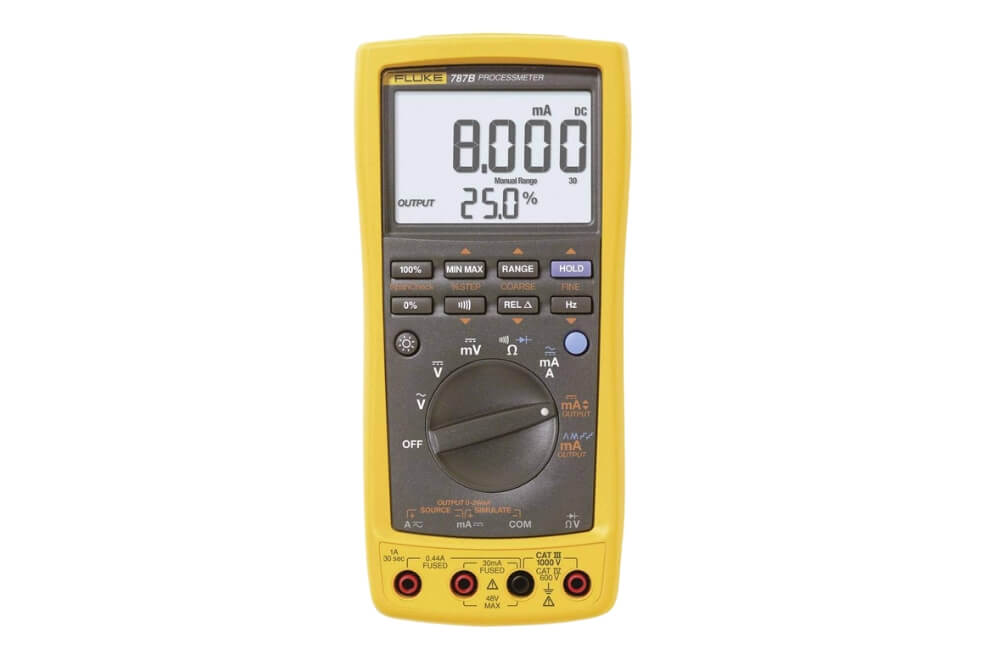
The Fluke 787B is made for electrical checks and basic loop work. It measures voltage, current, resistance, and frequency.
It can also source and simulate 4–20 mA signals. That makes it useful for many daily process checks.
Pros and Cons
The 787B keeps the key tools simple. It also has a few limits for advanced loop work.
Pros:
- 20 mA source and simulate: Useful for common loop checks.
- True-RMS measurement: Helps with varied AC signals.
- Auto ramp and step: Makes signal checks easier.
Cons:
- No built-in 24 V supply: An external supply may be needed.
- No built-in 250 Ω resistor: HART work needs another setup.
Real-World Use
The 787B suits routine electrical and loop work. You can check a signal, measure voltage, and test current with one meter.
Its source and simulate modes help during transmitter checks. The mA and percent readings also make loop signals easier to watch.
The main limit appears when a loop needs its own power. An external supply may then add another item to the tool bag.
Recommendation
The 787B makes sense when basic meter and loop functions are the main need.
- Best for general technicians: Strong meter functions cover many daily checks.
- Best for maintenance teams: Useful for routine electrical and loop work.
- Best for basic loop users: Source and simulate modes add useful flexibility.
- Not ideal for HART users: It lacks a built-in 250 Ω resistor.
- Not ideal for users needing loop power: It has no built-in 24 V supply.
Fluke 789 Review
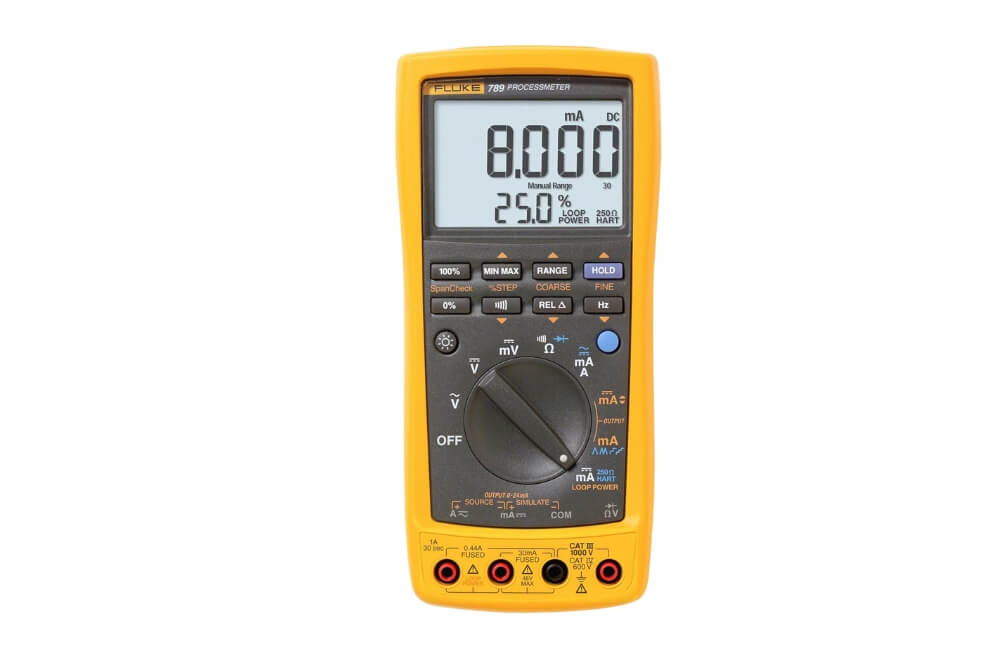
The Fluke 789 adds more loop tools to the same basic meter concept. Its biggest advantage is built-in 24 V loop power.
It also has a selectable 250 Ω resistor for HART communication. External fuse access can make field service easier.
The dual display can show mA and percent of span together. This can save a few button presses during loop checks.
Pros and Cons
The extra features make the 789 more useful for process work. They also add a little size and weight.
Pros:
- Built-in 24 V loop power: Reduces the need for extra power gear.
- Selectable 250 Ω resistor: Helps with HART loop work.
- External fuse access: Makes fuse service easier.
- Dual display: Shows mA and percent of span together.
Cons:
- Slightly heavier body: Adds a little carry weight.
- More features: May be more than needed for simple meter work.
Real-World Use
The 789 feels more complete when loop work is the main task. Built-in 24 V power can save time during transmitter checks.
The 250 Ω resistor is useful when HART communication is part of the job. The dual display also makes key loop values easy to watch.
The larger feature set may feel unnecessary for simple voltage or resistance checks. For process work, those extra tools can earn their space.
Recommendation
The 789 fits users who often work with transmitters and process loops.
- Best for process technicians: More loop tools are built in.
- Best for HART users: The selectable 250 Ω resistor supports HART setup.
- Best for transmitter testing: Built-in 24 V loop power reduces extra setup.
- Not ideal for basic meter users: Some advanced tools may go unused.
- Not ideal for minimal tool kits: The added features increase size and weight.
7 Key Differences: Fluke 787B Vs 789
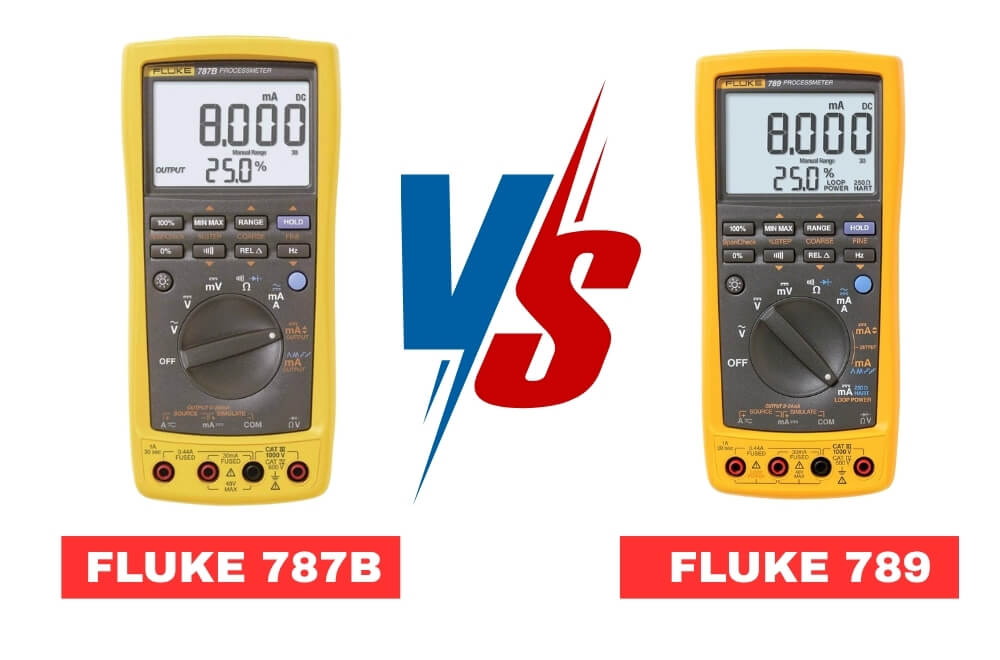
Both meters share many core functions. These seven differences show where each model fits best.
1. Built-In 24 V Loop Power: Fluke 787B Vs 789
This is one of the biggest differences. The 789 can provide 24 V loop power from the meter.
The 787B does not have the same built-in loop supply. An external source may be needed for some powered loop checks.
That can matter during a busy service call. The 789 can reduce the extra gear needed for certain transmitter tasks.
Fluke 787B Rating: 8.5/10
Fluke 789 Rating: 9.5/10
2. HART Resistor: Fluke 787B Vs 789
The 789 includes a selectable 250 Ω resistor. This helps set up a loop for HART communication.
The 787B does not include this built-in resistor. Users doing regular HART work may need another way to add the required resistance.
For simple 4–20 mA checks, this may not matter. For HART work, the 789 offers a much simpler setup.
Fluke 787B Rating: 7.5/10
Fluke 789 Rating: 9.5/10
3. Fuse Replacement Access: Fluke 787B Vs 789
Fuse access is another small detail with field value. The 789 uses external fuse access doors.
The 787B requires case access for fuse replacement. That makes the process less convenient during field service.
This difference may not matter often. When a fuse does fail, easier access can save time.
Fluke 787B Rating: 8/10
Fluke 789 Rating: 9.5/10
4. Display and Backlight: Fluke 787B Vs 789
Both meters have clear digital displays. The 789 adds a dual display that can show mA and percent of span together.
The 789 also has two backlight settings. This can help when working in dim panels or equipment rooms.
The 787B still shows the key readings needed for normal loop work. The 789 simply gives more information at a glance.
Fluke 787B Rating: 8.5/10
Fluke 789 Rating: 9.5/10
5. Size and Weight: Fluke 787B Vs 789
The weight difference is small. The 787B weighs about 600 g. The 789 weighs about 610 g.
The 789 is also slightly larger. Extra loop hardware helps explain the added size.
Ten grams will not change most jobs. Users who carry many tools may still prefer the lighter 787B.
Fluke 787B Rating: 9.5/10
Fluke 789 Rating: 9/10
6. Loop Sourcing and Power: Fluke 787B Vs 789
Both meters can source and simulate current for loop testing. The main difference is the 789’s built-in loop power.
That added function gives the 789 more flexibility. It can handle tasks where the 787B may need another power source.
For users who only source or simulate signals, the difference is smaller. For full loop checks, the 789 has the stronger setup.
Fluke 787B Rating: 8.5/10
Fluke 789 Rating: 9.5/10
7. Price and Target User: Fluke 787B Vs 789
The 787B suits users who need strong meter and loop functions without every advanced feature.
The 789 adds more process-focused tools. Its built-in power supply, HART resistor, and easier fuse access can matter for frequent process work.
For occasional loop checks, the 787B may be enough. For regular process troubleshooting, the 789 offers more built-in tools.
Fluke 787B Rating: 9/10
Fluke 789 Rating: 9.5/10
Fluke 787B Vs 789: Complete Comparison
The table below puts the main differences in one place. It is useful for a quick buying decision.
| Feature | Fluke 787B | Fluke 789 |
|---|---|---|
| DMM functions | Voltage, current, resistance, frequency | Voltage, current, resistance, frequency |
| 24 V loop power | No | Yes |
| 250 Ω HART resistor | No | Yes |
| Fuse access | Internal | External |
| Safety rating | CAT IV 600 V / CAT III 1000 V | CAT IV 600 V / CAT III 1000 V |
| Weight | About 600 g | About 610 g |
| Best for | DMM + basic loop checks | Full process loop work |
Final Verdict
The Fluke 787B Vs 789 choice depends on the work. The 787B fits users who need strong DMM and basic loop tools.
The 789 is better for regular process work, HART tasks, and loops that need built-in power. For simple checks, the 787B can be enough.
FAQs
Is the Fluke 789 better than the Fluke 787B?
For advanced loop work, the 789 has the edge. It adds built-in 24 V loop power, a 250 Ω resistor, and easier fuse access.
Does the Fluke 787B have 24 V loop power?
No. An external power source may be needed for some powered transmitter checks.
Does the Fluke 789 support HART?
Yes. The 789 has a selectable 250 Ω resistor for HART communication setup.
Which meter is lighter?
The 787B is slightly lighter at about 600 g. The 789 weighs about 610 g.
Which one is better for basic maintenance?
The 787B can be the better fit when basic electrical measurements and routine loop checks are the main tasks. The 789 makes more sense when advanced loop features are used often.
Authoritative External References
-
- Official Fluke 787B Product Specifications: Fluke 787B ProcessMeter™
- Official Fluke 789 Product Specifications: Fluke 789 ProcessMeter™
- Official Fluke 787B & 789 Data Sheet: Fluke 787B and 789 ProcessMeter Data Sheet