
Water is sneaky. It hides in walls. You can not always see it. I learned this the hard way. A small roof leak left a giant water stain in my living room. I needed to know if the inside of the wall was still wet.
I went to the store. I bought a tool to check for water. But when I turned it on, the screen made no sense to me. I had to figure out how to use a moisture meter on drywall the right way. This guide shares exactly what I learned so you can find hidden water fast.
Why I Had to Learn How to Use a Moisture Meter on Drywall
Leaks cause panic.
When I saw water on my floor, my heart sank. I wiped it up. The paint looked a bit dark. But felt dry to the touch. Was the wall wet inside? I did not know. Mold can grow fast. According to the EPA guide on mold, mold can grow on wet drywall in just two days. I could not risk that.
I needed proof. A simple touch test is not enough. Water pulls down due to gravity. The top of the wall might feel dry. The bottom could be soaked. Learning how to use a moisture meter on drywall gave me the truth. It took away the guessing.
Two Types of Meters You Can Buy
Tools can be confusing.
There are two main types of meters on the shelf. One has sharp metal pins. The other has a flat pad. I stood in the aisle for ten minutes looking at them. Here is what I learned about both types.
| Meter Type | How It Works | Best Used For |
| Pin Meter | Pokes small holes in the wall | Exact spot testing |
| Pinless Meter | Scans flat against the wall | Fast, damage-free checks |
I bought a combo meter. It has both pins and a flat scanner. If you want to keep your paint nice, a pinless meter is great. If you need to know exactly how deep the water goes, use the pins.
Step-by-Step: How to Use a Moisture Meter on Drywall
You must prep the tool first.
Do not just turn it on and jam it into the wall. You will get the wrong numbers. I did this at first. The tool beeped loudly. I thought my whole house was ruined. I was just using it wrong.
Step 1: Set the Tool to the Right Mode
Meters check many things.
They check wood, brick, and paper. You must press the mode button. Look at the screen. Change it until it says “Drywall” or “Sheetrock.” If you leave it on the wood setting, your numbers will be way off.
Step 2: Find a Dry Baseline First
This is the most vital step.
Do not touch the wet spot yet. Walk to a different wall. Find a wall that you know is 100 percent dry. Put the meter on that dry wall. Write down the number on the screen.
Why do this? Every house has normal moisture. The air has humidity. My dry wall read 8 percent. That became my safe number. Anything near 8 was good. Anything much higher was bad.
Step 3: Scan the Suspect Area
Now go to the wet spot.
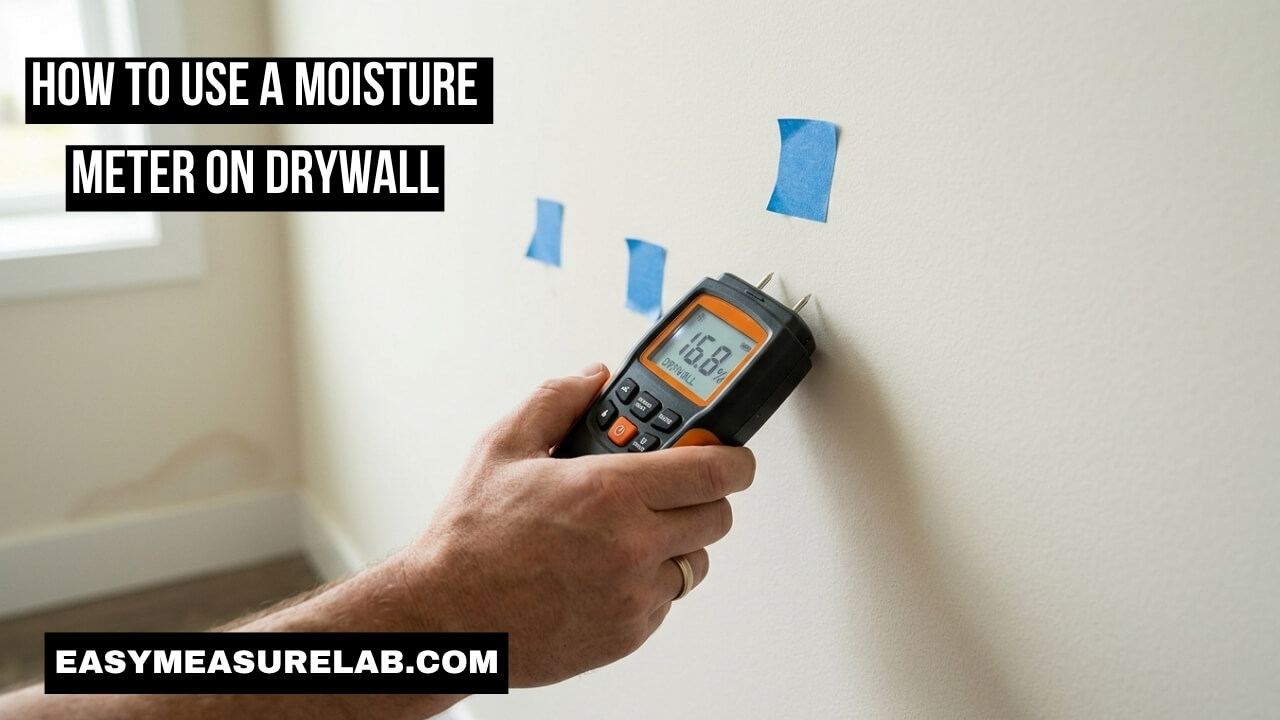
If you have a pinless meter, press the pad flat on the paint. Slide it slowly. Move it up and down. Watch the screen. If you have a pin meter, push the sharp tips into the paint gently. You do not need to push them all the way through the wall.
Step 4: Map the Wet Zone with Tape
Use your eyes and hands.
As I found wet spots, I used blue painters tape. I put a small piece of tape on the wall where the meter beeped. I kept checking. I put tape everywhere the numbers were high. Soon, I had a large circle of tape on my wall. It showed me the exact shape of the hidden water pool.
Making Sense of the Numbers on the Screen
The numbers can scare you.
When you read the screen, what is safe? What is bad? Most meters use a simple scale for building materials. But drywall is very thin and holds a lot of water.
| Screen Reading | What It Means | What To Do |
| 5% to 12% | Normal and dry | Do nothing. You are safe. |
| 13% to 17% | A little wet | Watch closely. Run a fan. |
| 18% and up | Very wet | Find the leak. Start drying fast. |
When my tool hit 25 percent, it flashed red. That meant the paper on the inside of the wall was soaked. I knew I had a real problem to fix.
Watch Out for False Positives
Tools can lie to you.
Pinless meters send a signal into the wall. But water is not the only thing that sets them off. Metal sets them off too. I scanned a spot near my baseboard. The meter screamed. I thought it was soaked. But it was completely dry.
| Hidden Object | Why It Fools the Meter | How to Check It |
| Metal Studs | Tool reads metal as water | Slide tool left. Reading drops. |
| Water Pipes | Metal pipes trigger the sensor | Move tool up. Follow the pipe line. |
| Wire Bundles | Copper wiring spikes the read | Use a pin meter to double-check. |
If you hit a high spot, move the tool two inches to the left. If the reading drops to zero right away, you likely hit a metal stud or a screw. Water spreads out. Metal stays in a straight line.
Common Mistakes I Made at First
Learning takes time.
I made a few dumb mistakes on my first day. I want to save you from doing the same things. It will save you time and stress.
| My Mistake | Why It Was Bad | The Better Way |
| Pushing pins too hard | I broke a metal pin off | Push gently. Just break the paint. |
| Scanning too fast | The sensor missed the water | Move slow. Give it time to read. |
| Low battery | Readings were completely random | Put fresh batteries in first. |
Always check your batteries. A low battery makes the screen show wild numbers. I spent an hour worrying because my tool showed 40 percent on a dry wall. The battery was just dying.
The Reality of Dealing with Wet Walls
Finding water is just step one.
Once you learn how to use a moisture meter on drywall, you have to fix the mess. I mapped out my wet wall. The bottom two feet were soaked. The top was fine.
I set up a box fan. I pointed it at the wall. I also brought in a dehumidifier. I left them running for three days. Every morning, I used my meter. I checked the exact same spots. I watched the numbers drop. It went from 25, to 18, to 10.
If the numbers do not drop, the leak is still active. The meter tells you if your drying plan is actually working. The CDC guidelines for flood water state you must dry things out fast to stop health risks. The meter is your best guide for this.
When to Call a Pro vs DIY Fixes
You can not fix everything.
Sometimes, the wall is too wet. If the water sat there for a week, mold is likely growing on the dark side of the drywall. You have to know when to stop DIY work.
| Water Issue | My Advice | Who To Call |
| Small leak, caught fast | Dry it yourself with fans | No one. You got this. |
| Large flood, sitting water | Wall must be cut open | Water damage expert |
| Dark spots on the paint | Mold is already growing | Mold removal pro |
I was lucky. I caught my leak on day one. I dried it out fast. The meter showed it was safe. If it had been wet for a week, I would have called a pro.
Best Practices I Now Use
I keep my meter handy now.
I do not put it back in the garage box. I keep it in my house tool drawer. When it rains hard, I check my ceiling. When the sink leaks, I check the wall behind it.
I always wipe the tool clean after I use it. Dust can mess up the flat sensor. If I use the pins, I wipe them with a bit of rubbing alcohol. This keeps them clean and sharp. The tool was cheap, but it saved me thousands of dollars in wall repairs. If you check out This Old House guides, you will see the pros use these daily.
Final Thoughts
Leaks are scary, but knowledge gives you power.
Learning how to use a moisture meter on drywall changed how I care for my home. I no longer guess if a wall is wet. I no longer panic over a dark spot on the paint. I just grab my tool, find my dry baseline, and test the area.
If you own a home, buy one of these tools. Learn to use it before you actually need it. Take it slow, watch out for metal studs, and always dry the area until the numbers match your safe baseline. You will save your walls and your peace of mind.
5 FAQs About Using Moisture Meters on Drywall
1. What is a normal moisture reading for drywall?
A normal reading is usually between 5 and 12 percent. This can change based on the humidity in your town. Always check a dry wall first to find your baseline.
2. Will a pin moisture meter ruin my paint?
It will leave two tiny holes in the paint. They look like small pinpricks. You can easily fill them with a dab of spackle and a touch of paint.
3. Do I really need to calibrate my meter?
Yes. You should set it to the drywall mode. You must also find a dry spot first to see what normal looks like in your specific house.
4. Can a moisture meter detect mold?
No. It only detects water. However, if a wall stays wet for a few days, mold will likely grow. The meter helps you find the water before mold starts.
5. Why does my meter beep when the wall feels dry?
The water might be deep inside the wall. Or, you might be scanning over a metal stud, a pipe, or electrical wires. Move the tool slightly to see if the reading changes.