
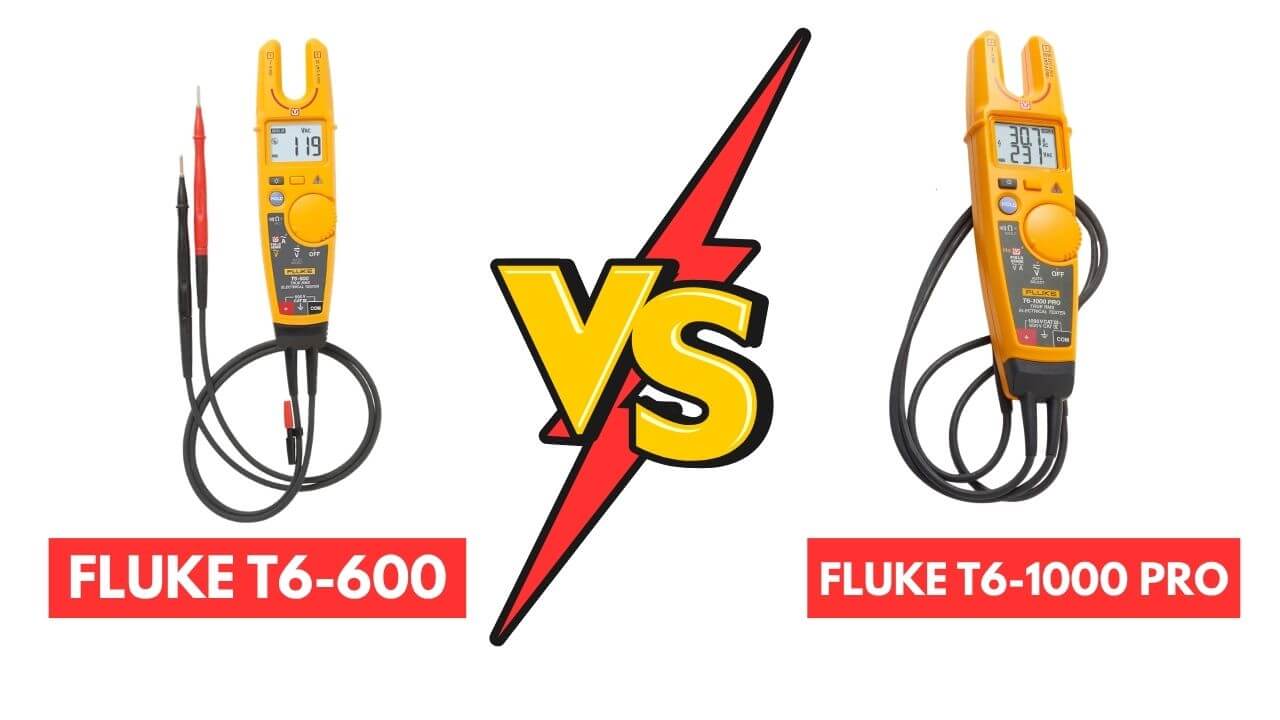
Electrical tests in tight spaces can feel slow. You need tools that read power fast. Compare the Fluke T6-600 Vs T6-1000 Pro to pick the best meter for your job.
Both tools can measure AC voltage and current through the open fork without direct metallic contact with the conductor. This guide breaks down the specs to help you choose.
Fluke T6-600 Review
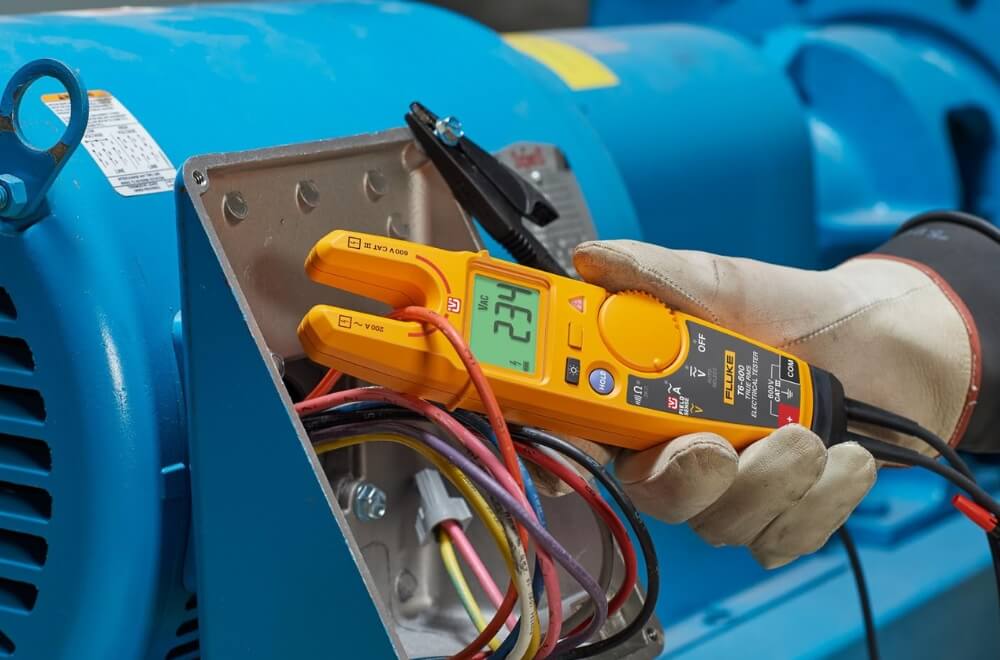
Testing basic circuits requires a solid device. This meter gives you fast basic power checks. It handles many routine residential and commercial electrical testing tasks.
Check out the pros and cons of this base tester.
Pros and Cons
Reviewing these features helps you decide if this model meets your needs.
| Type | Feature | Practical Impact |
| Pro | Backlit screen | Easy to read in dark spaces. |
| Pro | Open fork jaw | Tests power without touching bare metal. |
| Pro | Compact body | Fits well in standard tool bags. |
| Con | Single reading | Shows voltage or current, not both. |
| Con | Lower ohm cap | Resistance testing caps at 2,000 ohms. |
| Con | 600 V limit | Not rated for 1000 V systems. |
Routine testing is simple when you do not need test leads for every check.
Daily Electrical Performance
Using this meter on daily jobs saves time. You slide the open fork over a wire to take fast readings. The backlit screen helps you read values in dark rooms. It supports voltage tests up to 600 V AC/DC. This makes it great for everyday tasks.
The 200 A AC current limit is useful for routine circuit checks. You will like the light design on long shifts. Quick checks without touching bare metal keep you moving fast all day.
Understanding who benefits most from this tool helps narrow your choice.
Recommendation
Match your job needs with the user profiles below.
| User Type | Recommendation | Reason |
| Residential pros | Good Fit | 600 V limit covers everyday tasks. |
| Commercial pros | Good Fit | FieldSense gives quick voltage and current checks. |
| High-voltage work | Consider Pro | The T6-1000 Pro works up to 1000 V. |
| Budget buyers | Good Fit | Offers core testing features at a lower price. |
Fluke T6-1000 Pro Review
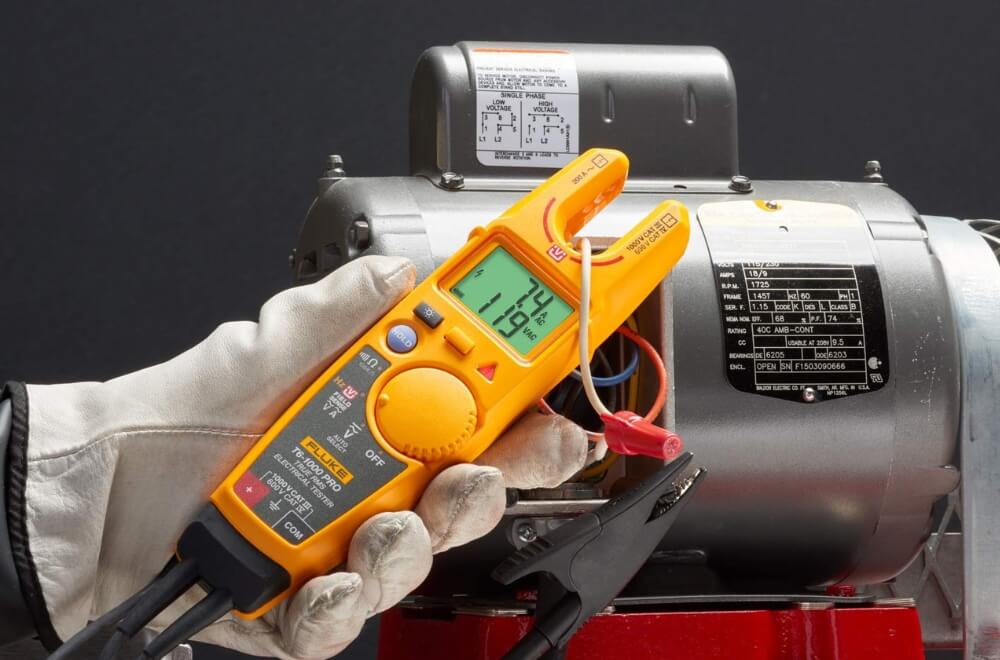
Moving up to the Pro model brings more features for tough jobs. This upgraded tool expands your testing range. It measures up to 1000 V AC/DC while keeping the same small size.
Explore the key pros and cons of this advanced tester.
Pros and Cons
These details show what sets the upgraded model apart.
| Type | Feature | Practical Impact |
| Pro | Dual display | Shows voltage and current at the same time. |
| Pro | Visual screen | Screen turns green during continuity checks. |
| Pro | 1000 V limit | Supports higher-voltage testing safely. |
| Con | Higher cost | Costs more money upfront. |
| Con | Same jaw opening | Fork width stays at 17.8 mm. |
| Con | Same weight | Weighs the same as the base model. |
Advanced features speed up hard testing steps on busy sites.
Field Performance Observations
Working with this model on big sites speeds up checks. Seeing voltage and current at once saves button clicks. The screen turns green during continuity tests. This gives clear visual feedback.
The 1000 V rating supports higher-voltage testing within the meter’s specified safety ratings. The Pro also checks frequency through the fork. The T6-600 does not do this. Its size and weight match the base unit, so it feels familiar.
See if your work demands warrant upgrading to this model.
Recommendation
Check if your testing environments align with these users.
| User Type | Recommendation | Reason |
| Industrial techs | Good Fit | 1000 V limit handles higher system loads well. |
| Busy pros | Good Fit | Dual display saves time on every panel. |
| Simple home fixes | Not Ideal | Higher cost exceeds basic home needs. |
| Light service work | Consider T6-600 | Base model handles up to 600 V for less money. |
Detailed Comparison for Fluke T6-600 Vs T6-1000 Pro
Comparing these two meters side by side shows key differences. Both tools use FieldSense tech, but their skills differ. Here is how they stack up.
Performance: Fluke T6-600 Vs T6-1000 Pro
The biggest difference is the voltage range and screen type. The T6-600 reads up to 600 V AC/DC on a single screen. The T6-1000 Pro reads up to 1000 V AC/DC. Both models measure up to 200 A AC using FieldSense tech.
The Pro also checks frequency through the fork. The T6-600 does not. Resistance testing jumps from 2,000 ohms on the base unit to 100 k-ohms on the Pro. For applications that require higher voltage ratings, the Pro offers greater testing capability.
| Feature | T6-600 | T6-1000 Pro |
| Voltage Range | Up to 600 V | Up to 1000 V |
| Current Limit | Up to 200 A AC | Up to 200 A AC |
| Dual V + A Screen | No | Yes |
| Check Frequency | No | Yes (45 to 66 Hz) |
T6-600 Rating: 8/10
T6-1000 Pro Rating: 10/10
Screen layout and visual alerts shape how quickly you finish checks.
Ease of Use: Fluke T6-600 Vs T6-1000 Pro
Both tools offer simple use in tight panels. They feature clear backlit screens for dark rooms. The T6-1000 Pro takes comfort further by showing voltage and current together.
Also, the T6-1000 Pro adds Visual Continuity for quick checks. The screen turns green for fast visual proof. Both units share the same 17.8 mm fork opening for easy cable access.
| Feature | T6-600 | T6-1000 Pro |
| Screen Backlight | Yes | Yes |
| Dual Reading Screen | No | Yes |
| Visual Continuity | No | Yes (Green Screen) |
| Fork Opening | 17.8 mm | 17.8 mm |
T6-600 Rating: 8/10
T6-1000 Pro Rating: 9/10
Physical size and casing design decide how comfortable meters feel.
Build Quality: Fluke T6-600 Vs T6-1000 Pro
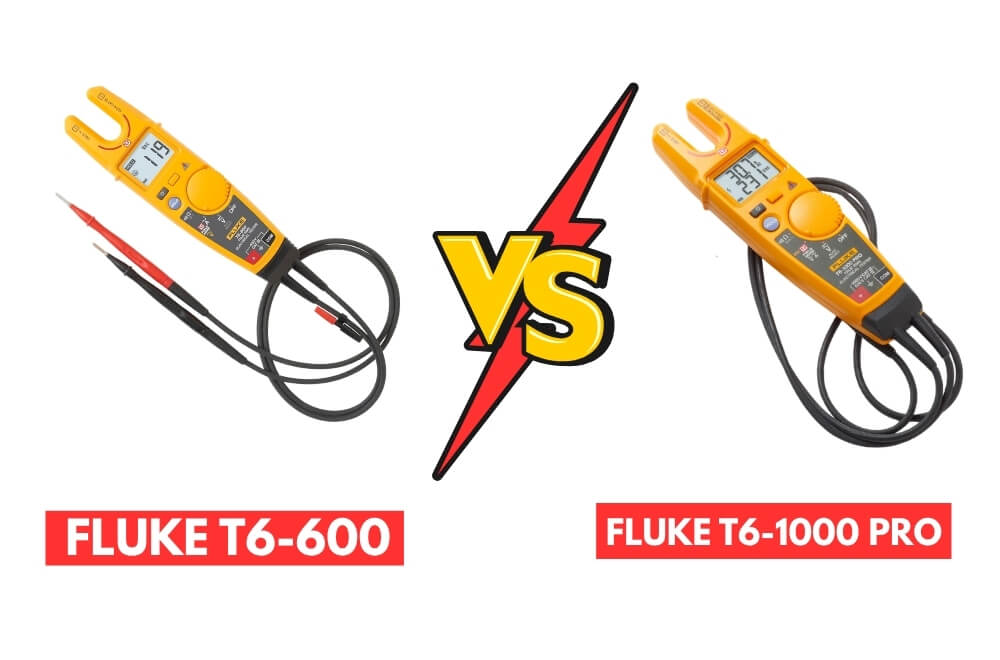
Both models use the same basic fork design. They share the same physical size. Each meter measures 61 by 259 by 43 mm. They also share a weight of 0.35 kg. Their size and weight offer similar handling.
Both meters feature tough outer shells built for daily site use. The open fork on both tools fits wires up to AWG 4/0.
| Feature | T6-600 | T6-1000 Pro |
| Dimensions | 61 x 259 x 43 mm | 61 x 259 x 43 mm |
| Weight | 0.35 kg | 0.35 kg |
| Fork Opening | 17.8 mm | 17.8 mm |
| Wire Size | Up to AWG 4/0 | Up to AWG 4/0 |
T6-600 Rating: 9/10
T6-1000 Pro Rating: 9/10
Proper tool care ensures accurate readings and long tool life.
Maintenance: Fluke T6-600 Vs T6-1000 Pro
Both models need basic care and checks. Follow the maker’s manual for cleaning and battery swaps.
Battery changes and routine surface wipes stay simple on both tools. Storing the tools properly protects the parts from site dust.
| Feature | T6-600 | T6-1000 Pro |
| Cleaning | Follow Manual | Follow Manual |
| Battery Swap | Standard Access | Standard Access |
| Inspection | Routine Check | Routine Check |
T6-600 Rating: 9/10
T6-1000 Pro Rating: 9/10
Evaluating your upfront cost against time savings ensures a smart buy.
Value for Money: Fluke T6-600 Vs T6-1000 Pro
The T6-600 offers great value for home and light shop work. It provides FieldSense testing without touching bare metal. It costs less upfront. If you rarely test above 600 V, it meets core daily needs.
The T6-1000 Pro costs more due to its extra features. The time saved by dual screens quickly makes up for the extra cost for busy pros.
| Feature | T6-600 | T6-1000 Pro |
| Upfront Cost | Lower | Higher |
| Ideal Target | Home / Light Shop | Commercial / Industrial |
| Feature Depth | Standard FieldSense | Advanced Dual FieldSense |
T6-600 Rating: 8/10
T6-1000 Pro Rating: 9/10
Fluke T6-1000 Vs T6-1000 Pro
You may notice similar model names while searching for tools.
The Fluke T6-1000 and T6-1000 Pro have similar names. This makes them easy to mix up. The T6-1000 Pro offers 1000 V testing. It also adds dual voltage and current screens, plus Visual Continuity.
Conclusion
Reviewing your choices helps clarify which tester best fits your tool bag.
Picking between the Fluke T6-600 Vs T6-1000 Pro depends on your daily voltage needs and speed. The T6-600 offers great value for standard jobs. For higher-voltage systems, dual readings, and visual continuity, the T6-1000 Pro is worth the money.
Frequently Asked Questions
Reviewing these common questions clears up final details before you buy.
Does the green screen mean a wire is live?
No. The green screen is part of the Visual Continuity feature. It shows continuity during a check. It does not just mean a wire is live.
Do both meters measure up to 200 A AC current?
Yes. Both models measure up to 200 A AC using FieldSense tech. They do this without touching bare metal.
Are the physical dimensions of both meters identical?
Yes. Both meters measure 61 x 259 x 43 mm and weigh 0.35 kg. Their exact size and weight offer similar handling.
Which model is better for residential electrical work?
The T6-600 is usually best for home work. Its 600 V limit covers standard home circuits at a lower price.
Do both tools require extensive maintenance?
No. Both models need basic care and routine checks. Follow the manufacturer’s manual for cleaning, battery replacement, and inspection.
Authoritative External Resources
– Fluke T6-600 official product specifications – Fluke T6-600 Official Specifications
– Fluke T6-1000 PRO official product specifications – Fluke T6-1000 PRO Official Specifications