
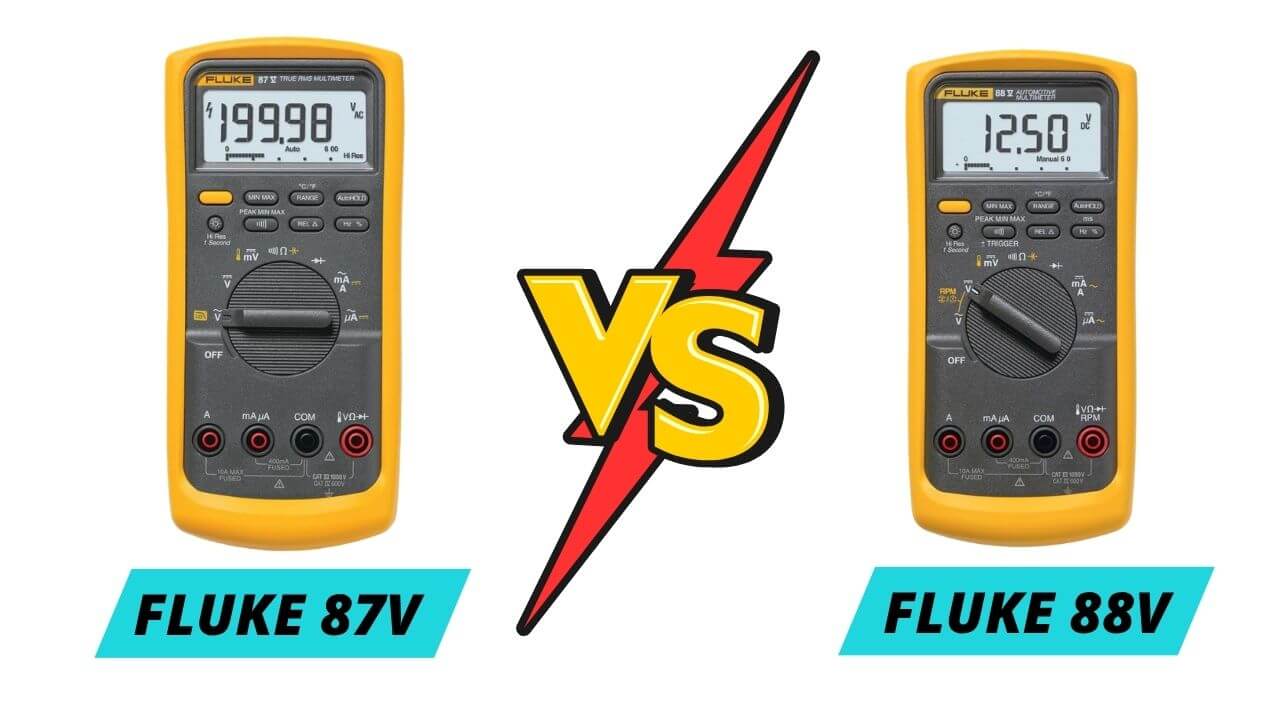
You need the right tool for daily work. A bad choice leads to slow tests. It can cause missed errors on the job. Comparing the Fluke 87V Vs 88V helps you pick. It shows you the right meter for your work. This guide covers motor drives and car parts. It looks at safety ratings and key features. It helps you pick the best tool for your daily needs.
Look at the first meter in detail. See how it handles plant work.
Fluke 87V Review
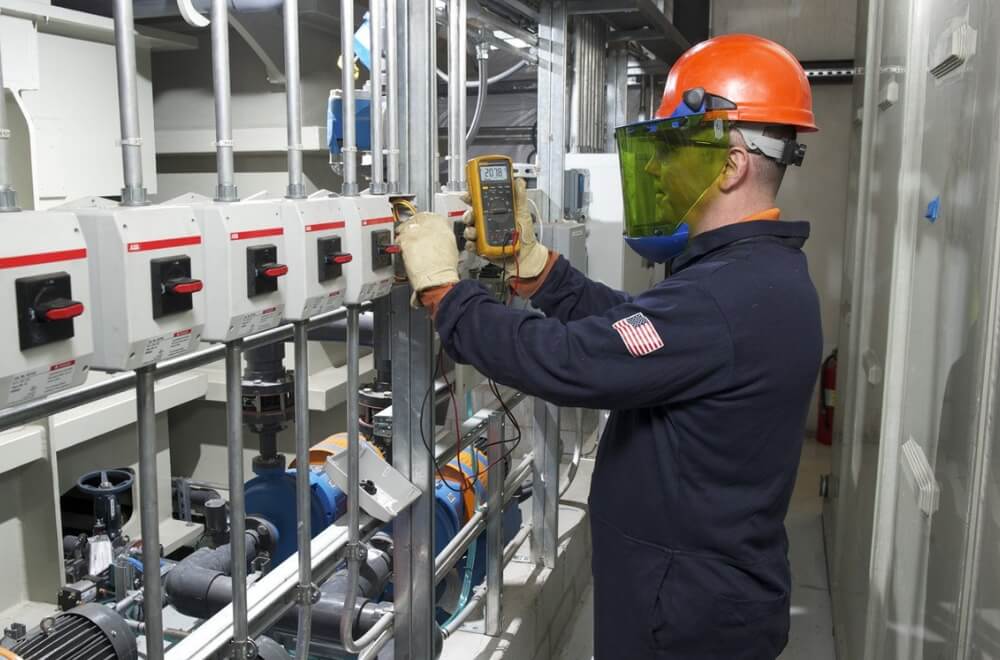
Techs pick this meter for plant work. It runs clear checks on motor drives. The meter gives steady data in busy work areas.
Check the main pros and cons below.
Pros and Cons
| Type | Feature | Practical Impact |
| Pro | Low-pass filter | Gives steady readings on drives. |
| Pro | Peak Min/Max | Can capture fast 250 µs events. |
| Pro | Input alert | Warns when leads are connected to the wrong jacks. |
| Con | High cost | Costs more cash upfront. |
| Con | Larger body | Takes up extra room in bags. |
Real shop use shows the true value of this tool.
Daily Field Use
Techs rely on this tool every day. They use it on big plant motors. Its low-pass filter helps reduce the effect of high-frequency noise when measuring variable-frequency motor drives. You get clean test results every time. You do not have to guess.
The bright screen makes reading easy in dark rooms. You can use an optional magnetic hanger to position the meter and keep your hands free. You can hold test probes safely. A loud beep warns if leads sit in wrong jacks.
Match this meter against your job needs.
Recommendation
| User Type | Recommendation | Reason |
| Plant techs | Good Fit | Built for heavy plant power systems. |
| Work techs | Good Fit | Helps fix complex gear problems. |
| Car mechanics | Not Ideal | Does not offer the same automotive-focused features as the 88V. |
| Hobbyists | Not Ideal | High price for basic home tasks. |
Now check the second meter built for car tests.
Fluke 88V Review
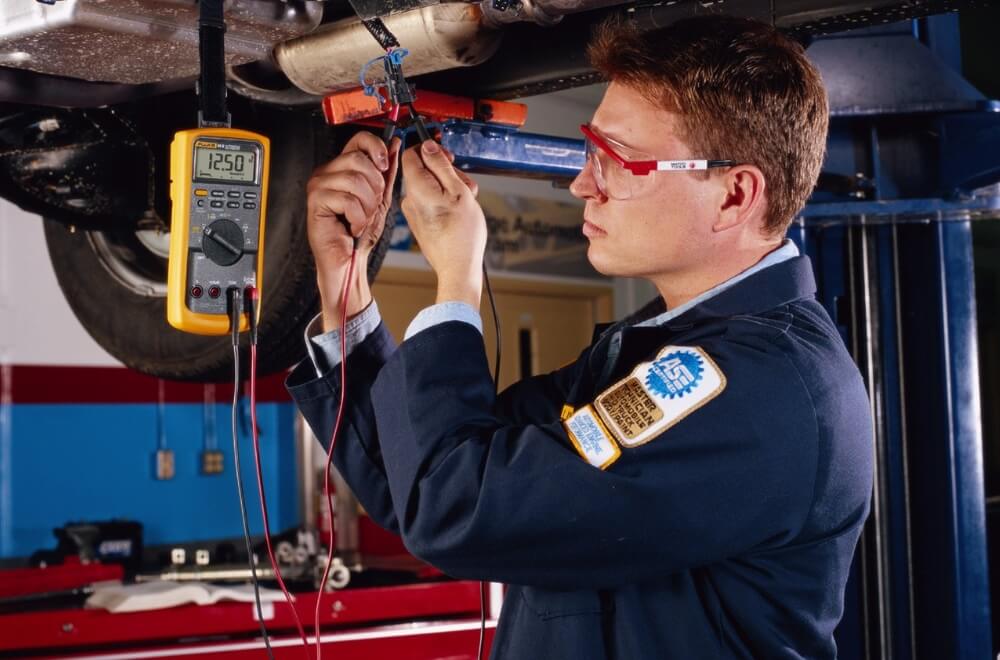
This meter has extra car testing features. These make it very useful for car tests. It works across many car power systems.
The extra features allow fast checks on sensors. They also help test fuel controls. Its high input impedance helps minimize circuit loading during testing. It also features peak capture to catch fast events down to 250 µs.
Review the main features and trade-offs of this car tool.
Pros and Cons
| Type | Feature | Practical Impact |
| Pro | High impedance | Helps minimize circuit load. |
| Pro | Pulse width | Helps check control signals. |
| Pro | Auto hold | Freezes readings with one touch. |
| Con | High cost | Costs more cash upfront. |
| Con | Extra features | Adds extra steps for simple wiring. |
Everyday shop tests show how this meter works.
Garage Shop Use
Techs use this meter to test sensors. They also check control units with it. It gives pulse-width and duty-cycle numbers. These help you test car signals. It can also measure engine RPM with the appropriate inductive pickup. It captures low, high, and average readings. This helps you find hidden problems over time.
The clear screen makes dark work simple. The meter handles daily shop wear well. Its high input impedance helps minimize the meter’s effect on sensitive circuits. This allows clean checks on car networks.
See if this model fits your daily test work.
Recommendation
| User Type | Recommendation | Reason |
| Auto techs | Good Fit | Has special pulse width modes. |
| Automotive techs | Good Fit | Includes specialized vehicle diagnostic functions. |
| Plant techs | Not Ideal | Lacks motor drive filter tools. |
| Beginners | Not Ideal | Has modes not needed for simple tasks. |
Compare both units side by side to pick the winner.
Detailed Comparison for Fluke 87V Vs 88V
Knowing the main differences helps you spend cash wisely. Both units serve very different work fields.
Testing features show how fast you finish work.
Performance: Fluke 87V Vs 88V
The 87V excels at plant motor drive tests. Its low-pass filter helps reduce the effect of high-frequency noise when measuring variable-frequency motor drives. Peak Min/Max can capture fast events as short as 250 µs. This helps you find fast faults.
The 88V excels at car tests. It gives pulse-width and duty-cycle numbers. These help with testing car control signals. It can also measure engine RPM with the appropriate inductive pickup. Like the 87V, it offers peak capture down to 250 µs.
| Feature | 87V | 88V |
| Low-pass filter | Yes | No |
| Pulse width | Less specialized | Automotive-focused |
| Min/Max/Avg | Yes | Yes |
| Peak capture | Yes | Yes |
Clear dials and bright screens make testing easy.
Ease of Use: Fluke 87V Vs 88V
Both meters have large displays with backlights. They help you read values in dark areas. The auto hold freezes steady readings on the screen. This lets you focus on holding probes safely.
Alert warnings sound a beep if test leads sit in wrong jacks. Smooth dials allow quick choice of modes. You can set voltage, current, and resistance fast.
| Feature | 87V | 88V |
| Display backlight | Yes | Yes |
| Auto hold | Yes | Yes |
| Input alert | Yes | Yes |
| Bar graph display | Yes | Yes |
Tough builds ensure a long life in hard work zones.
Build Quality: Fluke 87V Vs 88V
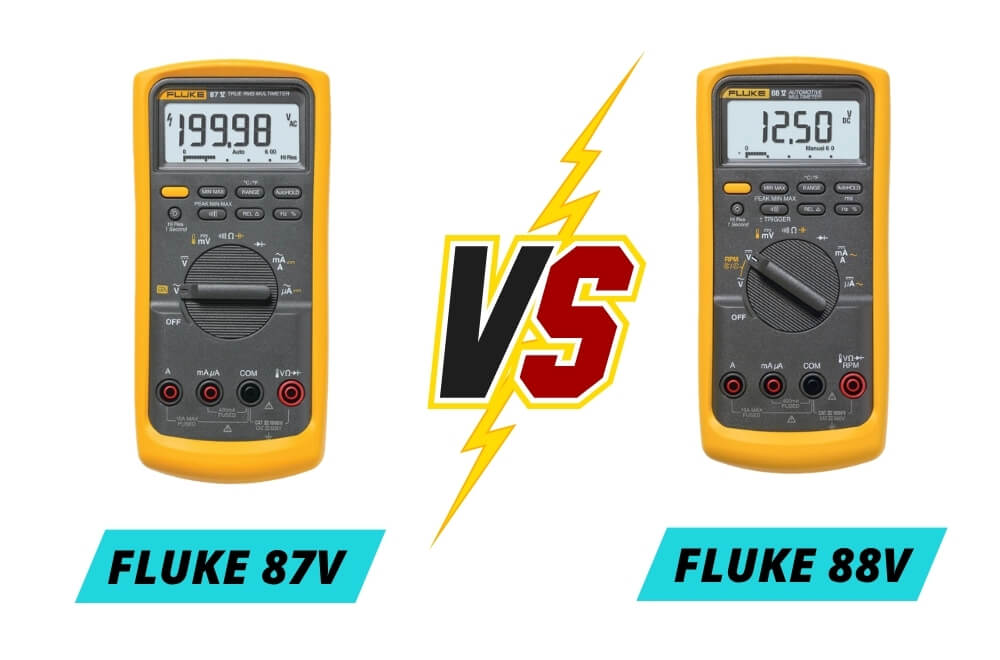
Both meters are built for hard field conditions. They feature tough outer cases. They are designed for demanding field and shop environments.
The test lead jacks, switches, and cases resist daily wear. Both units meet strict safety rules. They hold CAT III 1000V and CAT IV 600V ratings. They handle high-energy areas safely.
| Safety Standard | 87V | 88V |
| CAT III safety | 1000 V | 1000 V |
| CAT IV safety | 600 V | 600 V |
| Rugged housing | Yes | Yes |
Simple care steps keep your tool ready for daily work.
Maintenance: Fluke 87V Vs 88V
Battery swap is very easy on both devices. Both meters have a small back door. This allows fast battery changes. You do not need tools to keep them running.
Wipe the outer case with a damp cloth. This keeps dirt off controls. Routine cleaning and battery replacement help keep the meters ready for regular use.
| Feature | 87V | 88V |
| Battery door | Yes | Yes |
| Cleanable case | Yes | Yes |
| Power source | Alkaline battery | Alkaline battery |
Good tools pay for themselves by saving you time.
Value for Money: Fluke 87V Vs 88V
The 87V offers strong value for plant workers. It can help reduce troubleshooting time and costly motor-drive downtime. Its exact readings cut down guessing during complex plant repairs.
The 88V offers great value for car mechanics. It finds sensor and injector issues very quickly. Buying the right meter saves time. It can help reduce unnecessary parts replacement.
| Work Type | Better Choice | Why |
| Industrial motor drives | 87V | Low-pass filter |
| Automotive diagnostics | 88V | Automotive functions |
| General testing | Both | Professional modes |
| Vehicle sensor tests | 88V | Car-oriented features |
Knowing model history shows why older units appear on markets.
What About Older Models?
Older 87 and 88 models may pop up on used markets. But the 87V and 88V offer the updated features and specifications of these V-series models.
Choosing a current model gives you access to the current specifications, documentation, and manufacturer support for that model.
Make a final choice for your exact job today.
Conclusion
The Fluke 87V Vs 88V choice depends on your main work field. Pick the 87V for plant work and motor drives. Pick the 88V for car repair and pulse width tests.
Read these common questions to clear up small details.
FAQs
Which meter is better for plant maintenance?
The 87V is better for plant work. Its low-pass filter helps reduce high-frequency noise on drives.
Can the 88V test regular electrical circuits?
Yes. The 88V measures standard voltage, current, resistance, and continuity along with special car features.
How does high input impedance help in vehicle tests?
Its high input impedance helps lower the meter’s effect on sensitive circuits. This helps reduce measurement loading.
Are both meters rated for high-voltage safety?
Yes. Both meters carry CAT III 1000V and CAT IV 600V safety ratings for high-energy areas.
What is the main difference in the Fluke 87V Vs 88V choice?
The 87V focuses on plant motor drives. The 88V focuses on car pulse width and engine test features.
- Fluke 87V official specifications: Fluke 87V specifications
- Fluke 88V official specifications: Fluke 88V specifications