
Here is the complete, SEO-optimized article with the external authoritative links naturally integrated into the content, along with the proper markdown formatting restored for the tables and headings:
I love old houses. They have so much character. But I hate putting holes in them. A few years ago, I bought a huge vintage mirror. I also wanted to hang thick wooden floating shelves in my living room. I needed strong support.
I quickly learned that old houses do not act like new houses. You cannot just guess where the wood is. If you want to know how to find stud in plaster wall, you are in the right place. I ruined my wall with bad advice. I made five ugly holes before I figured out the secret. Today, I want to share what actually works.
What Makes Plaster Different?
Old walls use a system called lath and plaster. Builders nailed thin strips of wood across the studs. These thin strips are called laths.
Then, builders spread wet plaster over the lath. The plaster squeezed between the wood strips. It dried hard like rock. This makes a thick, bumpy, solid wall. Normal stud finders get confused by this thick rock and extra wood. They just beep at everything. If you are curious about historical building methods, you can read more about lath and plaster construction details to understand exactly what is behind your walls.
How to Find Stud in Plaster Wall with a Magnet
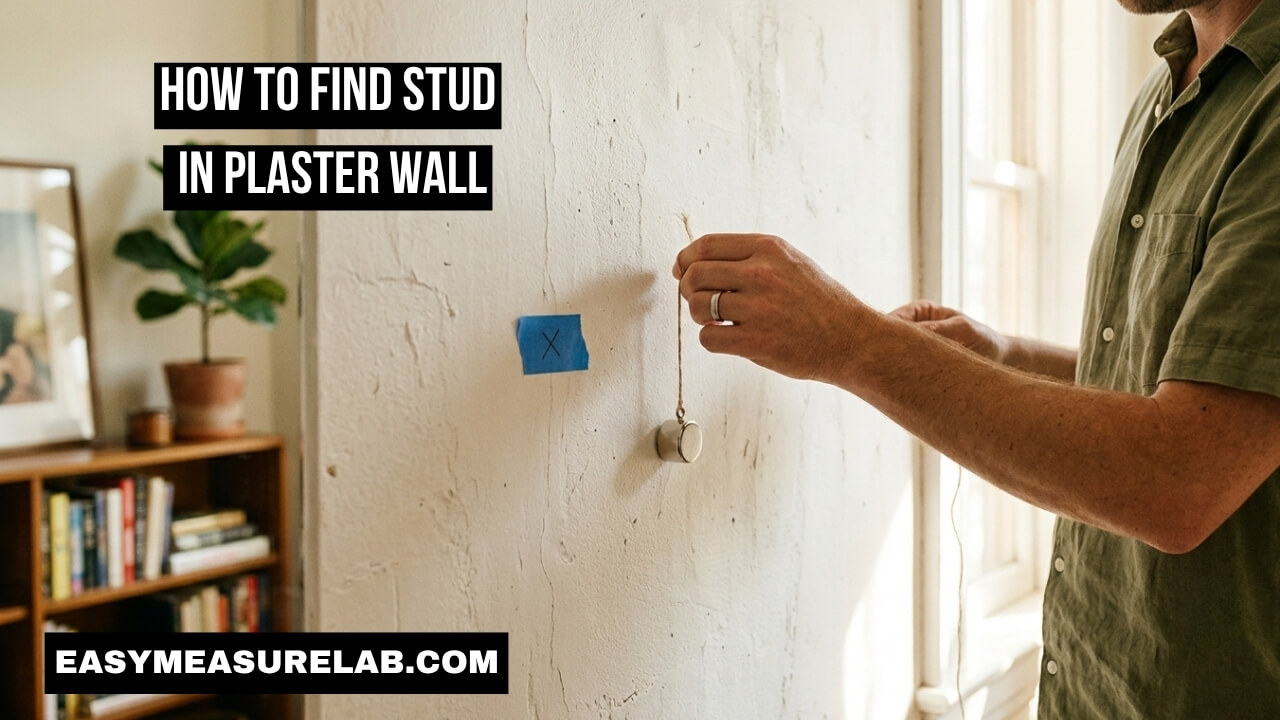
This is my favorite trick. It saved my living room project. You do not look for the wood. You look for the metal nails.
Builders used small nails to attach the wood lath to the main wall studs. These nails sit right on top of the studs. If you find the nails, you find the stud. You need a very strong magnet for this. A cheap fridge magnet will not work. I use a rare earth magnet. You can buy one at any hardware store.
Tie a piece of string to the magnet. Drag the magnet slowly across the wall. Wait for the magnet to pull or stick. When it sticks, you found a nail. Put a piece of painter’s tape on that spot.
| Magnet Type | Cost | Success Rate |
| Fridge Magnet | Free | Very Low |
| Basic Hardware Magnet | Low | Medium |
| Rare Earth Magnet | Medium | Very High |
The Wall Knocking Test
You can also use your ears. This method takes a little practice. I still use it to double-check my magnet results.
Knock lightly on your wall with your knuckles. Move your hand left and right. Listen to the sound. Most parts of the wall will sound hollow. You will hear an empty echo.
When you knock directly over a stud, the sound changes. It becomes a dull, hard thud. It feels solid under your hand. Mark that solid spot with tape.
| Knock Sound | What It Means |
| Hollow and empty | Just lath and plaster |
| Dull and solid | You found a stud |
Checking Wall Outlets and Switches
This trick feels like a cheat code. Builders usually attach electrical boxes directly to a wall stud. They need the wood to hold the box steady.
Look at your wall outlets. Look at your light switches. The stud is almost always right next to the box. It will be on the left side or the right side.
Take off the plastic cover plate. Look inside with a flashlight. You can usually see which side has the wood. Once you know the side, measure straight up the wall. This gives you a great starting line for your shelves.
| Wall Fixture | Stud Location |
| Electrical Outlet | Left or right side |
| Light Switch | Left or right side |
| Cold Air Return | Usually framed on both sides |
Why Outlets Help You
Outlets give you a baseline. Wall studs usually sit 16 inches apart. Some old houses have studs 24 inches apart.
Once you find the stud next to the outlet, grab a measuring tape. Measure 16 inches to the left or right. You will likely find the next stud right there. Check that new spot with your magnet.
Using a Metal Detector Wand
I learned this trick from an old carpenter. Normal stud finders fail because they look for density. Plaster is very dense. But a metal detector only looks for metal.
You can buy a small hand-held metal detector wand. They look like the security wands at concerts. Sweep the wand flat across the wall. It will beep loudly when it passes over the lath nails.
Move the wand up and down to find a vertical line of nails. A vertical line means you found the wood behind it.
| Tool | Benefit for Plaster |
| Basic Stud Finder | Gets confused by plaster thickness |
| Magnetic Stud Finder | Sticks to lath nails easily |
| Metal Detector Wand | Scans large areas very fast |
Looking at Your Baseboards
Your floor baseboards can also tell you a secret. Builders use nails to attach the baseboards to the wall. They hammer these nails straight into the studs.
Look closely at your baseboards. Try to find small dips in the paint. These dips are covered nail holes. If you see a nail hole in the baseboard, trace a line straight up the wall. You will probably hit a stud.
How to Find Stud in Plaster Wall Safely: The Drill Test
You found your spot. You used a magnet. You knocked on the wall. Now you must test it before you hang your heavy mirror.
Never drill a huge hole right away. You might have made a mistake. Use a very tiny drill bit. Drill a small pilot hole. Pay close attention to how the drill feels. Pay attention to the dust.
First, you will hit hard plaster. Then you might hit the thin lath wood. After that, your drill should hit thick, solid wood. If your drill suddenly pushes into empty space, you missed the stud.
Look at the dust falling out of the hole. The dust tells you the truth.
| Drill Dust Color | What You Hit |
| White or gray powder | Plaster |
| Light, thin wood chips | Wood lath |
| Dark, thick wood shavings | Solid stud (Success) |
What If You Just Cannot Find the Stud?
Sometimes, old houses break all the rules. Maybe the studs are uneven. Maybe the plaster is too thick for your magnet. I faced this exact problem in my hallway.
If you absolutely cannot find the wood, do not panic. You can still hang heavy things. You just need the right hardware. For additional safety tips, you can explore detailed guides on hanging heavy things on plaster walls.
My Favorite Heavy Duty Anchors
Never use cheap plastic wall plugs in plaster. They will pull right out. Your heavy mirror will crash to the floor.
If you miss the stud, use a toggle bolt. A toggle bolt has metal wings. You push the wings through a hole in the plaster. The wings pop open behind the wall. They grab the back of the lath wood.
Toggle bolts are incredibly strong. One large toggle bolt can hold up to 100 pounds. I use them for my heavy floating shelves when the studs are in the wrong place. If you have never used one before, check out this excellent tutorial on properly installing a toggle bolt.
Final Thoughts
Learning how to find stud in plaster wall takes a little patience. Old houses are stubborn. But they are built to last. You just need to learn their secrets. If you want a second opinion, Bob Vila’s guide to finding a stud is another fantastic resource to keep bookmarked.
My best advice is to use the magnet trick first. It is cheap, easy, and rarely fails. Always double-check your spot with a tiny drill bit. Take your time, trust your tools, and your heavy shelves will stay exactly where you put them.
Frequently Asked Questions
Can I use a regular stud finder on a plaster wall?
No, regular stud finders usually do not work well. The plaster is too thick and bumpy. It confuses the sensors. Magnetic finders work much better.
How much weight can plaster walls hold without a stud?
Plaster is very strong, but you should not hang heavy items directly on it without special anchors. A good toggle bolt can hold 50 to 100 pounds safely.
Why are there metal meshes in some plaster walls?
Some corners and bathroom walls use metal lath instead of wood lath. This metal mesh holds the plaster tightly. Magnets will stick everywhere on these walls.
How far apart are studs in old plaster houses?
Most modern houses use 16-inch spacing. Old houses might use 16-inch, 24-inch, or completely random spacing. Always measure, but verify with a magnet.
What is the best drill bit for plaster walls?
Use a masonry bit to drill slowly through the hard plaster layer. Once you hit the wood stud behind it, switch to a regular wood drill bit. This stops the plaster from cracking.