
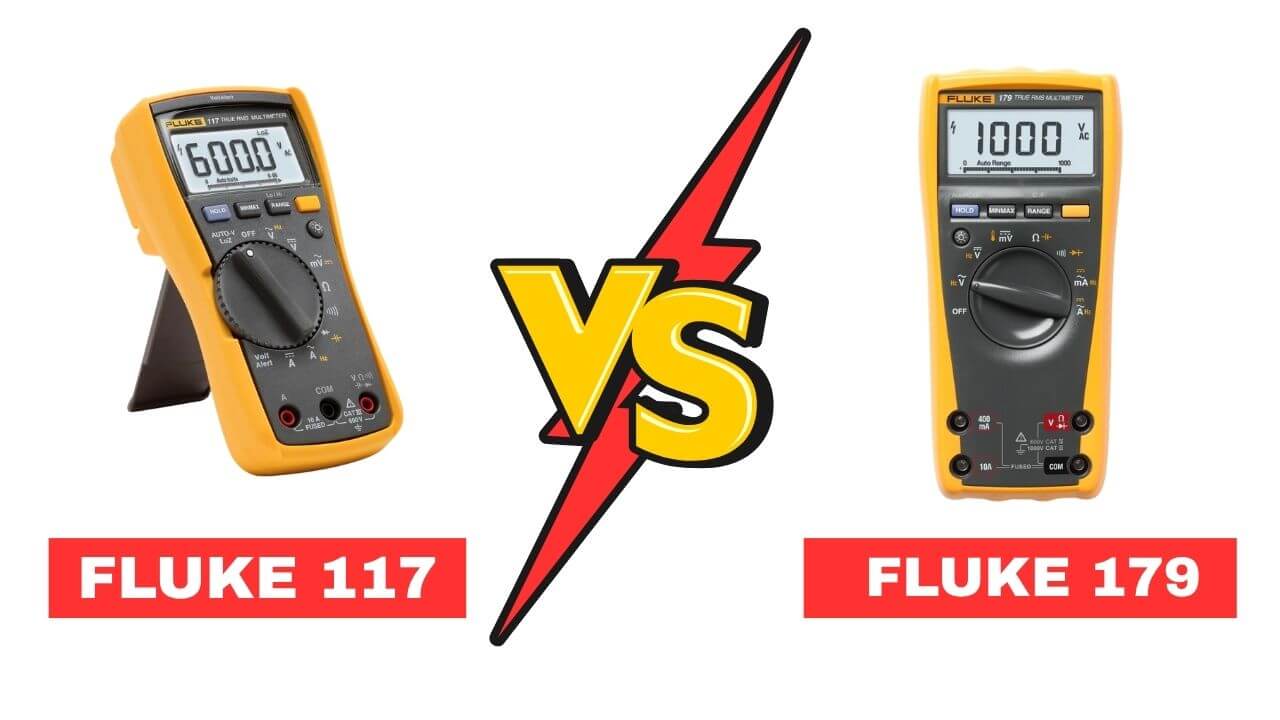
A good tool is a must. You need a safe multimeter for your work. Will you pick the Fluke 117 or the Fluke 179? Your choice rests on your daily jobs. The Fluke 117 is great for office jobs. It has non-contact voltage detection. It is small. It is easy to hold. The Fluke 179 is a big tool. It has higher safety ratings. It checks heat. This guide compares both meters. We will help you pick the right one.
Fluke 117 Review
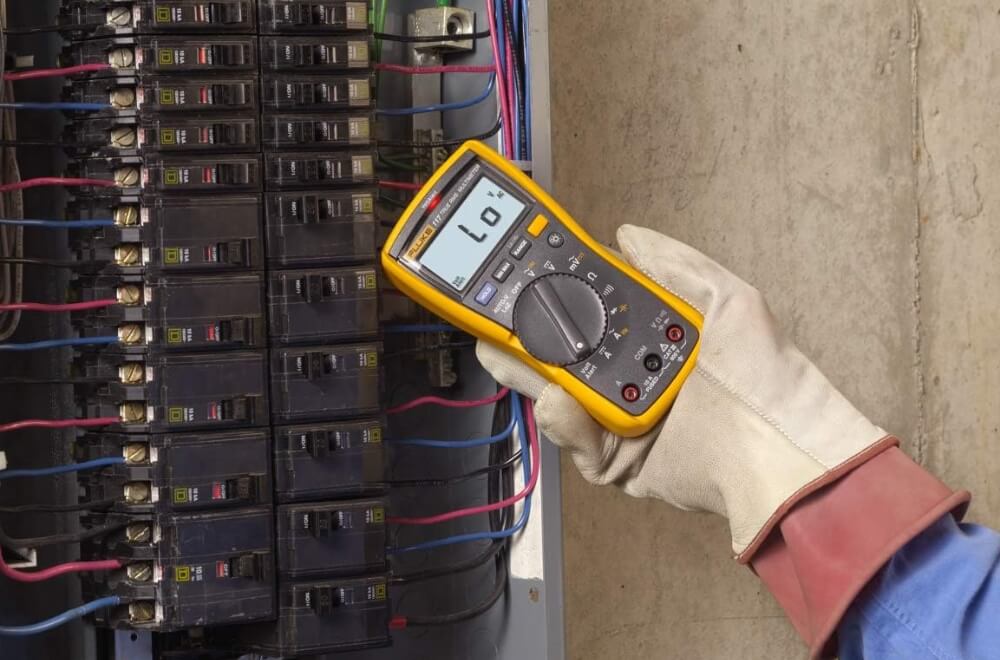
The Fluke 117 is for commercial electricians. It is small. But it has top safety tools. It has integrated non-contact voltage detection. It also uses a low input impedance mode. These parts make your work fast. It is great for schools and big buildings.
Pros and Cons
Look at the good and bad points. This helps you choose the best tool.
| Type | Feature | Practical Impact |
| Pro | Integrated VoltAlert | Finds live wires with no touch. |
| Pro | AutoV/LoZ Function | Stops bad readings from ghost voltage. |
| Pro | Small Design | Fits your hand well for long days. |
| Pro | White LED Screen | Easy to read in dark spaces. |
| Con | CAT III 600V Limit | Not for huge CAT IV 1000V lines. |
| Con | No Heat Check | Needs a second tool for heat. |
Commercial Panel Troubleshooting
The Fluke 117 handles daily commercial work well. It is fast. It is exact. It uses the AutoV/LoZ function. This lowers input impedance. It stops false readings from ghost voltage. The large screen is bright. You can read it in dark boxes.
It has a built-in stand. It has a loud beep tone. These details help a lot. The dial turns well. Small buttons are hard to press with thick gloves. Changing the battery is quick. Use a simple screw tool on the back door.
Recommendation
Check these common user profiles. See if this small tool fits your daily work.
| User Type | Recommendation | Reason |
| Commercial Electricians | Good Fit | Has VoltAlert and stops ghost voltage. |
| Residential Techs | Good Fit | Small tool for fast basic voltage checks. |
| Industrial Techs | Not Ideal | Lacks heat checks and high safety ratings. |
| HVAC Specialists | Not Ideal | Cannot use a K-type thermocouple probe. |
Fluke 179 Review
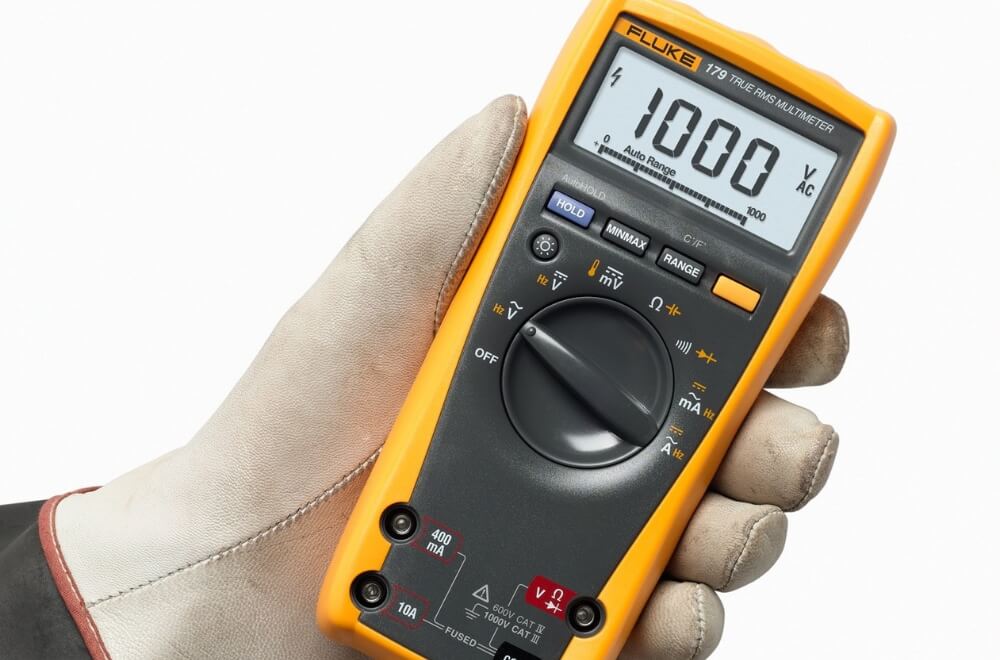
The Fluke 179 is a full-sized True-RMS multimeter. It is built for tough plant jobs. It has True RMS capability. It checks heat. It has high safety ratings. It handles heavy machines well. It tests big power grids safely.
Pros and Cons
Review the main features. It is a very safe choice for plant work.
| Type | Feature | Practical Impact |
| Pro | Thermocouple Input | Reads heat from -40°C to +400°C with probe. |
| Pro | CAT IV / CAT III | Keeps you safe on main lines. |
| Pro | Display Hold / Auto Hold | Keeps the reading on the screen. |
| Pro | Analog Bar Graph | Shows fast signal shifts. |
| Con | Larger Body Size | Takes more space in your belt. |
| Con | Higher Tool Cost | Costs more than small tools. |
Industrial Maintenance Tasks
The Fluke 179 shines in tough factory spaces. It is very strong. The overmolded housing guards it from hard drops. You can use manual or auto ranging. It comes with a K-type thermocouple probe. You can check motor heat fast. You do not need a second tool.
It features Display Hold and Auto Hold. You can place your test leads safely. The tool saves the reading on the screen. The big body adds weight. But the strong build lasts. You must open the back panel to change the battery or fuses.
Recommendation
Check these user profiles. See if this heavy-duty meter fits your needs.
| User Type | Recommendation | Reason |
| Industrial Electricians | Good Fit | High safety ratings and motor heat checks. |
| Plant Repair Techs | Good Fit | Strong housing handles tough drops. |
| Field HVAC Techs | Good Fit | Checks power and system heat in one tool. |
| Light DIY Users | Not Ideal | Costs too much for basic home tasks. |
Detailed Comparison for Fluke 117 vs 179
Let us look at both meters. We will check parts, safety, and sizes. This helps you pick the best tool.
Performance: Fluke 117 vs 179
A meter must handle mixed signals well. The Fluke 117 gives fast True RMS readings. It uses AutoV/LoZ. This stops ghost voltage on dead wires. It does not measure heat.
The Fluke 179 checks heat. It reads heat from -40°C to +400°C. It uses an included thermocouple probe. It has a fast analog bar graph. It tracks quick signal changes. It has Display Hold and Auto Hold. This traps readings with ease.
| Feature | Fluke 117 | Fluke 179 |
| Temperature Measurement | Not Available | -40°C to +400°C (Thermocouple) |
| Low-Impedance Voltage Mode | Yes (AutoV/LoZ) | Not available |
| Non-Contact Voltage Detection | Yes (VoltAlert) | Not available |
| Display Type | Backlit Digital | Backlit Digital with Analog Bar Graph |
Ease of Use: Fluke 117 vs 179
A meter must feel good in your hand. The Fluke 117 is small. It is light. You can use it with one hand. The built-in VoltAlert lets you check lines fast. You do not need test leads.
The Fluke 179 is bigger. It is heavier. You can still hold it with one hand. The big dial and buttons are very easy to press.
| Feature | Fluke 117 | Fluke 179 |
| Ergonomics | Compact, lightweight | Full-sized frame |
| Single-Handed Operation | Easy and natural | Manageable when positioned |
| Display Hold Function | Standard Display Hold | Display Hold / Auto Hold |
| Control Ergonomics | Compact controls | Larger full-size controls |
Build Quality: Fluke 117 vs 179
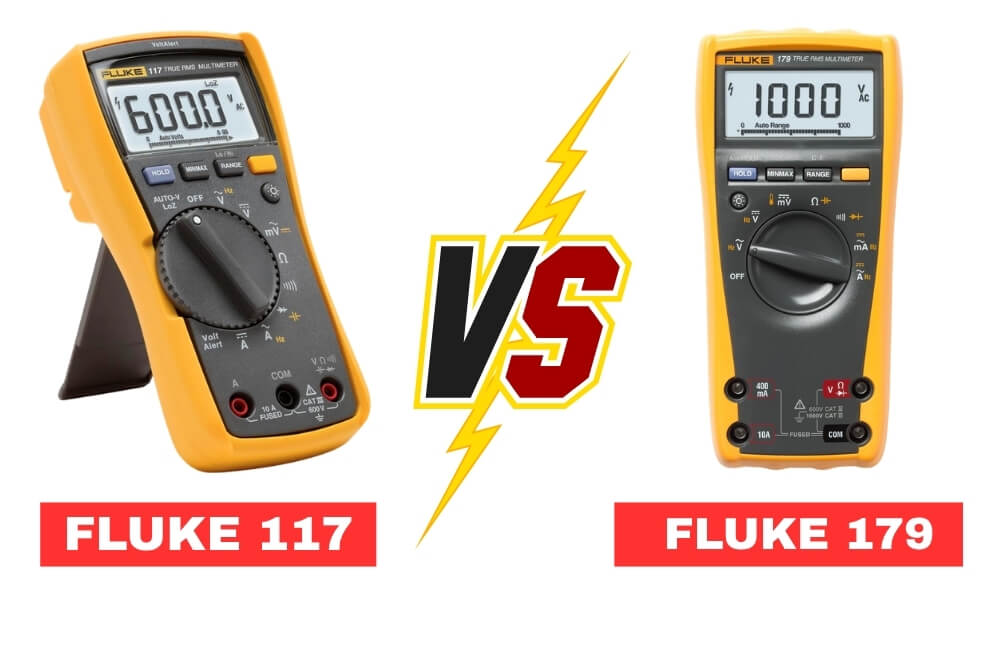
Safety ratings show where a tool works best. They follow NFPA 70E safety standards. The Fluke 117 has a hard case inside a yellow holster. It carries a CAT III 600V safety rating. It is safe for indoor panels.
The Fluke 179 has an overmolded housing. It absorbs hard shocks. It is certified for CAT IV 600V and CAT III 1000V. It is safe for heavy plant power.
| Feature | Fluke 117 | Fluke 179 |
| Safety Category Rating | CAT III 600V | CAT IV 600V / CAT III 1000V |
| Protective Casing | Yellow holster | Overmolded housing |
| Intended Environment | Commercial electrical work | Industrial electrical work |
Maintenance: Fluke 117 vs 179
You will need to change batteries. The Fluke 117 runs on a 9V alkaline battery. It lasts about 400 hours without the backlight. It uses standard fast-acting fuses. You change the battery through a simple back door.
The Fluke 179 uses a 9V alkaline battery too. It lasts about 200 hours without the backlight. You must unscrew the full back panel. Then you can reach the battery and high-energy safety fuses.
| Feature | Fluke 117 | Fluke 179 |
| Typical Battery Life | ~400 hours | ~200 hours |
| Power Source | 9V Alkaline | 9V Alkaline |
| Battery Door Access | Single-screw rear door | Screw-secured rear panel |
| Internal Fuse Protection | Standard fast-acting fuse | High-energy safety fuses |
Value for Money: Fluke 117 vs 179
You want a good tool for the price. The Fluke 117 is a great deal for office techs. You get VoltAlert. You stop ghost voltage. It costs less than heavy plant tools.
The Fluke 179 costs more money. But it gives higher safety ratings. It adds a heat probe. It is a smart buy for tough plant jobs.
| Feature | Fluke 117 | Fluke 179 |
| Price Level | Moderate | Premium |
| Included Accessories | Test leads, holster | Test leads, thermocouple probe |
| Target Application | Commercial & residential | Heavy industrial & HVAC |
| Primary Advantage | Integrated VoltAlert and LoZ | High safety rating & temperature mode |
Conclusion
Your pick rests on your daily tasks. Get the Fluke 117 for office sites. It gives you non-contact voltage detection. It stops ghost voltage. Get the Fluke 179 for heavy plant work. It gives you higher CAT IV safety ratings. It checks heat with a thermocouple. You can check full details on the official Fluke website. Always follow OSHA workplace safety rules on the job.
FAQs about Fluke 117 vs 179
Which multimeter is better for commercial electricians?
The Fluke 117 is better. It is small. It has VoltAlert non-contact voltage detection. It uses the AutoV/LoZ mode. This stops ghost voltage.
Does the Fluke 117 measure temperature?
No. It does not check heat. You need the Fluke 179 to use a thermocouple probe.
How does the Fluke 117 help prevent false readings?
It uses the AutoV/LoZ function. This makes low input impedance. It clears stray voltage. This stops false readings on dead wires.
What safety category ratings do these multimeters carry?
The Fluke 117 has a CAT III 600V safety rating. The Fluke 179 is certified for CAT IV 600V and CAT III 1000V.
Does the Fluke 179 include a temperature probe?
Yes. The Fluke 179 brings an included 80BK temperature probe. It is a K-type thermocouple. It checks heat from -40°C to +400°C.