
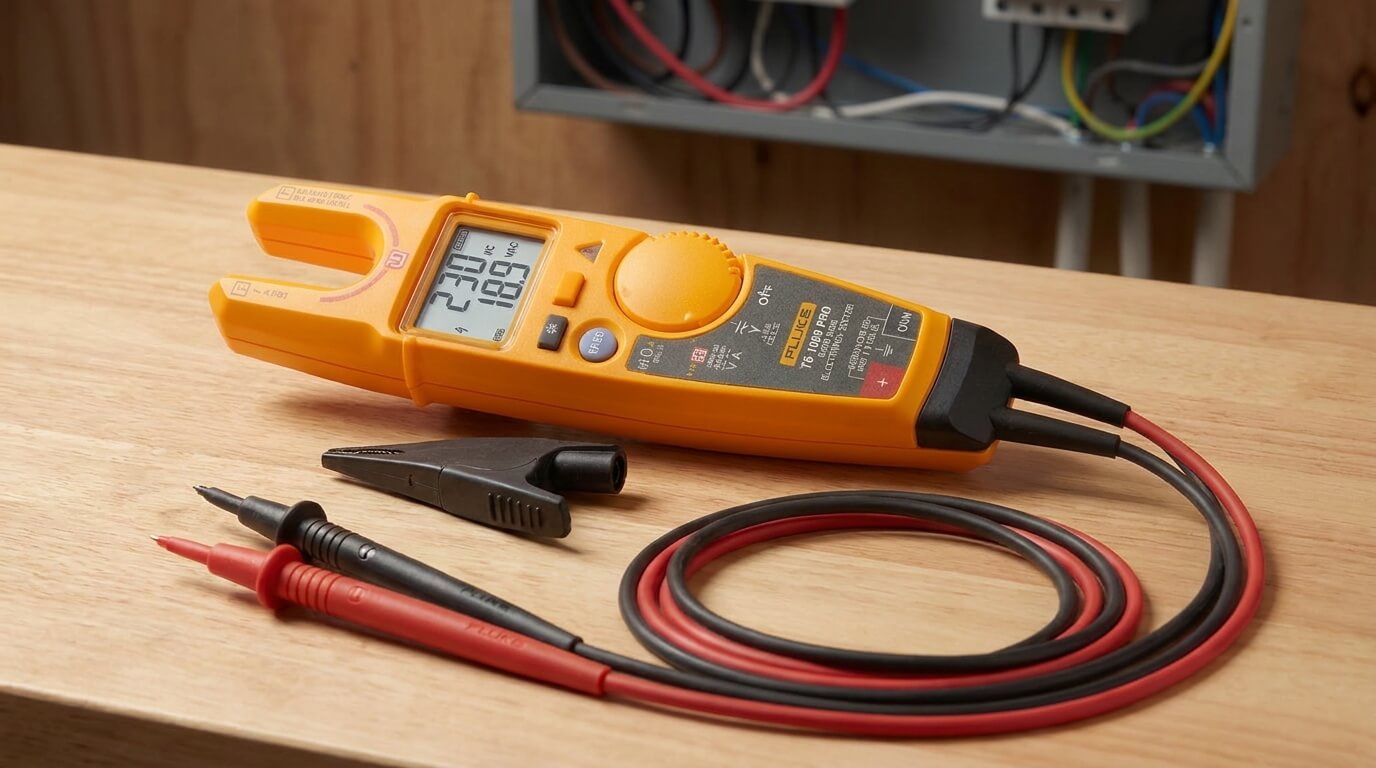
Electrical checks can take time. This is common when wires are close together, or space is tight. The Fluke T6-1000 PRO Review looks at how this tester handles these jobs. It also explains where the tool helps and where you still need test leads.
Black Friday 2026
Black Friday Sale is LIVE! Don't miss out on today's deals.
Check Price on Amazon As an Amazon Associate I earn from qualifying purchases.This guide covers FieldSense, voltage and current ranges, accuracy, safety ratings, and battery life. It also explains the main limits. By the end, you can decide if this tester suits your work or if a full digital multimeter is a better choice.
Fluke T6-1000 PRO Review: What Does It Do?
The Fluke T6-1000 PRO is an electrical tester. It checks AC voltage, AC current, frequency, DC voltage, resistance, and continuity. Its FieldSense feature measures AC voltage, current, and frequency through the open fork. It does not need direct metal-to-metal contact with the live conductor. For FieldSense voltage readings, the black lead provides a ground reference.
Black Friday 2026
Black Friday Sale is LIVE! Don't miss out on today's deals.
Check Price on Amazon As an Amazon Associate I earn from qualifying purchases.| Key detail | Official specification |
|---|---|
| AC voltage | Up to 1,000 V |
| AC current | Up to 200 A |
| DC voltage | Up to 1,000 V |
| Resistance | Up to 100 kΩ |
| Fork opening | 17.8 mm (0.7 in) |
| Power | Two AA batteries |
These features cover many common electrical tests. However, the right test method depends on the circuit and the job.
Black Friday 2026
Black Friday Sale is LIVE! Don't miss out on today's deals.
Check Price on Amazon As an Amazon Associate I earn from qualifying purchases.1. FieldSense Technology: The Main Advantage
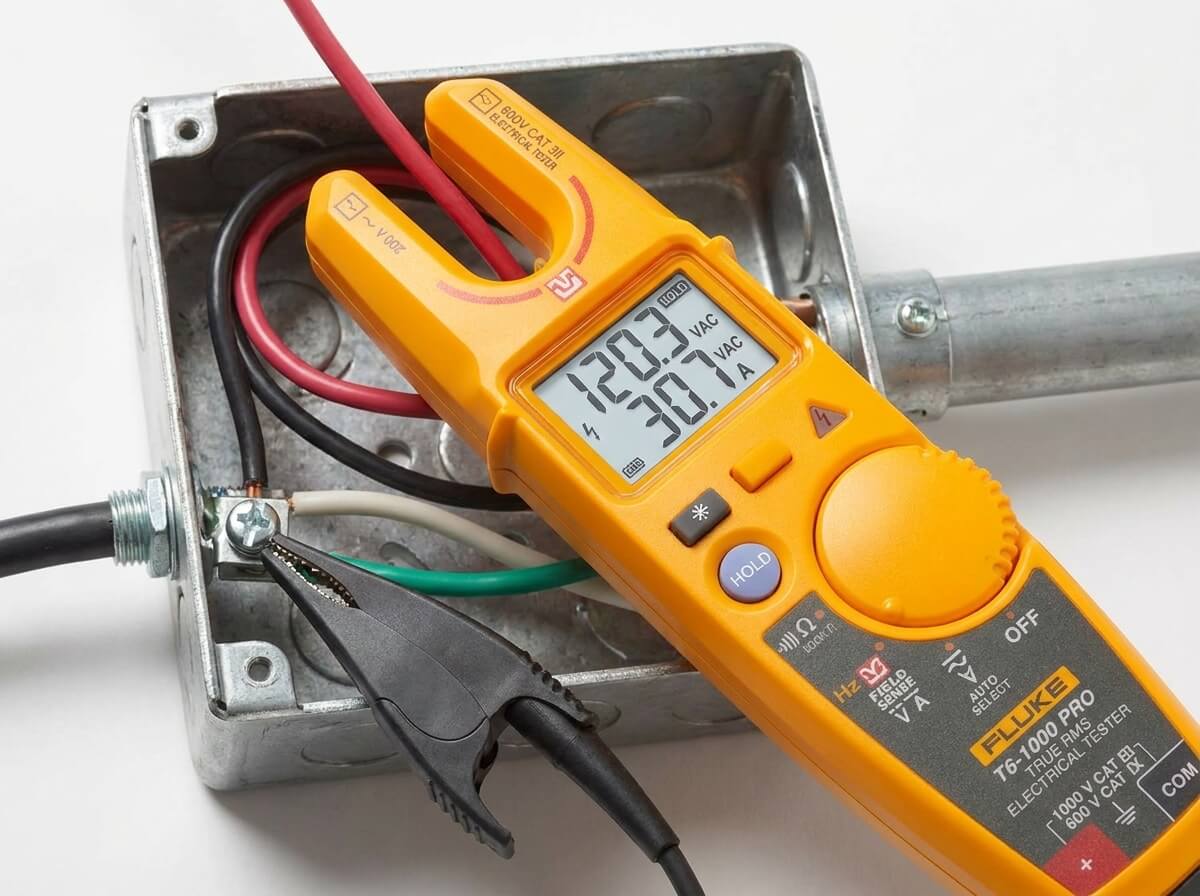
FieldSense is a key feature of the Fluke T6-1000 PRO. It measures AC voltage through the open fork. This means the probe tip does not need to touch the live conductor for this type of reading.
However, FieldSense voltage readings still need a ground reference. Connect the black lead to a suitable ground point as shown in the manual.
The tester can also show voltage and current at the same time. This helps during checks on motors, pumps, and other electrical equipment. Correct setup is still important for reliable readings.
When FieldSense helps most
FieldSense works well for quick checks on a single, accessible conductor. It can reduce the need to place a probe tip directly on a live wire.
| Situation | Practical benefit |
|---|---|
| Routine AC checks | Less need for direct probe contact |
| Current checks | Measures AC current through the open fork |
| Tight work areas | Makes access to a single conductor easier |
| Motor checks | Shows voltage and current together |
The fork opening is 17.8 mm wide. Some large cables may not fit. Bundled wires can also affect readings. Place only the conductor being tested inside the fork. Always follow safe testing steps.
2. Voltage, Current, and Resistance Measurements
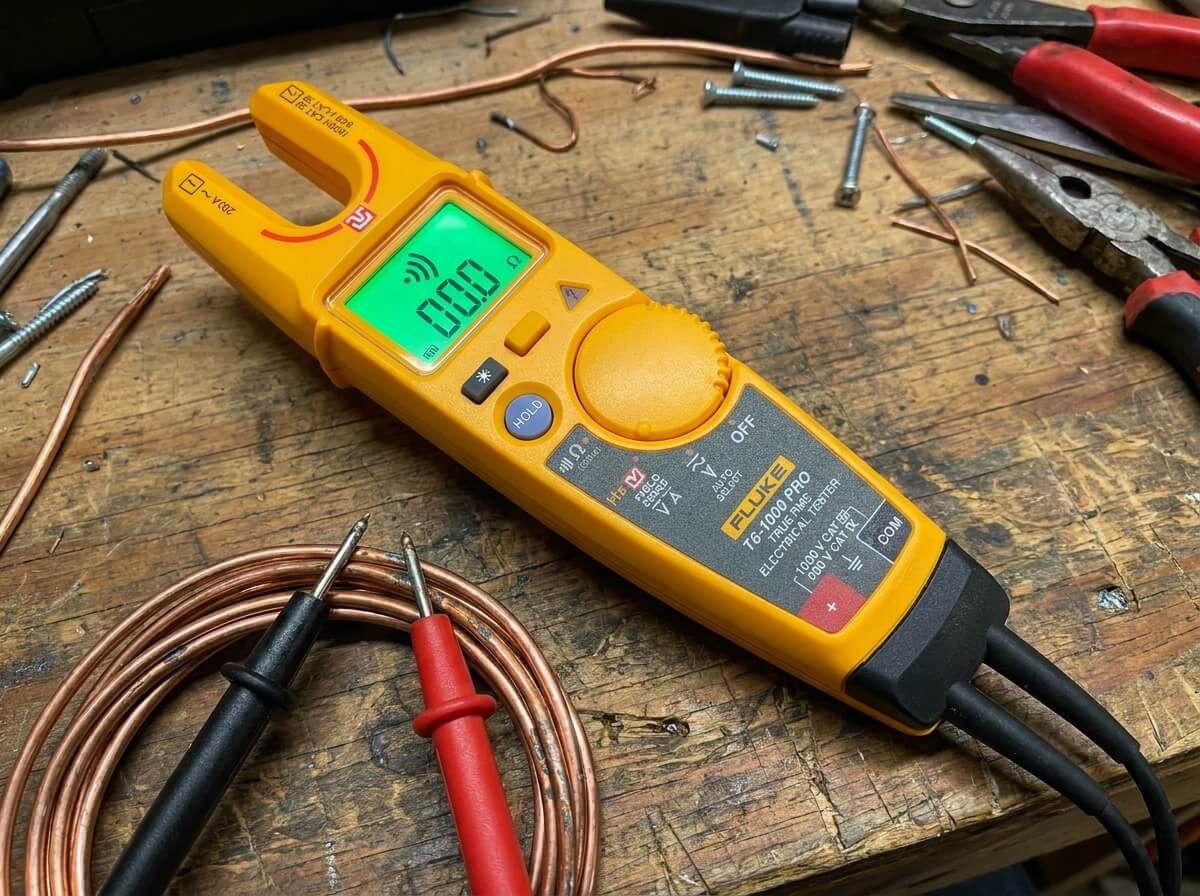
The Fluke T6-1000 PRO handles several common electrical tests. Its test leads support standard voltage checks, resistance tests, and continuity checks.
The official specifications list AC and DC voltage up to 1,000 V. The AC current limit is 200 A. These are the tool’s measurement limits. They do not mean every circuit is suitable for every test.
| Measurement | Range | Test leads |
|---|---|---|
| FieldSense AC voltage | 16–1,000 V | Black lead for ground reference |
| AC current | Up to 200 A | No |
| AC frequency | 45–66 Hz | No |
| DC voltage | Up to 1,000 V | Yes |
| Resistance | Up to 100 kΩ | Yes |
| Continuity | Audible and visual signal | Yes |
What the readings mean in daily work
AC voltage checks help you check the power in a circuit. Current readings show how much AC flows through a wire. Resistance tests help check parts and wiring when power is off.
Continuity mode gives an audible alert when it detects continuity. The display also turns green. This visual signal can help in noisy areas.
Never test resistance or continuity on a live circuit. Turn off the power and confirm that the circuit is safe before testing.
3. Fluke T6-1000 PRO Accuracy and Display
A wide measurement range is not the only thing that matters. Accuracy is also important. It helps you judge how close a reading is to the expected value.
Fluke lists different accuracy figures for FieldSense and lead-based voltage tests. The figures below apply under the stated test conditions. The setup, temperature, and ground reference can affect readings.
| Function | Official stated accuracy |
|---|---|
| FieldSense AC voltage | ±(3% + 3 counts) |
| FieldSense AC | ±(3% + 3 counts) |
| Lead-based AC voltage | ±(1.5% + 2 counts) |
| DC voltage | ±(1% + 2 counts) |
| Resistance | ±(1% + 2 counts) |
Why measurement setup matters
Fluke lists FieldSense voltage accuracy for readings from 16 V to 1,000 V. The conductor’s position inside the fork also matters. Place the conductor near the bottom center of the fork for a stable reading.
Insulated gloves, insulated footwear, and an insulated ladder can affect the ground reference. In these cases, use the black lead and a suitable ground point as directed in the manual. Fluke also notes that FieldSense voltage accuracy may change without an external ground.
4. Safety Ratings: What CAT III and CAT IV Mean
Safety ratings help you choose the right tester for a circuit. The Fluke T6-1000 PRO has CAT III 1,000 V and CAT IV 600 V ratings.
These ratings do not make every test safe. Choose the right rating for the test location. Always follow the manual and local electrical safety rules.
| Rating or action | General meaning |
|---|---|
| CAT III 1,000 V | Rated for suitable distribution and fixed-installation circuits |
| CAT IV 600 V | Rated for suitable measurements at the supply origin |
| Check test leads | Helps find worn or damaged insulation |
| Verify the tester | Helps confirm the tester works before and after a test |
Check the tester, probes, and accessories before each use. Do not use damaged equipment. A reading of zero does not always prove that a circuit is safe. Follow the correct steps to check both the tester and the circuit.
5. Battery Life, Size, and Everyday Handling
The Fluke T6-1000 PRO uses two AA batteries. Fluke lists a typical battery life of up to 360 hours of continuous use. With FieldSense, the listed life is about 200 hours. Actual battery life depends on how you use the tool.
The tester weighs about 0.35 kg. Its length is roughly 259 mm. The fork opening is 17.8 mm wide. Check the cable size before using the fork.
| Design detail | Why it matters |
|---|---|
| Two AA batteries | Easy to replace |
| 0.35 kg weight | Easy to carry for routine work |
| Open fork design | Allows access to a single conductor |
| Attached test leads | Supports standard measurements |
| Included holster | Helps with storage and carrying |
The PRO package includes attached test leads with removable probe caps. It also includes a black AC285 SureGrip alligator clip, an H-T6 holster, and user documents. Package contents may vary by model or region. Check the product details before use.
6. Fluke T6-1000 PRO Review: Main Limits to Know
The Fluke T6-1000 PRO handles many common electrical checks. However, it cannot replace every advanced meter. Its range and features may not suit jobs that need detailed analysis or specialist tests.
| Limitation | What to consider |
|---|---|
| 17.8 mm fork opening | Large cables may not fit |
| AC measurement | Does not measure DC |
| No advanced logging | A meter with recording features may be needed |
| Resistance range | Measures up to 100 kΩ |
| FieldSense setup | Grounding and conductor position can affect readings |
Fluke T6-1000 PRO vs. a full digital multimeter
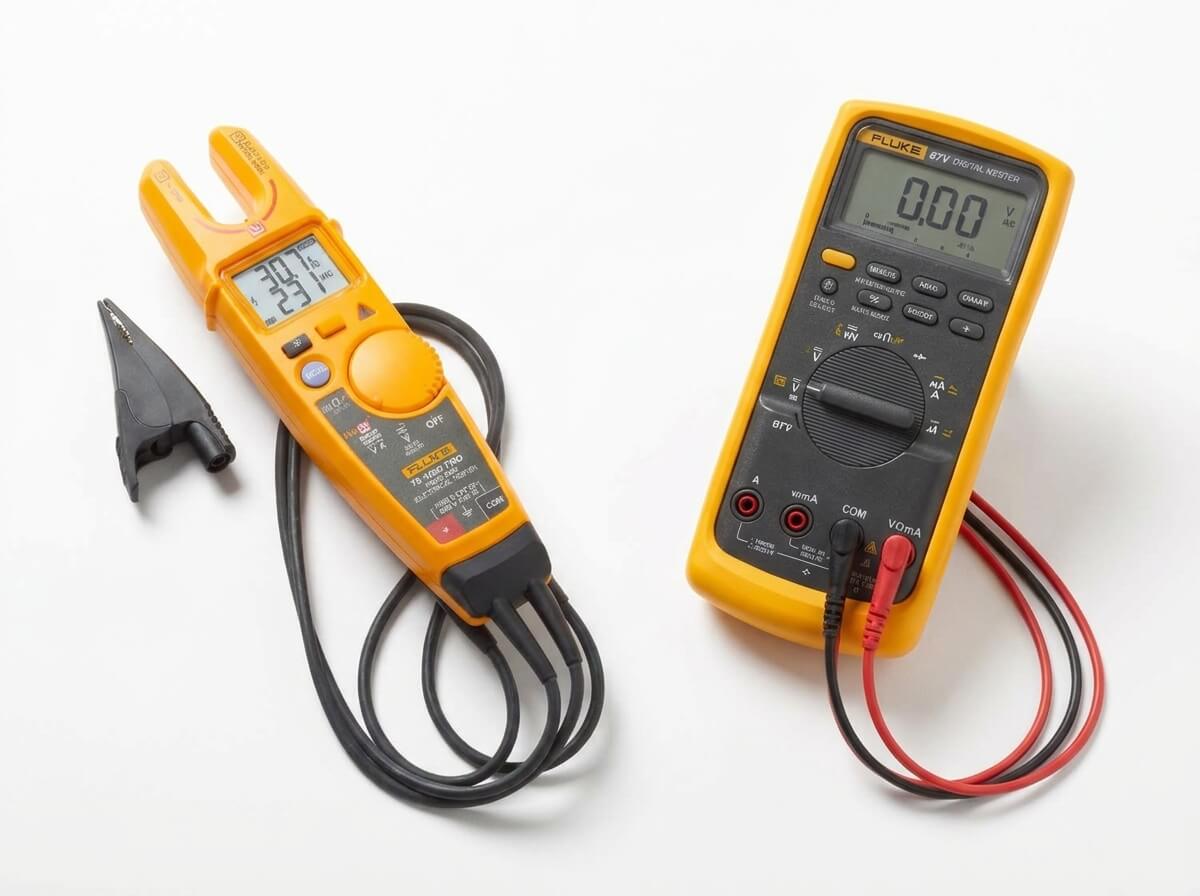
A full digital multimeter may offer more features. Depending on the model, these may include capacitance, diode tests, temperature, or data logging. The T6-1000 PRO focuses on quick electrical checks and its open-fork design.
Choose the T6-1000 PRO if you often check AC voltage and current on accessible wires. A more advanced meter may suit jobs that need detailed electronic checks or extra test functions.
Final Thoughts
The Fluke T6-1000 PRO Review shows how this tester can help with routine electrical checks. FieldSense is its main feature. Lead-based voltage, resistance, and continuity tests add more options. The display can also show voltage and current together.
Before buying, consider the jobs you do most often. Check the fork size, measurement limits, and required test functions. This tester can suit quick AC checks. A full digital multimeter may be a better choice for advanced tests.
Frequently Asked Questions
1. What does the Fluke T6-1000 PRO measure?
It measures AC voltage, AC current, AC frequency, DC voltage, resistance, and continuity. FieldSense measures AC voltage, current, and frequency through the open fork without direct metal-to-metal contact with the conductor.
2. Can the Fluke T6-1000 PRO measure DC?
No. It measures AC up to 200 A. It can also measure DC voltage with test leads.
3. Does the Fluke T6-1000 PRO need test leads?
FieldSense AC and frequency readings don’t require test leads. FieldSense voltage readings use the black lead for a ground reference. Standard voltage, resistance, and continuity tests use test leads.
4. Is the Fluke T6-1000 PRO rated for 1,000 V circuits?
It has a CAT III 1,000 V rating and a CAT IV 600 V rating. The correct rating depends on where the test takes place. Follow the manual and approved safety steps before testing a circuit.
5. Is the Fluke T6-1000 PRO a good choice for home use?
It may suit users who need regular electrical tests and know how to work safely. A simpler tester may be enough for occasional home checks. Qualified people should handle work on live circuits.
Official References