
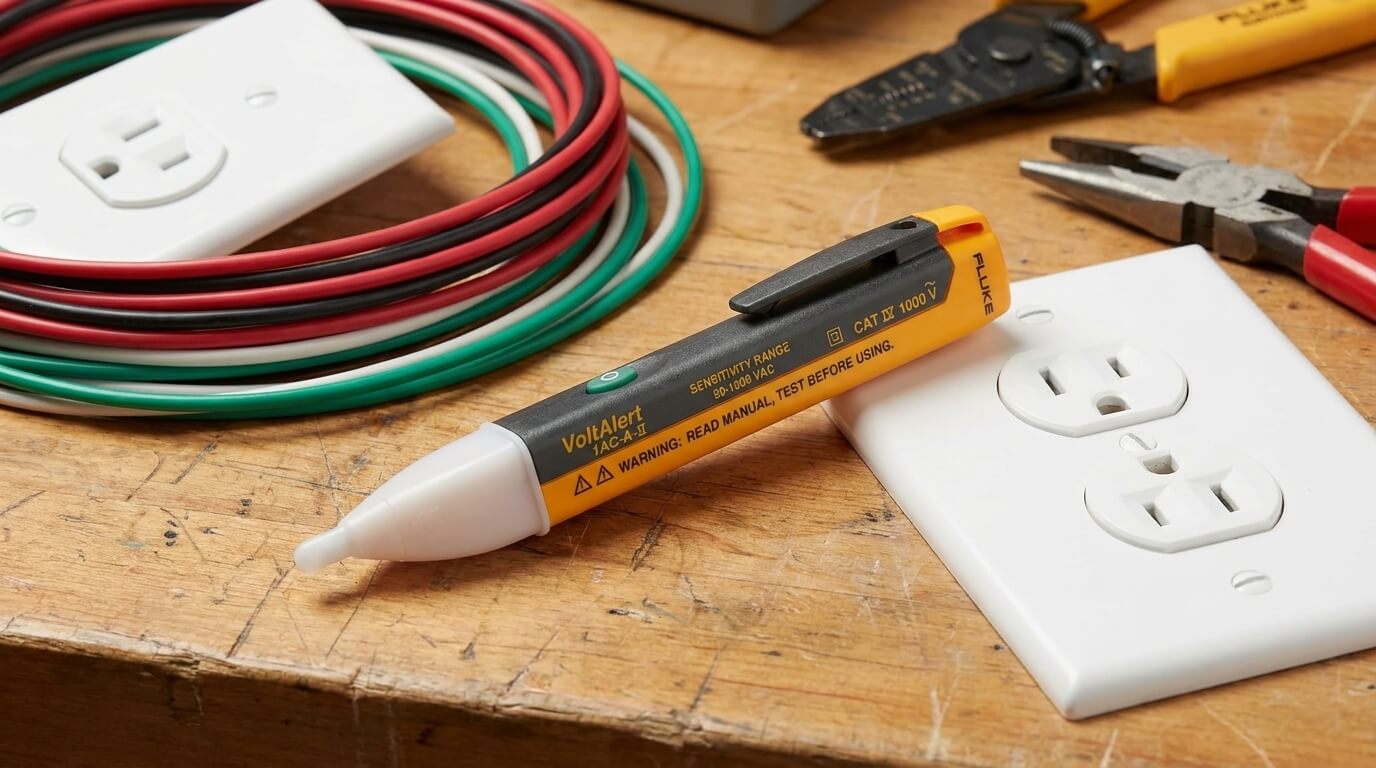
A live wire can cause serious injury. Always check for voltage before starting electrical work. This Fluke 1AC II review explains how this small voltage tester works. It also covers its main features, safety rating, and limits.
Black Friday 2026
Black Friday Sale is LIVE! Don't miss out on today's deals.
Check Price on Amazon As an Amazon Associate I earn from qualifying purchases.The Fluke 1AC II VoltAlert is a non-contact AC voltage tester. It can detect voltage without touching bare metal. Place its tip near a suitable outlet, wire, or power cord. If it detects voltage, the tip glows red. The beeper also sounds when audible mode is on.
The tester is small and easy to carry. Its pocket clip keeps it close at hand. However, it cannot detect every live wire in every situation. Knowing its limits is just as important as knowing its features.
Black Friday 2026
Black Friday Sale is LIVE! Don't miss out on today's deals.
Check Price on Amazon As an Amazon Associate I earn from qualifying purchases.Fluke 1AC II Review of Core Specs and Voltbeat Tech
A good voltage tester needs a clear warning light. It should also show that the tool is working. The official Fluke product page lists Voltbeat as a key feature.
Black Friday 2026
Black Friday Sale is LIVE! Don't miss out on today's deals.
Check Price on Amazon As an Amazon Associate I earn from qualifying purchases.The tip flashes red at regular intervals. This flash shows that the tester is on and its self-check is running. It does not prove that the tool will detect every live wire.
| Feature | Official Specification | Real-World Benefit |
|---|---|---|
| Voltage Range | 90 V to 1000 V AC for the standard model; 200 V to 1000 V AC for applicable variants | Covers many common AC voltage checks |
| Safety Rating | CAT IV 1000 V | Defines the tester’s rated voltage and measurement category |
| Power Source | 2 AAA alkaline batteries | Uses common replacement batteries |
| IP Rating | IP40 | Offers limited protection from solid objects; it is not waterproof |
| Temp Range | -10°C to 50°C | Shows the rated operating temperature |
| Altitude Limit | Up to 3,000 meters | Shows the rated operating altitude |
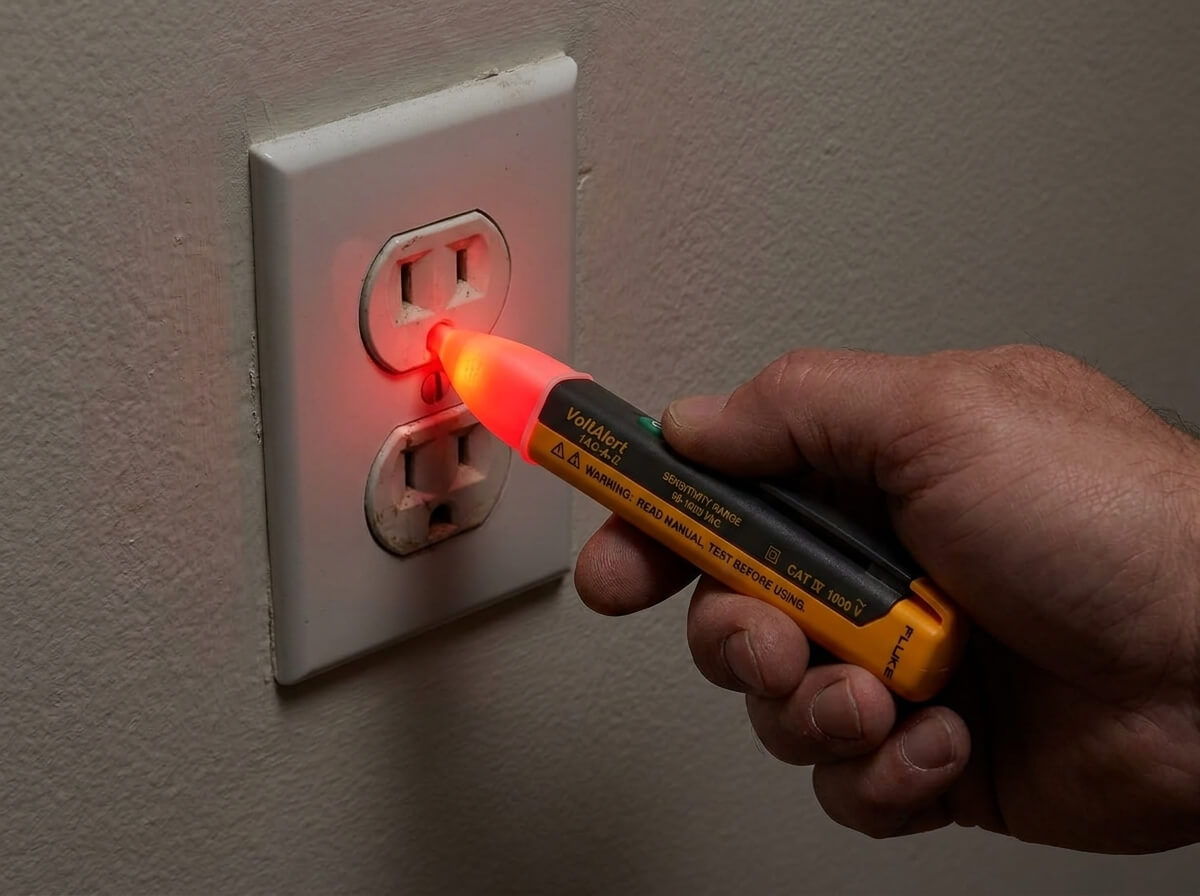
How the Capacitive Sensor Detects AC Power
The tester senses the electric field around AC wires. This lets it detect voltage through some types of insulation. It does not need to touch bare metal.
Several things can affect the result. These include wire position, insulation, nearby electrical fields, and tester placement. Follow the user manual when testing a wire. Do not assume that the tester will always detect voltage.
The tester also has audible and silent modes. Silent mode turns off the beeper but keeps the visual warning active. Follow the manual to switch between these modes.
Why the CAT IV 1000V Rating Matters for Your Safety
Electrical testers need the right safety rating for their intended use. The Fluke 1AC II has a CAT IV 1000 V rating. This rating defines its measurement category and rated voltage. It cannot prevent every electric shock.
The International Electrotechnical Commission (IEC) publishes standards for electrical equipment. These include the IEC 61010 series, which covers electrical testing tools.
CAT IV generally applies to measurements at the source of a low-voltage installation. This may include the point where power enters a building. However, this rating does not make every job safe. Always use the right tools and follow safety rules.
The OSHA electrical safety guidelines explain common workplace hazards. Follow the rules that apply to your job.
| Situation | Recommendation |
|---|---|
| Checking a bedroom wall outlet | Follow the tester’s instructions near the outlet. A negative result does not prove the outlet is safe. |
| Tracing a lamp cord | Check suitable insulated sections as directed by the manufacturer. |
| Working in a loud factory | Watch the red light if needed. Remember that the tester can miss voltage. |
| Testing in a quiet hospital | Use silent mode when workplace rules allow it. |
| Verifying a breaker is truly off | Follow the correct safety procedure. Use a suitable contact voltage tester or meter to check for voltage. |
Real-World Limits and User Feedback in This Fluke 1AC II Review
Every Fluke 1AC II review should explain what the tool cannot do. A non-contact tester may fail to detect voltage in some cases. Some users may report missed readings or slow responses. These reports do not prove that every tester has the same problem.
Test results can vary. Wire position, insulation, metal shields, and nearby electrical fields can affect detection.
Place the tester near the wire as directed by the manufacturer. Even then, detection is not guaranteed. Thick cables can also make it hard to locate an inner wire. Do not rely on turning the tester around a cable to find a live wire with certainty.
| Myth | Reality |
|---|---|
| No beep means the wire is 100% safe to touch | The tester may miss voltage. A negative result does not prove that a wire is safe. |
| It can test car batteries and solar panels | The 1AC II detects AC voltage. It cannot measure DC battery voltage. |
| All non-contact pens work on low-voltage doorbells | The standard model starts at a nominal 90 V AC. The 1LAC II covers 20 V to 90 V AC. |
| It replaces a digital multimeter | It detects the possible presence of voltage. It cannot show an exact voltage reading. |
Picking the Right Model Variant for Your Region
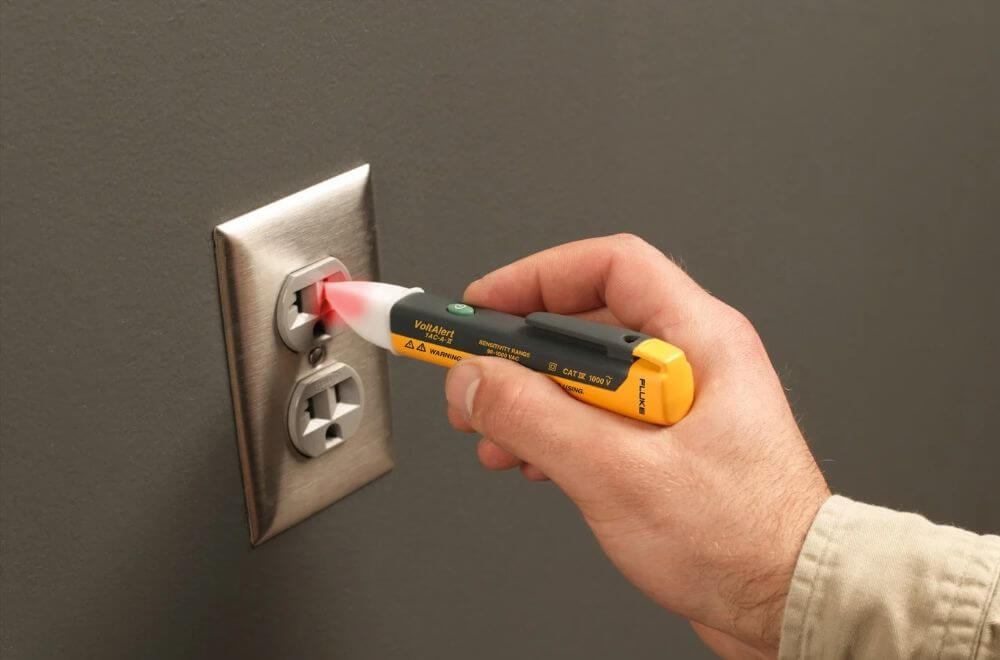
Check the model number before buying a tester. Similar models can have different voltage ranges and tip designs.
| Feature | Fluke 1AC-A1-II (Standard) | Fluke 1AC-E-II (European) | Fluke 1LAC-A-II (Low Volt) |
|---|---|---|---|
| Voltage Range | 90 V to 1000 V AC | 200 V to 1000 V AC for applicable versions | 20 V to 90 V AC |
| Tip Shape | Flat tip | Check the exact model’s manual | Check the exact model’s manual |
| Best Use Case | Basic checks on suitable AC systems | Basic checks on compatible AC systems | Suitable low-voltage control circuits |
Note: Check the exact model number and tip shape before ordering so it fits your local outlets. You can check the Fluke 1AC-A1-II Standard Tester on Amazon for regular household wiring, or look at the Fluke 1LAC-A-II Low-Voltage Tester on Amazon if you work on thermostats and doorbells.
Common Testing Mistakes That Put You at Risk
Even experienced workers can make mistakes when they rush. A non-contact tester is useful for quick checks. It should not be the only tool used to prove that a wire is safe to touch.
| Mistake | Better Approach |
|---|---|
| Trusting a tester without checking it | Test the tool on a known live source before and after use. Follow the manufacturer’s instructions. |
| Testing wires inside metal conduit | Do not expect the tester to detect voltage through metal. Use a suitable method to test the wires. |
| Assuming the neutral wire is always safe | Neutral wires can still be dangerous. Follow the correct isolation and testing steps. |
| Using the standard pen on 24V thermostat wires | Use a suitable low-voltage tester, such as the 1LAC II where appropriate, or a properly rated multimeter. |
Why the Live-Dead-Live Rule Saves Lives
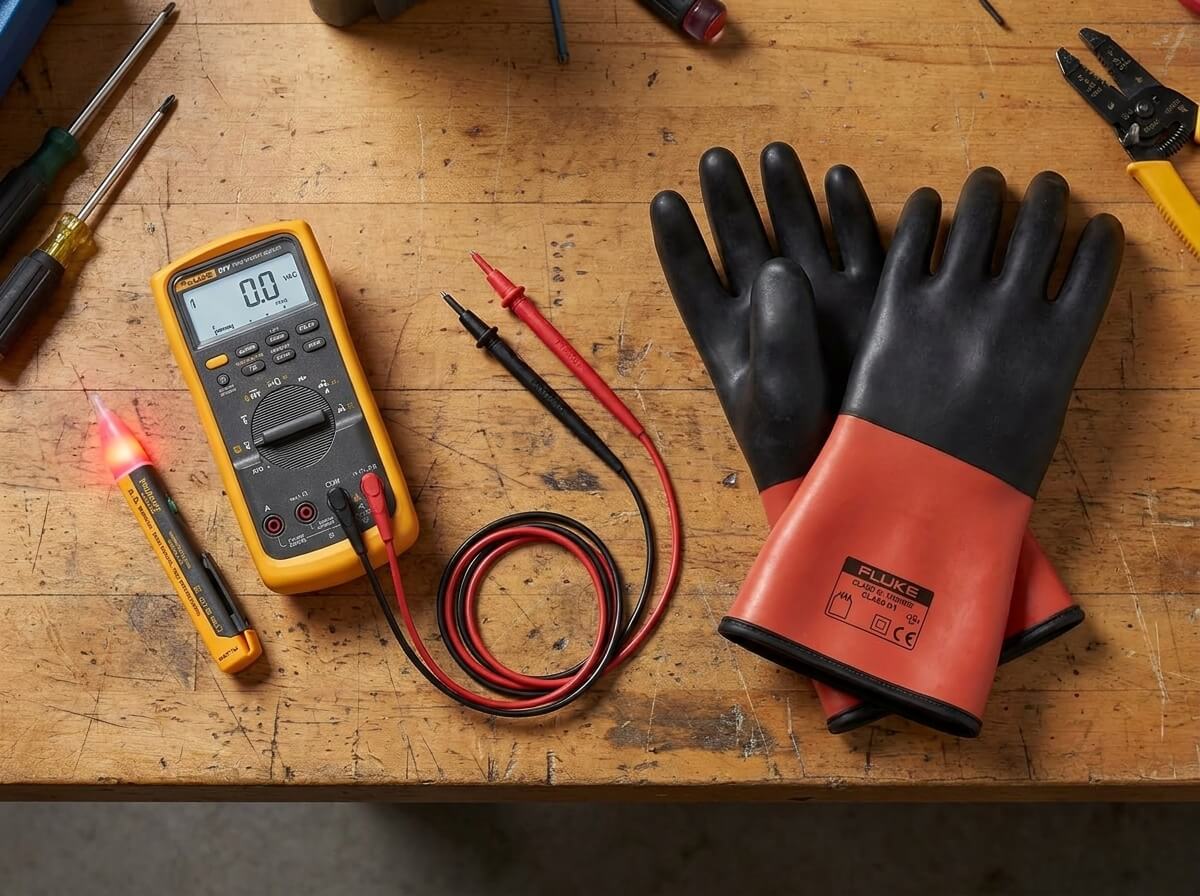
Live-Dead-Live is a common electrical safety check. It helps confirm that a voltage tester works before and after a test.
First, test a known live source with a suitable contact voltage tester. Next, isolate the target circuit and check for voltage with the correct tool. Finally, test the known live source again. This last step helps confirm that the tester still works.
The Fluke 1AC II alone cannot prove that a circuit is off. Use a suitable contact tester or meter when you need to confirm that no voltage is present. Follow the required safety steps before touching any wire.
Simple Maintenance and Troubleshooting Fixes
The Fluke 1AC II uses two AAA alkaline batteries. Its Voltbeat feature also checks the tool’s operation. Keep the tester clean and inspect it before use.
Replace the batteries when needed. Follow the manual and check the battery direction. Do not force the battery cap. Stop using the tool if its case or tip is damaged.
Store the tester as directed by the manufacturer. Handle leaking batteries with care. Clean the tool only as allowed by its instructions.
| Issue | Fix |
|---|---|
| No double flash from the Voltbeat light | Check the batteries and their direction. Replace them if needed. |
| Red light appears, but no beep sounds | Check if silent mode is on. Read the operating instructions. |
| Pen beeps when no nearby wire is visible | Move away from possible electrical interference and repeat the test as directed by the manufacturer. |
| Tester ignores a known live outlet | Check the voltage range, batteries, and test position. Check the tester using the recommended method. |
Final Thoughts
This Fluke 1AC II review shows why the VoltAlert can help with quick AC voltage checks. Its small size makes it easy to carry. Voltbeat provides a regular flash. The red tip and beeper warn you when voltage is detected.
The CAT IV 1000 V rating defines the tester’s rated voltage and measurement category. It does not guarantee protection from electric shock. The tester also has clear limits. It cannot measure DC battery voltage or show an exact voltage reading.
Most importantly, no light or sound does not prove that a wire is safe. Use the Fluke 1AC II for suitable quick checks. When you need to confirm that a circuit is off, use a suitable contact voltage tester or meter. Follow the correct safety steps every time.
Frequently Asked Questions (FAQs)
How do you turn off the beeper on the Fluke 1AC II?
The Fluke 1AC II supports audible and silent modes. Follow the instructions for your exact model to change modes. In silent mode, the red light can still show detected voltage.
Why does my Fluke 1AC II flash twice every few seconds?
The regular red flash is part of the Voltbeat feature. It shows that the tester is on and its self-check is running. It does not guarantee that every live wire will be detected.
Can the Fluke 1AC II detect DC voltage on car or solar batteries?
No. The Fluke 1AC II detects AC voltage. It cannot measure DC voltage from car batteries or solar panels. Use a suitable multimeter for these tasks.
Why is my Fluke 1AC II not beeping on a live wall outlet?
Several things can cause this problem. The voltage may be outside the detection range. The tester’s position or battery condition may also affect the result. Silent mode can turn off the beeper.
Follow the manufacturer’s instructions and check the tester as directed. Never assume an outlet is safe just because the tester does not beep.
What does a Fluke 1AC II review show compared to the Fluke 2AC?
The Fluke 1AC II has an on/off button, audible and silent modes, and Voltbeat technology. The Fluke 2AC stays on and gives a red light when it detects voltage. Both tools detect AC voltage without direct contact. Neither should be used alone to prove that a circuit is safe to touch.