
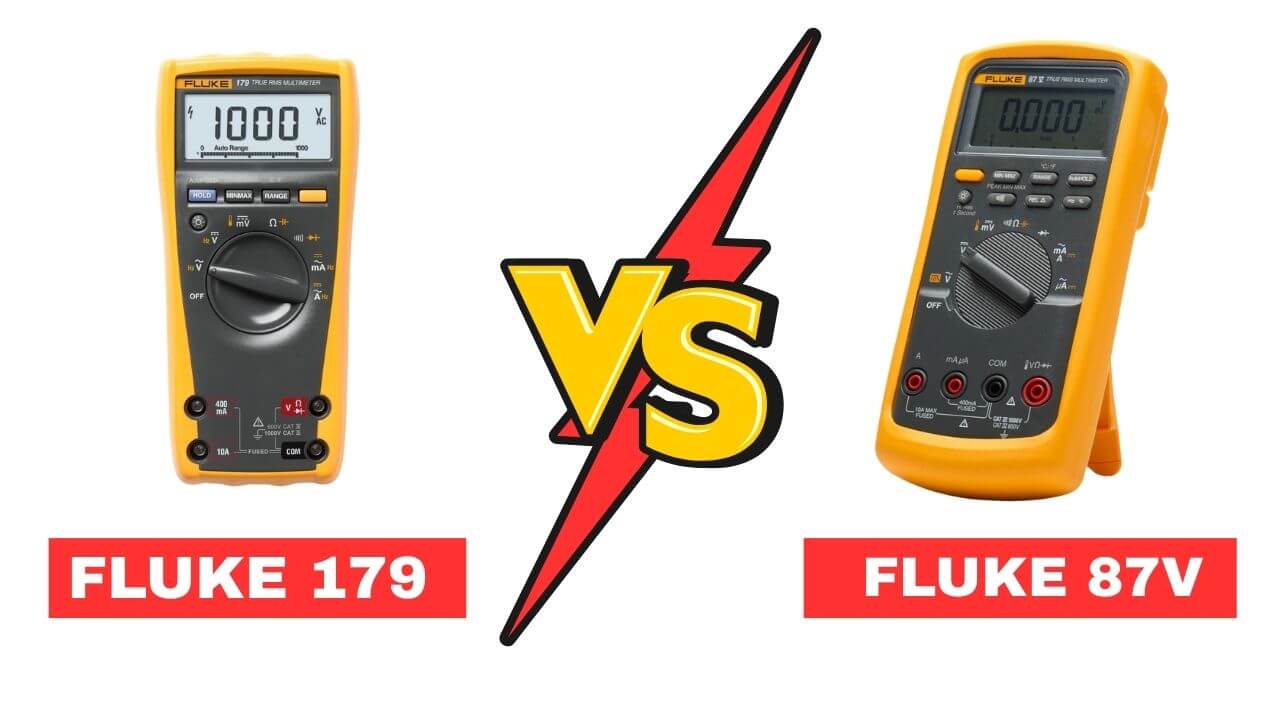
A meter can look perfect on paper, yet feel wrong during a long repair. Choosing between Fluke 179 vs 87V gets harder when both offer strong core testing features. The real problem is knowing which one fits daily checks and which one handles tougher drive work. This guide compares the key differences, so you can pick the right meter for your type of work.
Black Friday 2026
Black Friday Sale is LIVE! Don't miss out on today's deals.
Check Price on Amazon As an Amazon Associate I earn from qualifying purchases.Fluke 179 Review
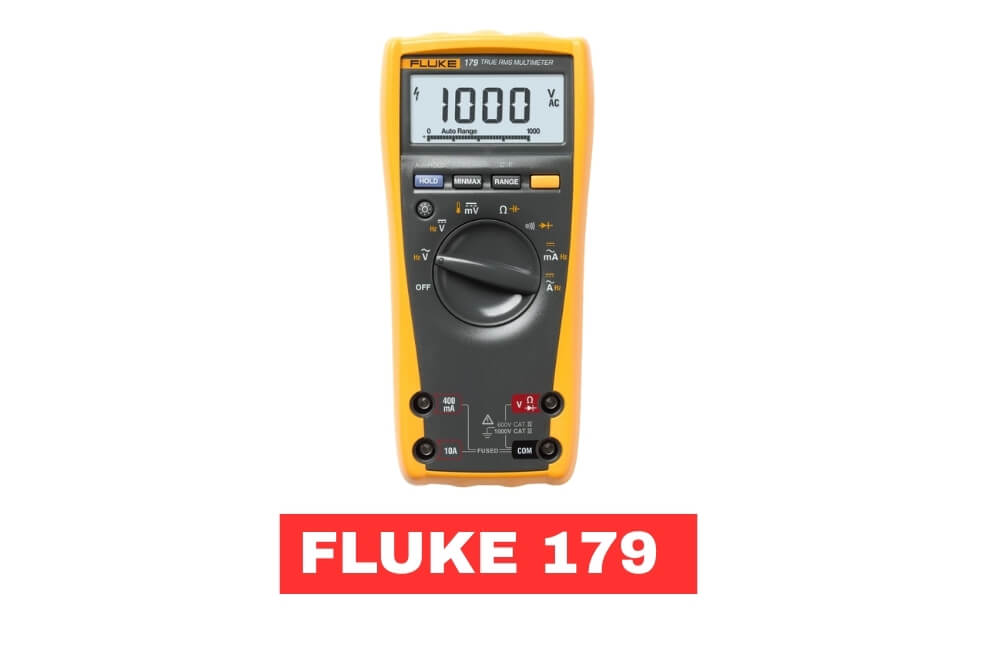
The Fluke 179 is built for broad daily testing. It covers voltage, current, resistance, capacitance, frequency, and temperature. Its backlit display and analog bar graph also help during quick checks. The official specifications list 1000 V AC/DC, 10 A AC/DC, frequency to 100 kHz, and temperature from -40°C to 400°C.
Black Friday 2026
Black Friday Sale is LIVE! Don't miss out on today's deals.
Check Price on Amazon As an Amazon Associate I earn from qualifying purchases.Pros and Cons
The main strengths are easy to spot. The limits matter too, especially when the work moves toward motor and drive testing.
Black Friday 2026
Black Friday Sale is LIVE! Don't miss out on today's deals.
Check Price on Amazon As an Amazon Associate I earn from qualifying purchases.| Type | Feature | Practical Impact |
|---|---|---|
| Pro | True-RMS | Gives better AC readings on varied loads. |
| Pro | Backlit display | Helps in dim work areas. |
| Pro | Temperature test | Useful for heat checks. |
| Pro | Auto and manual range | Gives simple or direct control. |
| Con | 100 kHz frequency limit | Gives less frequency range than the 87V. |
| Con | No VFD measurement | Less suited to drive troubleshooting. |
Daily Testing Feel
For normal electrical checks, the Fluke 179 covers a lot. The large backlit display is handy when a panel sits in a dark spot. The bar graph can also show a signal trend at a glance. Temperature work is another useful feature. The included probe makes that job easy to start. For basic faults, the controls stay fairly direct. For drive work, some users may want more tools.
| Feature | Practical Use |
|---|---|
| Backlit display | Helps with readings in low light. |
| Analog bar graph | Shows changing or unstable signals. |
| Temperature probe | Allows direct temperature checks. |
| Auto ranging | Makes common checks simple. |
Recommendation
The best fit depends on the type of work done each week. A general service role has different needs from industrial drive work.
| User Type | Recommendation | Reason |
|---|---|---|
| Electricians | Good Fit | Strong range for daily electrical checks. |
| HVAC users | Good Fit | Temperature testing adds useful value. |
| General technicians | Good Fit | Covers many common test jobs. |
| Basic DIY users | Good Fit | Auto ranging keeps checks simple. |
| VFD specialists | Not Ideal | No dedicated VFD measurement mode. |
Fluke 87V Review
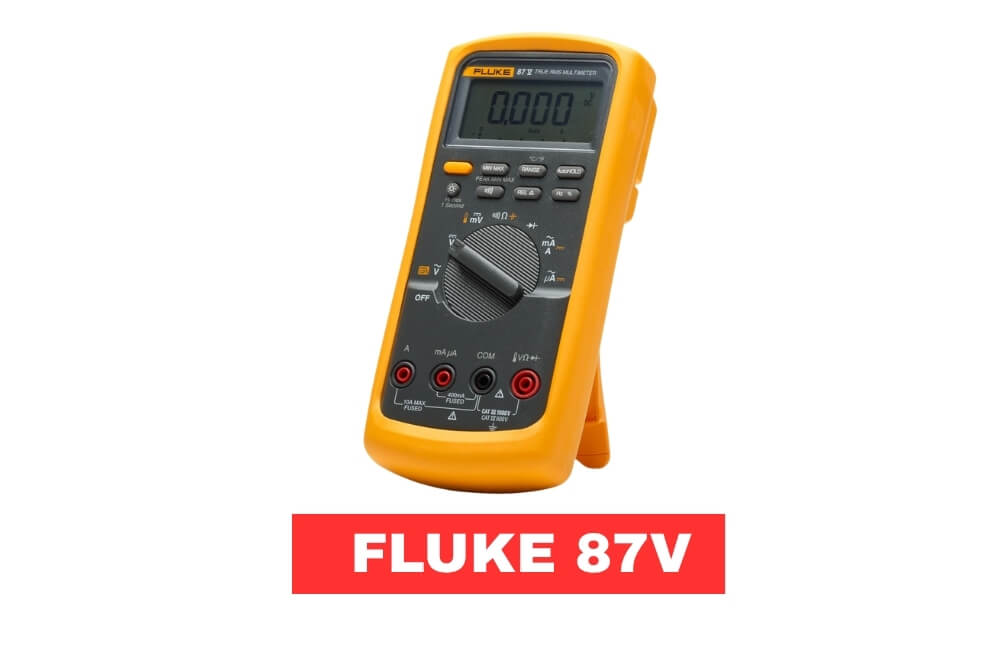
The Fluke 87V moves deeper into industrial testing. It adds motor-drive measurement, duty cycle, microamps, conductance, and a low-pass filter. Its DC voltage accuracy is also tighter at ±(0.05% + 1). The official specifications list 200 kHz maximum frequency and 20 kHz AC bandwidth when the low-pass filter is used.
Pros and Cons
The 87V brings more tools for hard electrical faults. That extra range can help, but it also means more controls to learn.
| Type | Feature | Practical Impact |
|---|---|---|
| Pro | Low-pass filter | Helps with variable-speed drive work. |
| Pro | VFD measurement | Useful for motor drive checks. |
| Pro | 20 kHz AC bandwidth | Supports filtered AC measurements. |
| Pro | 19,999-count high mode | Gives finer display detail. |
| Con | More advanced controls | Can take longer to learn. |
| Con | Higher feature load | Some basic users may not need it. |
Industrial Work in Practice
The extra functions become more useful as electrical work gets harder. A motor drive fault is a good example. The low-pass filter helps with measurements on electrically noisy drive systems. The VFD function also gives the meter a clear role in drive work. The high-resolution mode helps when small changes matter. Peak Capture can catch short events as fast as 250 µs. For simple outlet checks, though, many of these features may stay unused.
| Feature | Practical Use |
|---|---|
| Low-pass filter | Helps with VFD-related measurements. |
| Peak Capture | Captures short signal events. |
| High-resolution mode | Shows smaller reading changes. |
| Input Alert | Warns about incorrect lead input. |
Recommendation
The 87V makes more sense when electrical work gets more complex. For simple jobs, the extra functions may not add much value.
| User Type | Recommendation | Reason |
|---|---|---|
| Industrial electricians | Good Fit | Built for demanding electrical work. |
| Motor technicians | Good Fit | VFD tools add useful testing options. |
| Control technicians | Good Fit | Strong signal and current functions. |
| General home users | Not Ideal | Many advanced tools may go unused. |
| Basic repair work | Not Ideal | A simpler meter may cover the need. |
Detailed Comparison for Fluke 179 vs 87V
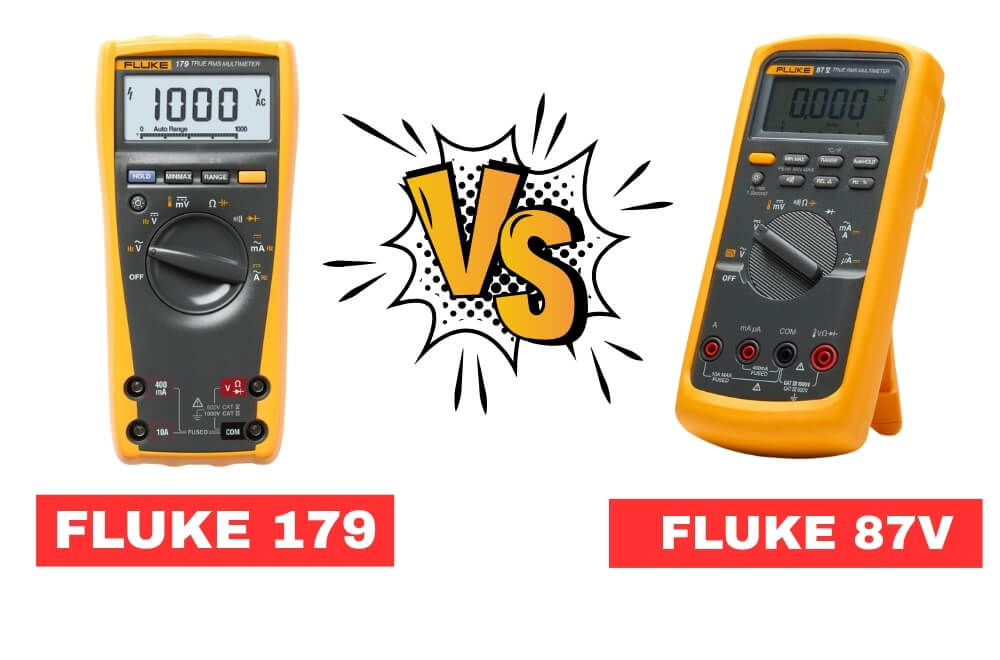
The two meters share many core functions. The real gap appears when the work moves beyond basic measurements.
Performance: Fluke 179 vs 87V
Both meters use True-RMS AC measurement. Both can measure up to 1000 V and 10 A. The 87V has a tighter DC voltage accuracy figure. It also reaches 200 kHz for frequency. The 179 reaches 100 kHz. The 87V adds VFD measurement and a low-pass filter. That gives it the edge for tougher electrical work.
| Feature | Fluke 179 | Fluke 87V |
|---|---|---|
| True-RMS | Yes | Yes |
| Max voltage | 1000 V | 1000 V |
| Max current | 10 A | 10 A |
| Frequency | 100 kHz | 200 kHz |
| VFD measurement | No | Yes |
Fluke 179 Rating: 8.5/10
Fluke 87V Rating: 9.5/10
Ease of Use: Fluke 179 vs 87V
The 179 keeps its focus on broad everyday testing. Auto and manual ranging give users two simple ways to work. Display Hold and Auto Hold also help keep readings visible. The 87V offers more functions and deeper controls. That helps advanced users but adds more to learn. For basic jobs, the 179 may feel more direct. For skilled industrial work, the extra controls can be useful.
| Feature | Fluke 179 | Fluke 87V |
|---|---|---|
| Auto ranging | Yes | Yes |
| Manual ranging | Yes | Yes |
| Hold functions | Yes | Yes |
| Advanced controls | Moderate | High |
| Learning curve | Lower | Higher |
Fluke 179 Rating: 9/10
Fluke 87V Rating: 8.5/10
Build Quality: Fluke 179 vs 87V
Both are made for serious electrical work. Both carry CAT III 1000 V and CAT IV 600 V ratings. The 179 weighs about 420 g. The 87V weighs 355 g without its holster. The 87V also has a 1 m drop specification. Its holster adds extra weight when fitted. Both are better suited to a tool bag than a desk drawer.
| Feature | Fluke 179 | Fluke 87V |
|---|---|---|
| CAT rating | CAT III 1000 V / CAT IV 600 V | CAT III 1000 V / CAT IV 600 V |
| Weight | 420 g | 355 g without holster |
| Drop specification | Not listed on current product page | 1 m |
| Display | Backlit | 6000 counts, 19,999 high-res mode |
| Industrial focus | Moderate | Strong |
Fluke 179 Rating: 8.5/10
Fluke 87V Rating: 9.5/10
Maintenance: Fluke 179 vs 87V
Battery life matters when a meter stays in a tool bag all week. The 179 is rated for about 200 hours without the backlight. The 87V reaches about 400 hours under the same basic condition. Both use an installed 9 V battery. Both include test leads and a temperature probe. The 87V also includes AC175 alligator clips and a holster with test-lead storage.
| Feature | Fluke 179 | Fluke 87V |
|---|---|---|
| Battery | 9 V | 9 V |
| Typical battery life | About 200 hours | About 400 hours |
| Temperature probe | Included | Included |
| Test leads | Included | Included |
| Warranty | Lifetime | Lifetime |
Fluke 179 Rating: 8.5/10
Fluke 87V Rating: 9.5/10
Value for Money: Fluke 179 vs 87V
Value depends on which features actually get used. The 179 gives a wide set of core measurements. It also adds temperature, a backlit display, and a bar graph. The 87V adds more industrial tools and stronger troubleshooting features. That makes the extra capability easier to justify for drive work. For basic electrical service, the 179 can cover most needs. For industrial faults, the 87V offers more room to grow.
| Feature | Fluke 179 | Fluke 87V |
|---|---|---|
| General testing | Excellent | Excellent |
| Industrial testing | Very good | Excellent |
| VFD work | Limited | Strong |
| Temperature work | Strong | Strong |
| Advanced signals | Good | Excellent |
Fluke 179 Rating: 9/10
Fluke 87V Rating: 9/10
Conclusion
The Fluke 179 vs 87V choice comes down to the work. The 179 suits broad daily testing and temperature checks. The 87V is the stronger choice for industrial faults, VFDs, and advanced signals. For simple service work, the 179 is enough; for deeper electrical work, the 87V has the edge.
FAQs
Is Fluke 179 better than 87V?
Not for every user. The 179 is a strong general meter. The 87V is better when VFD work, advanced signals, and industrial faults matter.
Does Fluke 87V have True-RMS?
Yes. The 87V uses True-RMS AC measurement. The 179 also uses True-RMS measurement.
Does Fluke 179 measure temperature?
Yes. The 179 measures from -40°C to 400°C and includes an 80BK temperature probe.
Which meter is better for VFD testing?
The 87V is the better fit. It includes motor-drive measurement and a low-pass filter for variable-speed drive work.
Which meter has longer battery life?
The 87V has the longer rated battery life. The official specification lists about 400 hours for the 87V and about 200 hours for the 179 without backlight use.