
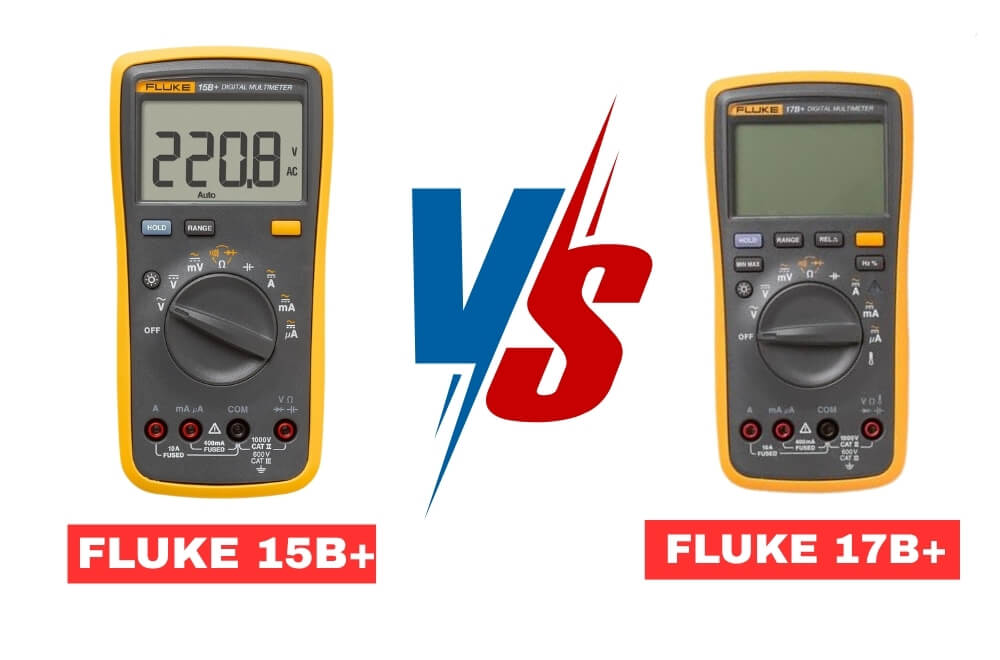
A quick meter check can turn into a slow job when one key test is missing. That gets frustrating when the next task is waiting. The Fluke 15B+ vs 17B+ choice helps narrow down which test range fits the work. Both cover core voltage, current, resistance, and capacitance work. The 17B+ adds frequency, duty cycle, and temperature tests, so this guide shows which one fits each need.
Black Friday 2026
Black Friday Sale is LIVE! Don't miss out on today's deals.
Check Price on Amazon As an Amazon Associate I earn from qualifying purchases.Fluke 15B+ Review
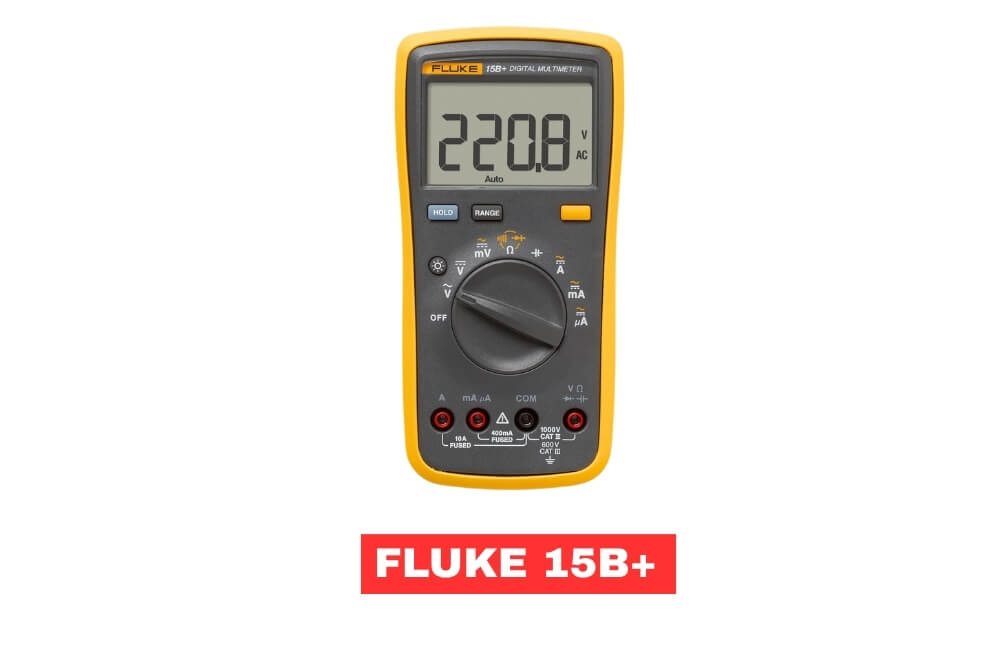
The Fluke 15B+ keeps the main test tools simple. It measures AC and DC voltage up to 1000 V and current up to 10 A. It also handles resistance, continuity, diode tests, and capacitance. A backlit 4000-count display can help when the work area is dim.
Black Friday 2026
Black Friday Sale is LIVE! Don't miss out on today's deals.
Check Price on Amazon As an Amazon Associate I earn from qualifying purchases.Pros and Cons (15B+)
The main strength is simple daily testing. The main limit is the smaller test range.
Black Friday 2026
Black Friday Sale is LIVE! Don't miss out on today's deals.
Check Price on Amazon As an Amazon Associate I earn from qualifying purchases.| Type | Feature | Practical Impact |
|---|---|---|
| Pro | AC/DC voltage to 1000 V | Covers many basic checks |
| Pro | AC/DC current to 10 A | Useful for current tests |
| Pro | Backlit display | Easier to read in dim spots |
| Pro | Capacitance test | Helps with common component checks |
| Con | No frequency test | Signal checks need another tool |
| Con | No temperature test | Heat checks need another meter |
Simple Daily Use
For basic electrical work, the 15B+ keeps things easy. Voltage checks, resistance tests, and continuity checks cover many common tasks. The backlit display can also help when a panel sits in a dark area.
The gap shows up when a job needs more than basic checks. The official technical data does not list frequency, duty-cycle, or temperature measurement for the 15B+. Those limits matter more as test needs grow.
| Task | Fluke 15B+ | Practical Impact |
|---|---|---|
| Voltage checks | Supported | Good for common electrical work |
| Resistance checks | Supported | Useful for fault checks |
| Continuity checks | Supported | Helps find open paths |
| Frequency checks | Not listed | Another tool is needed |
| Temperature checks | Not listed | Heat checks need another meter |
Recommendation (15B+)
The 15B+ makes the most sense when core electrical tests are the main goal. It can feel less useful when wider diagnostic work becomes part of the routine.
| User Type | Recommendation | Reason |
|---|---|---|
| Beginners | Good Fit | Simple core test set |
| DIY users | Good Fit | Handles common checks |
| Basic repair work | Good Fit | Covers voltage and current |
| Signal testers | Not Ideal | No listed frequency function |
| Temperature testers | Not Ideal | No listed temperature mode |
Fluke 17B+ Review
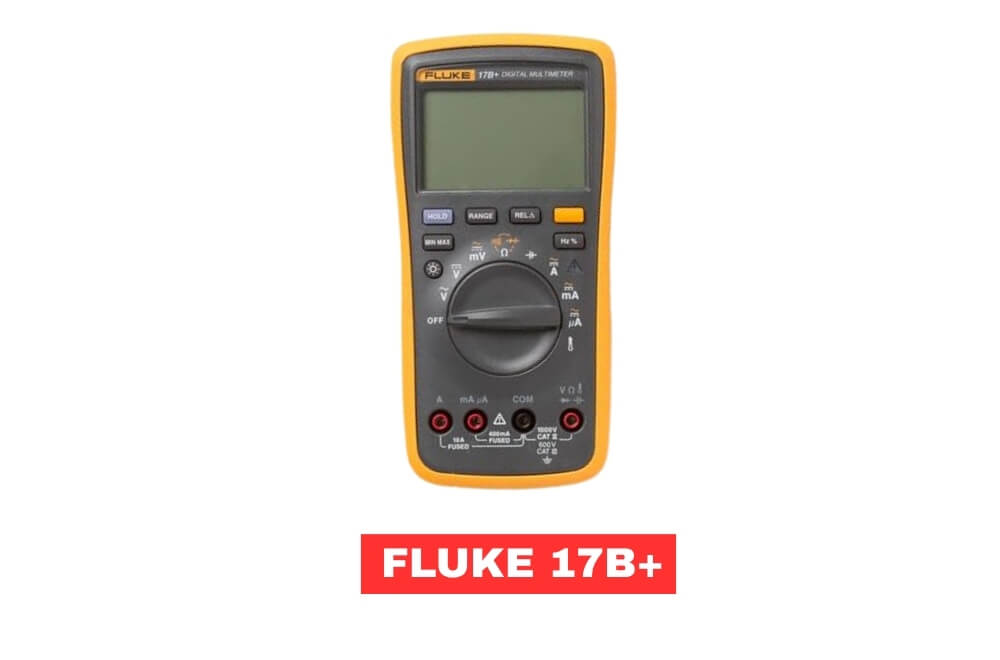
The Fluke 17B+ keeps the core functions but adds more test options. It measures voltage, current, resistance, capacitance, frequency, duty cycle, and temperature. That makes it more useful when one meter needs to handle a wider mix of jobs.
The core electrical specs are close to the 15B+. Both have a 4000-count display, a 10 A current range, and the same listed CAT III 600 V safety category. The big change is the extra test range.
Pros and Cons (17B+)
The extra modes can reduce the need to switch tools. Still, not every user needs them.
| Type | Feature | Practical Impact |
|---|---|---|
| Pro | Frequency to 100 kHz | Helps with signal checks |
| Pro | Duty cycle from 1% to 99% | Useful for pulse signals |
| Pro | Temperature measurement | Adds heat checks |
| Pro | Backlit 4000-count display | Easy to read in low light |
| Con | More test options | Takes more time to learn |
| Con | Extra functions may go unused | Less useful for simple work |
Built for Wider Checks
For users with wider test needs, the extra modes can be useful. Frequency can help with signal checks. Duty cycle can help with pulse-based systems. Temperature measurement adds another useful check.
There is still a small trade-off. More modes mean more controls to learn. If the work stays with voltage, current, resistance, and continuity, some extra functions may go unused.
| Task | Fluke 17B+ | Practical Impact |
|---|---|---|
| Voltage checks | Supported | Handles common electrical work |
| Frequency checks | 10 Hz–100 kHz | Adds signal testing |
| Duty-cycle checks | 1%–99% | Helps with pulse signals |
| Temperature checks | Supported | Adds heat measurement |
| Basic resistance work | Supported | Covers common fault checks |
Recommendation (17B+)
The 17B+ is a better fit when test needs can change from one job to the next. It is less compelling when only basic electrical checks matter.
| User Type | Recommendation | Reason |
|---|---|---|
| Electricians | Good Fit | Wider test range |
| Repair techs | Good Fit | Adds signal and heat tests |
| Advanced DIY users | Good Fit | More room to grow |
| Basic voltage users | Not Ideal | Extra modes may go unused |
| Simple home checks | Not Ideal | Core functions may be enough |
Detailed Comparison (5 Key Areas)
The two meters share many core features. The real gap appears in the extra test modes. Five areas make the choice much easier.
1. Performance
For core voltage and current work, the two are very close. Both measure AC and DC voltage up to 1000 V. Both measure AC and DC current up to 10 A. Both also use a 4000-count display with a listed update rate of three times per second.
The 17B+ pulls ahead when the job moves into frequency or duty-cycle checks. It can measure frequency from 10 Hz to 100 kHz and duty cycle from 1% to 99%. The 15B+ does not list those functions in the official technical data.
| Feature | Fluke 15B+ | Fluke 17B+ |
|---|---|---|
| AC/DC voltage | Up to 1000 V | Up to 1000 V |
| AC/DC current | Up to 10 A | Up to 10 A |
| Display | 4000 counts | 4000 counts |
| Frequency | Not listed | 10 Hz–100 kHz |
| Duty cycle | Not listed | 1%–99% |
Fluke 15B+ Rating: 8/10
Fluke 17B+ Rating: 9/10
2. Ease of Use
The 15B+ has fewer listed test modes. That can make the first few jobs feel less busy. It suits users who want the meter to cover the main checks without extra choices. The 17B+ adds more modes, so the learning curve can be a little wider.
Both use a backlit LCD. Both have a 4000-count display. So basic readings stay easy to see. The simpler function set gives the 15B+ a small edge for basic work.
| Feature | Fluke 15B+ | Fluke 17B+ |
|---|---|---|
| Backlight | Yes | Yes |
| Display | 4000 counts | 4000 counts |
| Core controls | Simpler | More functions |
| Extra modes | Fewer | More |
| Learning curve | Lower | Slightly higher |
Fluke 15B+ Rating: 9/10
Fluke 17B+ Rating: 8.5/10
3. Build Quality
The listed size and weight are the same for both meters. Each measures 183 × 91 × 49.5 mm and weighs 455 g. Both also carry an IP40 rating.
The listed safety category is also the same. Both are rated CAT III 600 V. So the main difference is not size or the listed safety category. The choice is more about test needs.
| Feature | Fluke 15B+ | Fluke 17B+ |
|---|---|---|
| Size | 183 × 91 × 49.5 mm | 183 × 91 × 49.5 mm |
| Weight | 455 g | 455 g |
| IP rating | IP40 | IP40 |
| CAT rating | CAT III 600 V | CAT III 600 V |
Fluke 15B+ Rating: 9/10
Fluke 17B+ Rating: 9/10
4. Maintenance
Both use two AA batteries. The listed battery life is at least 500 hours. Both also use fused current inputs. That keeps the basic care needs quite similar.
The 17B+ supports temperature measurement, which adds another test function to manage. The 15B+ has a simpler test set, so there are fewer functions to manage during routine use.
| Feature | Fluke 15B+ | Fluke 17B+ |
|---|---|---|
| Battery | 2 AA | 2 AA |
| Listed battery life | 500+ hours | 500+ hours |
| Current fuse protection | Yes | Yes |
| Temperature measurement | Not listed | Yes |
Fluke 15B+ Rating: 9/10
Fluke 17B+ Rating: 9/10
5. Value for Money
Value depends on how often the extra modes get used. The 15B+ can be the smarter pick when the work stays with basic electrical tests. The 17B+ makes more sense when frequency, duty cycle, or temperature checks can reduce the need for another test tool.
The key is simple. Extra modes add value only when those modes solve real jobs.
| Feature | Fluke 15B+ | Fluke 17B+ |
|---|---|---|
| Basic electrical work | Strong fit | Strong fit |
| Frequency work | Limited | Better fit |
| Temperature work | Limited | Better fit |
| Tool flexibility | Good | Better |
| Best use | Core testing | Wider testing |
Fluke 15B+ Rating: 8.5/10
Fluke 17B+ Rating: 9/10
Conclusion & FAQs
Conclusion
The Fluke 15B+ vs 17B+ choice comes down to test range. The 15B+ is a solid fit for core electrical checks. The 17B+ is the better choice when frequency, duty cycle, and temperature tests matter. For simple work, the 15B+ can be enough. For wider jobs, the 17B+ gives more room to grow.
FAQs
-
What is the main difference between Fluke 15B+ vs 17B+?
The 17B+ adds frequency, duty-cycle, and temperature measurement. The 15B+ focuses on core electrical tests.
-
Does the Fluke 17B+ measure temperature?
Yes. The 17B+ supports temperature measurement from -55 °C to 400 °C across its listed ranges.
-
Does the Fluke 15B+ measure frequency?
The official technical data for the 15B+ does not list frequency measurement. The 17B+ measures frequency from 10 Hz to 100 kHz.
-
Do both meters measure up to 10 A?
Yes. Both support AC and DC current measurement up to 10 A.
-
Which is better for wider electrical testing?
The 17B+ is the stronger choice when frequency, duty cycle, and temperature checks are part of the work. The 15B+ is better suited to core measurements.