
A busy workday can make the wrong clamp meter a real hassle.
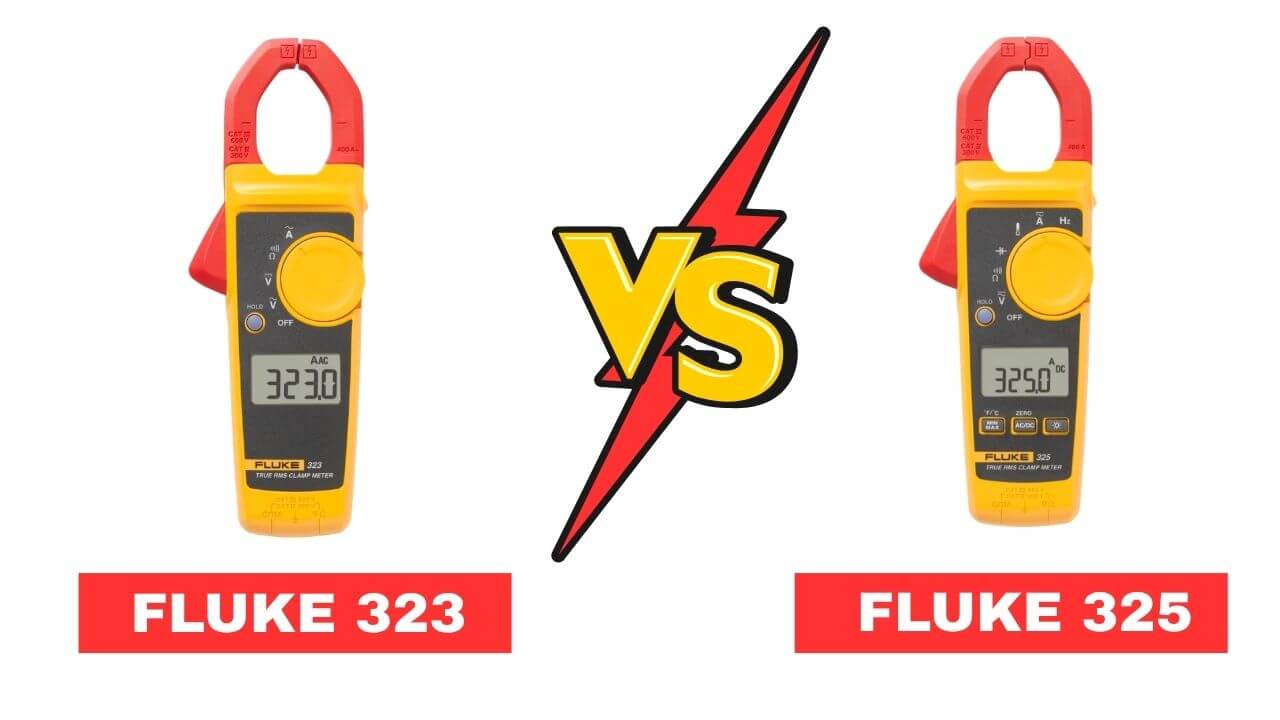
Fluke 323 Vs 325 matters when simple checks are not enough. One tool keeps things simple. The other adds more test options.
This guide shows the key differences. It helps you pick the right tool for your work.
Fluke 323 Review
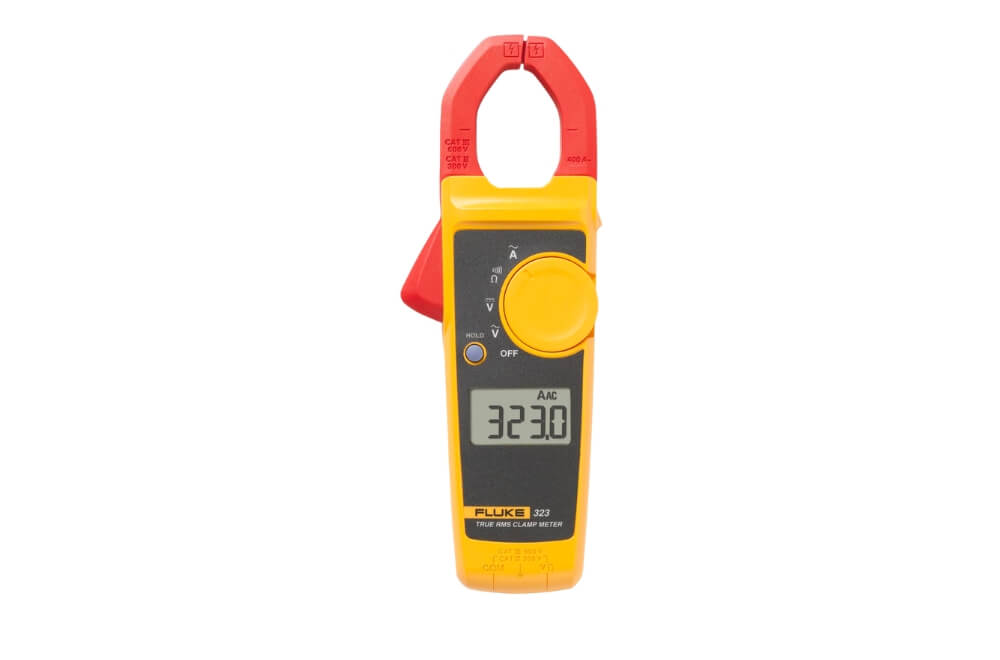
The Fluke 323 keeps your job simple. It measures AC current up to 400 A. It measures AC and DC voltage up to 600 V. It also checks resistance and continuity. (Fluke)
The slim body fits well in tight spaces. The large display and hold function make quick checks easy. (Fluke)
Pros and Cons
The simple design works well for daily checks. But the basic features may fall short on wider jobs.
| Type | Feature | Practical Impact |
|---|---|---|
| Pro | 400 A AC current | Handles common current checks. |
| Pro | True-RMS AC | Helps with non-linear loads. |
| Pro | Slim body | Fits well in tight spaces. |
| Con | No DC current | Cannot check DC current. |
| Con | No temperature mode | Needs another tool for heat checks. |
Everyday Use
The Fluke 323 works well for clear tasks. You can check current fast without a long setup. The slim body helps inside packed panels.
The limits show up on wider jobs. It has no DC current mode. It also lacks frequency, temperature, backlight, and Min/Max functions. (Fluke)
| Task | Fluke 323 Result | Practical Note |
|---|---|---|
| AC current check | Good | Up to 400 A. |
| AC/DC voltage | Good | Up to 600 V. |
| Resistance check | Good | Up to 4 kΩ. |
| Low-light work | Fair | No backlight. |
Recommendation
The best use is basic electrical work. The table below shows where this tool fits best.
| User Type | Recommendation | Reason |
|---|---|---|
| Basic electricians | Good Fit | Covers common AC checks. |
| DIY users | Good Fit | Simple controls are easy to use. |
| DC current users | Not Ideal | No DC current mode. |
| HVAC users | Not Ideal | No temperature mode. |
| Simple fault checks | Good Fit | Useful for current and voltage checks. |
Fluke 325 Review
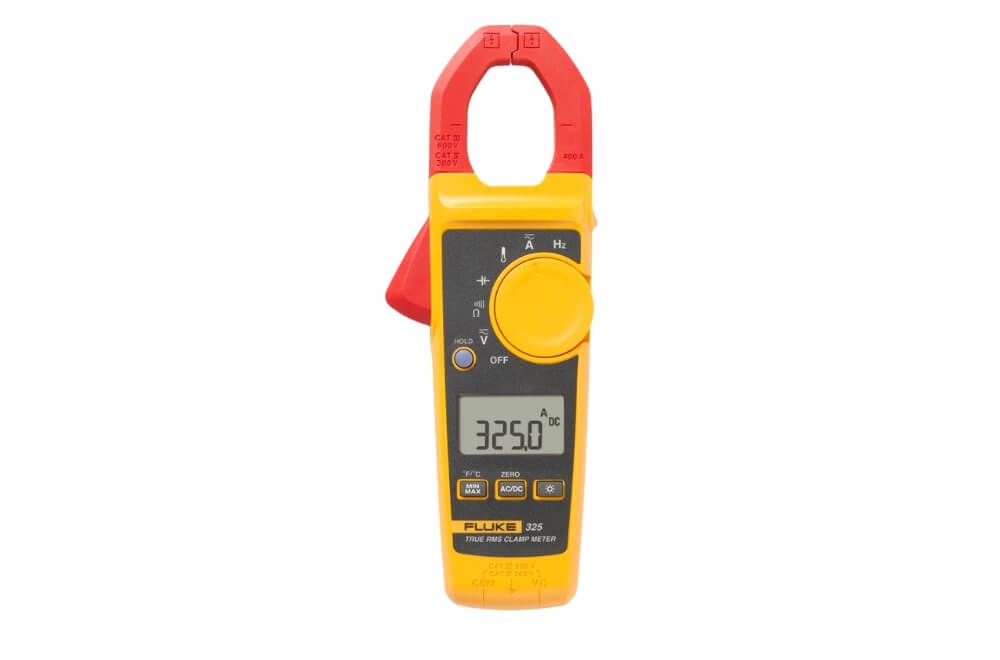
The Fluke 325 adds more functions while keeping the same basic shape. It measures AC and DC current up to 400 A. It also measures voltage, resistance, capacitance, frequency, and temperature. (Fluke)
This wider range can save time. You may need fewer tool changes during a job. The 325 also adds a backlight and Min/Max function. (Fluke)
Pros and Cons
The extra modes make the 325 more flexible. The trade-off is a little more weight and more controls.
| Type | Feature | Practical Impact |
|---|---|---|
| Pro | AC/DC current | Covers both current types. |
| Pro | Temperature mode | Helps with heat checks. |
| Pro | Frequency mode | Useful for signal checks. |
| Pro | Backlight | Helps in dark areas. |
| Con | More weight | Weighs 283 g. |
| Con | More features | Takes more time to learn. |
Everyday Use
The extra modes can save time on mixed jobs. You can check temperature without reaching for another meter. The backlight also helps in dark panels.
The wider resistance range adds more room for checks. The 325 reaches 40 kΩ. The 323 stops at 4 kΩ. The 325 also adds capacitance and Min/Max functions. (Fluke)
| Task | Fluke 325 Result | Practical Note |
|---|---|---|
| AC current check | Good | Up to 400 A. |
| DC current check | Good | Up to 400 A. |
| Temperature check | Good | -10°C to 400°C. |
| Frequency check | Good | 5 Hz to 500 Hz. |
| Dark work area | Good | Backlight helps. |
Recommendation
The 325 makes sense when you need one tool for many tasks. It may be more than needed for basic AC checks.
| User Type | Recommendation | Reason |
|---|---|---|
| Field electricians | Good Fit | Many test modes in one tool. |
| HVAC users | Good Fit | Temperature mode adds value. |
| DC system users | Good Fit | DC current is supported. |
| Basic AC users | Not Ideal | Extra modes may not be needed. |
| Frequent fault finding | Good Fit | Min/Max adds useful detail. |
Detailed Comparison for Fluke 323 Vs 325
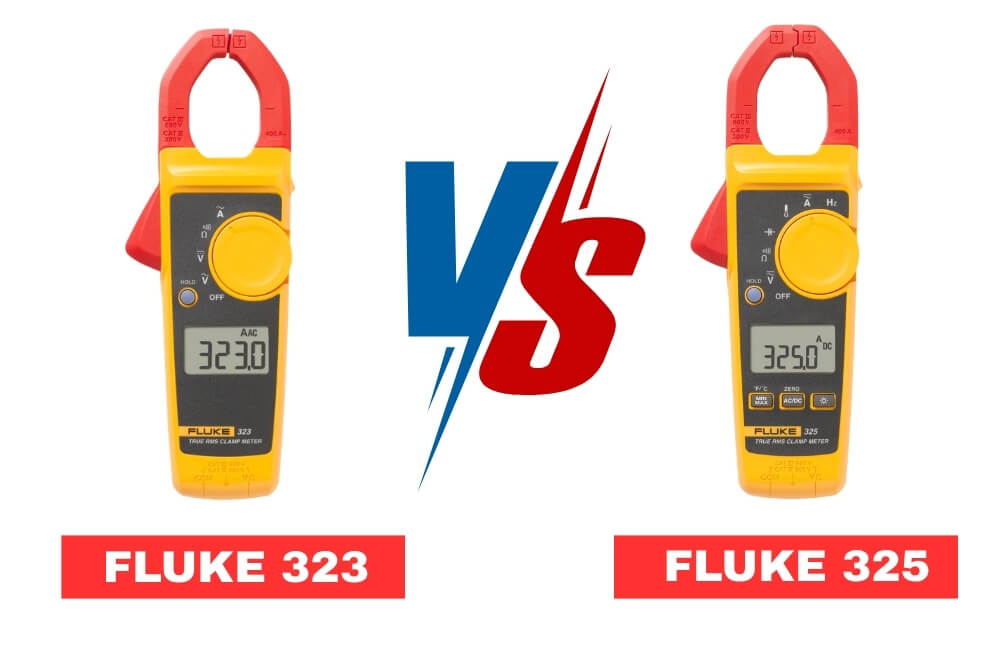
Both meters share a slim 207 × 75 × 34 mm body. Both have CAT III 600 V and CAT IV 300 V ratings. (Fluke)
The real gap is in the test modes. These five areas show the biggest differences.
Performance: Fluke 323 Vs 325
Both models use True-RMS AC measurement. Both measure AC current up to 400 A. Their AC current accuracy is 2% ± 5 digits from 45 Hz to 65 Hz. (Fluke)
The big change is DC current. The 323 cannot measure DC current. The 325 measures DC current up to 400 A. (Fluke)
| Feature | Fluke 323 | Fluke 325 |
|---|---|---|
| AC current | Up to 400 A | Up to 400 A |
| DC current | No | Up to 400 A |
| True-RMS AC | Yes | Yes |
| AC voltage | Up to 600 V | Up to 600 V |
| DC voltage | Up to 600 V | Up to 600 V |
Fluke 323 Rating: 8/10
Fluke 325 Rating: 9/10
Ease of Use: Fluke 323 Vs 325
The 323 has fewer modes. This makes quick checks feel simple. If you only need current, voltage, resistance, and continuity, this setup works well. (Fluke)
The 325 has more functions. This means more controls to learn. In return, one meter can handle more types of work.
| Feature | Fluke 323 | Fluke 325 |
|---|---|---|
| Basic controls | Simple | More functions |
| Hold | Yes | Yes |
| Backlight | No | Yes |
| Min/Max | No | Yes |
| Learning curve | Lower | Slightly higher |
Fluke 323 Rating: 9/10
Fluke 325 Rating: 8.5/10
Build Quality: Fluke 323 Vs 325
Both models share the same body size. Both have CAT III 600 V and CAT IV 300 V ratings. (Fluke)
The 323 weighs 265 g. The 325 weighs 283 g. The gap is small. Still, the 323 has a slight edge when a lighter tool bag matters.
| Feature | Fluke 323 | Fluke 325 |
|---|---|---|
| Body size | 207 × 75 × 34 mm | 207 × 75 × 34 mm |
| Weight | 265 g | 283 g |
| Max wire size | 30 mm | 30 mm |
| CAT rating | CAT III 600 V / CAT IV 300 V | CAT III 600 V / CAT IV 300 V |
Fluke 323 Rating: 9/10
Fluke 325 Rating: 9/10
Maintenance: Fluke 323 Vs 325
Both models have two-year warranties. Both come with soft cases and test leads. The 325 also includes a K-type thermocouple. (Fluke)
The 325 has more test modes to manage. Still, both tools suit regular electrical work.
| Feature | Fluke 323 | Fluke 325 |
|---|---|---|
| Warranty | Two years | Two years |
| Soft case | Yes | Yes |
| Test leads | Yes | Yes |
| Temperature probe | No | Yes |
| Basic care | Simple | Simple |
Fluke 323 Rating: 9/10
Fluke 325 Rating: 9/10
Value for Money: Fluke 323 Vs 325
Value depends on your work. It is not just about having more functions. The 323 fits well if you mostly check AC current and voltage.
The 325 fits better if you need DC current or temperature checks. It also adds frequency, capacitance, and Min/Max functions. These extra modes may reduce the need for another meter. (Fluke)
| Feature | Fluke 323 | Fluke 325 |
|---|---|---|
| Basic electrical work | Strong | Strong |
| DC current | No | Yes |
| Temperature | No | Yes |
| Frequency | No | Yes |
| Wider task range | Limited | Strong |
Fluke 323 Rating: 8.5/10
Fluke 325 Rating: 9/10
Conclusion
Choosing Fluke 323 Vs 325 comes down to your tasks. The 323 fits basic AC work well. The 325 fits better when you need DC current, temperature, and Min/Max functions.
FAQs
Is Fluke 323 better than Fluke 325?
Not for every job. The 323 fits simple AC checks. The 325 offers more test modes.
| Need | Better Fit | Why |
|---|---|---|
| Basic AC work | Fluke 323 | Simple feature set. |
| More test modes | Fluke 325 | Wider measurement range. |
Can Fluke 323 measure DC current?
No. The Fluke 323 has no DC current range. The Fluke 325 measures DC current up to 400 A. (Fluke)
| Current Type | Fluke 323 | Fluke 325 |
|---|---|---|
| AC current | Yes | Yes |
| DC current | No | Yes |
Does Fluke 325 measure temperature?
Yes. The Fluke 325 measures temperature from -10°C to 400°C. It includes a K-type thermocouple. (Fluke)
| Feature | Fluke 323 | Fluke 325 |
|---|---|---|
| Temperature | No | Yes |
| Range | Not available | -10°C to 400°C |
Which has more functions, Fluke 323 or Fluke 325?
The Fluke 325 has more functions. It adds DC current, frequency, capacitance, temperature, Min/Max, and a backlight. (Fluke)
| Function | Fluke 323 | Fluke 325 |
|---|---|---|
| Frequency | No | Yes |
| Capacitance | No | Yes |
| Temperature | No | Yes |
| Min/Max | No | Yes |
Are Fluke 323 and 325 the same size?
Yes. Both models list a size of 207 × 75 × 34 mm. The 323 weighs 265 g. The 325 weighs 283 g. (Fluke)
| Spec | Fluke 323 | Fluke 325 |
|---|---|---|
| Size | 207 × 75 × 34 mm | 207 × 75 × 34 mm |
| Weight | 265 g | 283 g |
1 thought on “Fluke 323 Vs 325: 5 Powerful Differences Compared”