
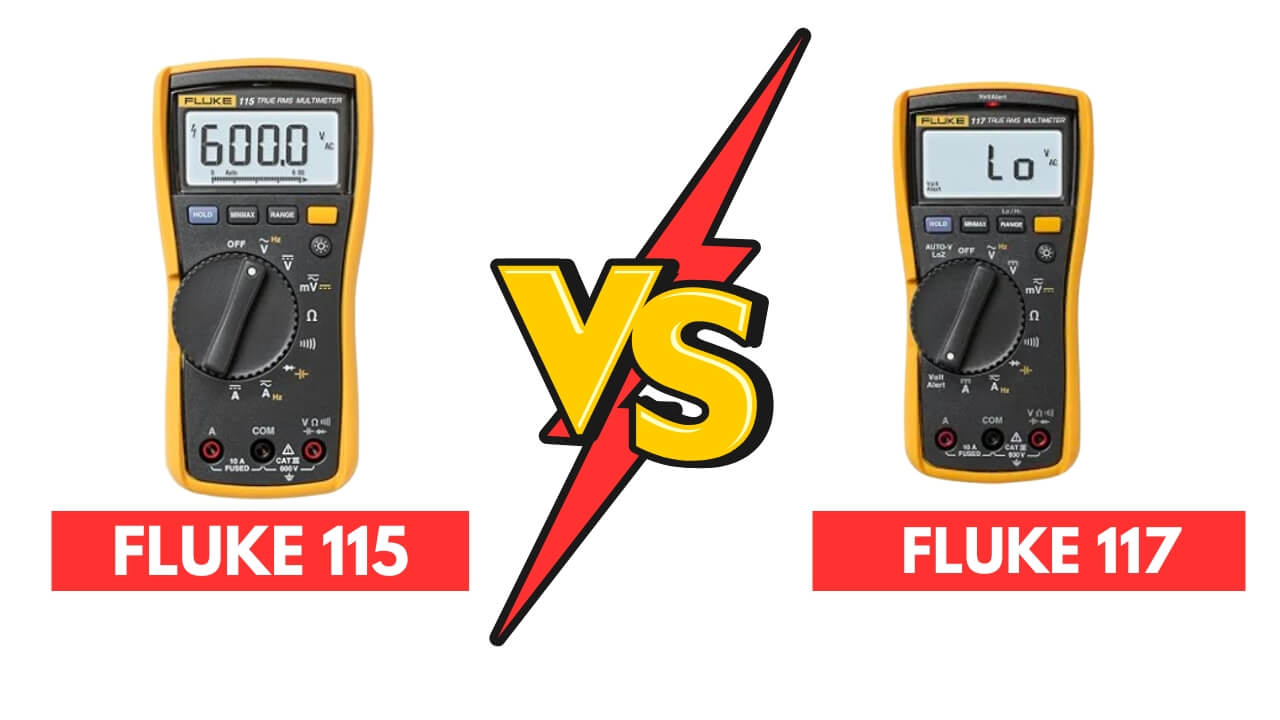
The Fluke 115 Vs 117 choice is tough. You want a tool that works every time. Picture a busy day with wires all around. You need fast reads to stay very safe. Finding the right meter changes your whole day. This guide shows what to expect from both.
Take a look at the first meter now. It brings great things to your tool bag.
Fluke 115 Review
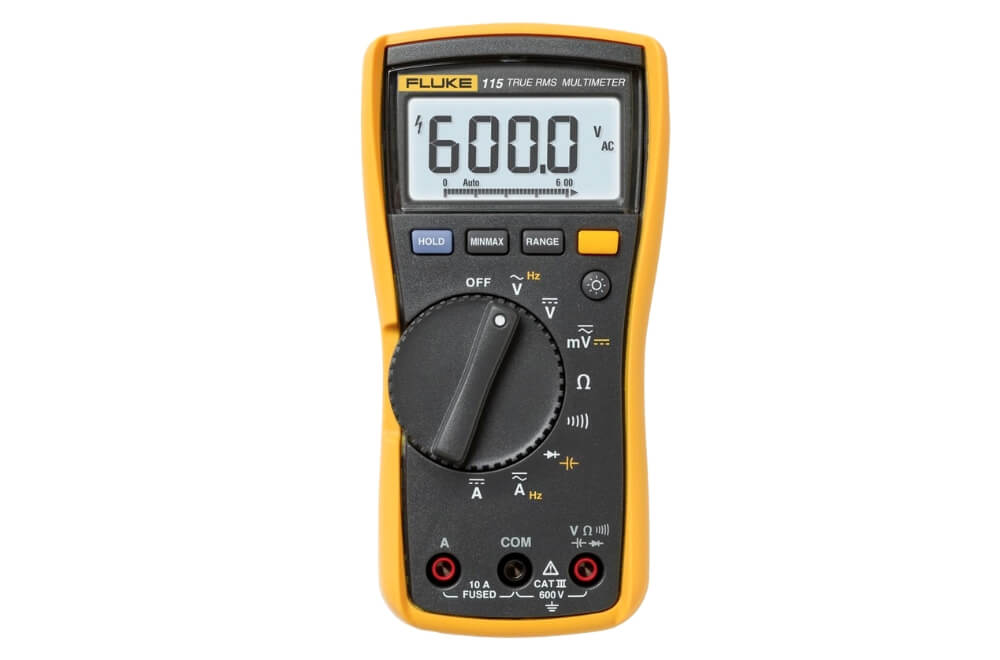
This meter feels very light in the hand. You can drop it in a pouch fast. The screen shines bright in dark spaces. It gives quick numbers without a fuss. You will love how simple it is to use.
Every tool has good and bad sides. Break them down clearly to see the truth.
Pros and Cons
Here is a quick look at the top facts. These details help you see the whole picture.
| Type | Feature | Practical Impact |
| Pro | Light build | It will not weigh your belt down. |
| Pro | Clear screen | You see numbers in dark rooms fast. |
| Con | No volt alert | You must use probes to check power. |
| Con | Basic modes | It lacks high end trade tools. |
Using it daily shows its true colors. Here is how it feels on the job.
Daily Field Work
The dial clicks with a nice loud snap. You know exactly what mode is on. Testing long wires feels fast and very easy. The leads stay snug in the base ports. It rarely slows down during a busy shift.
Sometimes the lack of a low input mode is sad. You might pick up ghost volts on thick lines. But for most standard checks, it runs perfectly. The smooth shape feels great to hold all day.
Here is a look at daily job tasks. It handles normal work with great ease.
| Task | Field Action | Daily Feel |
| Check volts | Push the probes in | Fast and very exact. |
| Read amps | Turn the big dial | Smooth and very crisp. |
| Hold meter | Grip the soft sides | Does not slip at all. |
| Pack up | Slide in a small bag | Fits very tight spaces. |
Some users will love this model. Others might need a bit more power.
Recommendation
Check this simple guide to see if it fits you. It breaks down the best match for your skills.
| User Type | Recommendation | Reason |
| Home fixer | Good Fit | It covers all basic house needs well. |
| New learner | Good Fit | The dial has no hard tricks to learn. |
| Trade pro | Not Ideal | You might miss the non touch tests. |
| Tight budget | Good Fit | It saves money for other good tools. |
Now it is time to check the next choice. This one packs a few extra tricks inside.
Fluke 117 Review
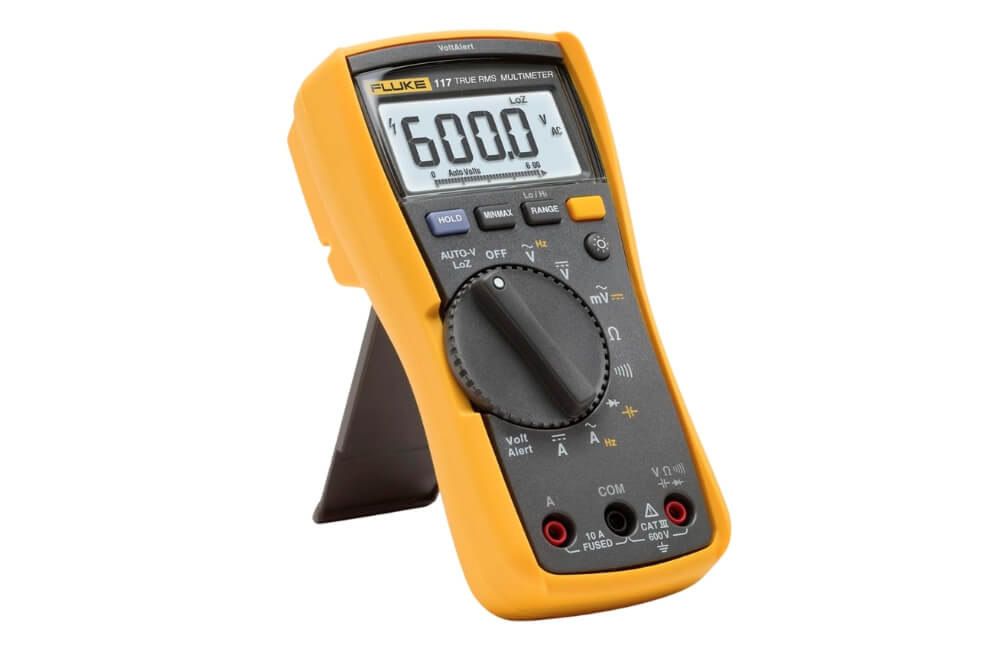
This device brings heavy power to your work. The grip feels firm and very safe. You can check hot wires without touching them. The display stays sharp from any view. It saves time when the pressure is high.
Break down the strong and weak spots now. This helps you see the real daily value.
Pros and Cons
Take a quick look at the best and worst traits. This honest list cuts right to the chase.
| Type | Feature | Practical Impact |
| Pro | Volt alert | You find hot wires without touching. |
| Pro | Ghost block | Fake readings do not fool you now. |
| Con | Cost bump | You pay more cash at the start. |
| Con | Screen glare | Sun can wash out the glass face. |
Taking this tool on big jobs tells a clear story. Here is the day to day feel.
Heavy Duty Tasks
The no touch test saves a lot of time. You just wave it close to a wall. The buzzer sounds off loud and clear. It stops fake readings on long cable runs. You trust the numbers without a doubt. Learning basic wire safety makes this even better.
The screen can look washed out in bright sun. You might need to shade it with a hand. Still, the extra modes keep you moving fast. It is a true work horse for tough spots.
Here is how it acts on tough heavy jobs. It tackles big tasks without a hitch.
| Task | Field Action | Daily Feel |
| Find power | Point the top tip | Saves tons of time safely. |
| Check lines | Use the low mode | Kills all fake readings. |
| Grip tool | Hold in one hand | Feels very solid and tough. |
| Work out | Read in the bright sun | Needs a bit of hand shade. |
Who should buy this exact model? Here is a simple guide to help you decide.
Recommendation
See if your daily needs match this tool below. It helps point you in the right path fast.
| User Type | Recommendation | Reason |
| Trade worker | Good Fit | The extra tests save lots of time. |
| Daily pro | Good Fit | It handles heavy use like a champ. |
| Home user | Not Ideal | You pay for modes you never use. |
| Fast worker | Good Fit | The volt alert speeds up big jobs. |
Putting them side by side clears up the fog. See how they fight it out below.
Detailed Comparison for Fluke 115 Vs 117
The Fluke 115 vs Fluke 117 debate is common. They look alike at first glance. Yet, deep down, they serve different needs. This guide looks at five key points to spot the winner.
How fast do they work on a job? Check out the real speed and exact output.
Performance: Fluke 115 Vs 117
Both meters read true numbers for exact facts. The 115 handles all standard tests with ease. You get clear volts and amps right away. It is very fast on simple quick fixes. You will not wait for the screen to catch up. Reading true RMS details helps explain this.
The 117 steps up with a low ohm mode. This stops fake ghost voltage dead in its tracks. It also checks for live power from far away. This keeps you safe in dark tight spaces. Both shine, but one gives a bit more safety.
Here is a quick look at how they run. See the clear output facts below.
| Feature | Product 1 | Product 2 |
| Volt check | Fast and true | Fast and true |
| No touch | Lacks this mode | Has a loud clear beep |
| Ghost block | Lacks this mode | Stops all fake numbers |
| Core speed | Very quick reads | Very quick reads |
Fluke 115: 8/10
Fluke 117: 9/10
Fluke 117: 9/10
A good tool should never confuse you. Check the daily feel for both choices.
Ease of Use: Fluke 115 Vs 117
The 115 keeps the front dial neat and plain. You learn to use it in five minutes. The buttons have a nice soft push. It fits great in one small bare hand. You can read the numbers very clearly.
The 117 adds a few more stops on the dial. The volt alert sits right at the top. You just point the tip and look for the light. It takes one extra step to master. Once you know it, work flies by fast.
Check how easy each tool is to grab and use. The facts sit right below for you.
| Feature | Product 1 | Product 2 |
| Main dial | Very neat and clean | Has a few extra stops |
| Grip size | Fits one hand well | Fits one hand well |
| Button feel | Soft and simple | Soft and simple |
| Learning | Five quick minutes | Takes a bit more time |
Fluke 115: 9/10
Fluke 117: 8/10
Fluke 117: 8/10
Tools fall and take a beating all day. Which one takes a heavy hit better?
Build Quality: Fluke 115 Vs 117
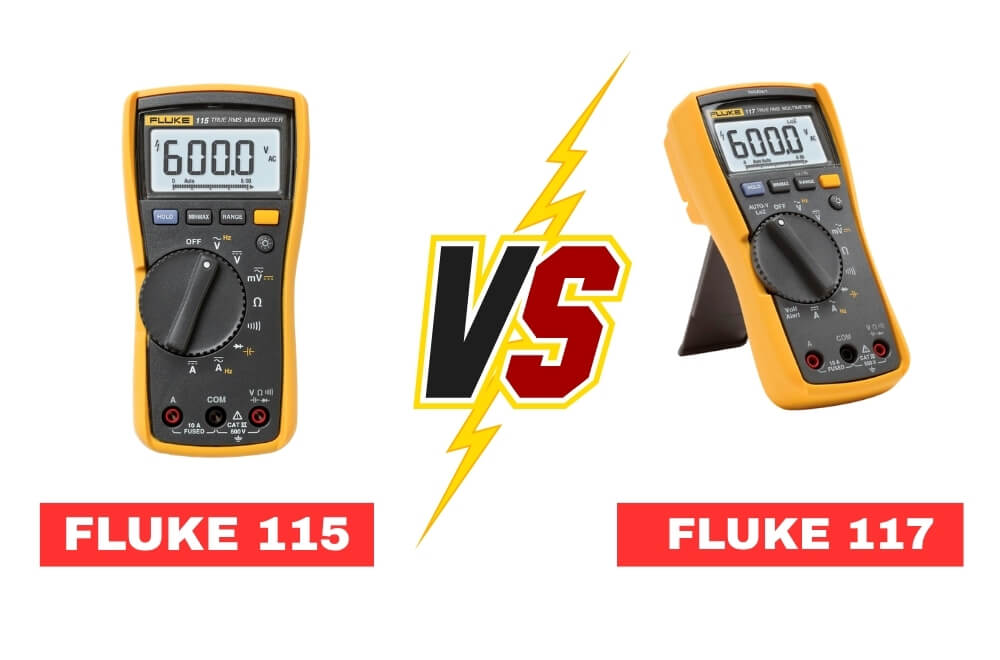
The 115 has a tough hard plastic shell. A rubber boot hugs the outer edges tight. You can drop it on hard wood floors softly. The screen cover takes light scratches well. The stand pops out with a nice loud click.
The 117 feels exactly the same in the palm. Both use the exact same outer tough mold. The parts inside handle heavy dust very well. You can toss it in a truck box daily. Neither will break down on a rough long shift.
Here is how well they handle rough daily drops. They share a very tough outer skin.
| Feature | Product 1 | Product 2 |
| Outer case | Hard thick plastic | Hard thick plastic |
| Edge boot | Thick soft rubber | Thick soft rubber |
| Kick stand | Clicks out strong | Clicks out strong |
| Drop risk | Takes hits very well | Takes hits very well |
Fluke 115: 9/10
Fluke 117: 9/10
Fluke 117: 9/10
Keeping tools clean saves a lot of money. Check the basic upkeep steps for both.
Maintenance: Fluke 115 Vs 117
The 115 needs very little care to stay nice. You wipe the screen with a dry clean cloth. Changing the fuse takes a basic small tool. The back door slides open fast. A single nine volt cell lasts for many months.
The 117 shares the exact same easy upkeep plan. You swap batteries in under a minute flat. The probes wipe clean with damp soft rags. Dust blows right out of the small test ports. You will not spend hours fixing either tool. Learning basic port care keeps both tools fresh.
See how simple it is to keep them clean. Fast upkeep keeps your tools ready to go.
| Feature | Product 1 | Product 2 |
| Wipe down | Fast dry cloth rub | Fast dry cloth rub |
| Cell swap | Opens with a screw | Opens with a screw |
| Probe care | Wipe with damp rag | Wipe with damp rag |
| Port clear | Blow the dust out | Blow the dust out |
Fluke 115: 9/10
Fluke 117: 9/10
Everyone wants to stretch their hard earned cash. Think about the price tags now.
Value for Money: Fluke 115 Vs 117
The 115 costs much less right out of the gate. You pay for just the core needs. It gives massive value for home fix jobs. You do not buy things you never touch. It keeps your budget very happy. Checking ohms law facts costs nothing with this tool.
The 117 costs a little more at the shop. You pay extra for the cool volt alert tech. The ghost volt block also bumps the price. For a daily pro, the extra cash pays off fast. Both give amazing bang for the buck.
Check how far your cash goes with each model. The price tag matches the power inside.
| Feature | Product 1 | Product 2 |
| Buy price | Keeps your wallet fat | Costs a bit more cash |
| Pro value | Good for simple days | Great for tough shifts |
| Home value | Best choice by far | Too much money spent |
| Tool life | Lasts for many years | Lasts for many years |
Fluke 115: 8/10
Fluke 117: 9/10
You made it to the final big step. Wrap up the main facts now.
Conclusion
Picking between the fluke 117 vs 115 is simple. The 115 wins for home jobs and simple quick fixes. The 117 shines for daily heavy trade work. Think about your daily tasks and pick what fits. Both tools will serve you well for a long time.
You might still have a few small questions. Here are some simple facts to help you out.
FAQs
What is the main difference in the Fluke 115 Vs 117?
The main split is the no touch power check mode. The 117 has it, while the 115 lacks it entirely.
Can both tools check for true exact facts?
Yes, both tools read true numbers for exact and very safe daily work.
Which tool saves more cash for home use?
The 115 costs less right now and handles home jobs perfectly well.
Does the choice matter much for trade pros?
Yes, pros save time and stay safe with the extra modes on the 117.
Are the tool batteries hard to change out?
No, both use a simple back door that opens fast with one small turn.
2 thoughts on “Fluke 115 Vs 117: 5 Key Differences You Need to Know”