
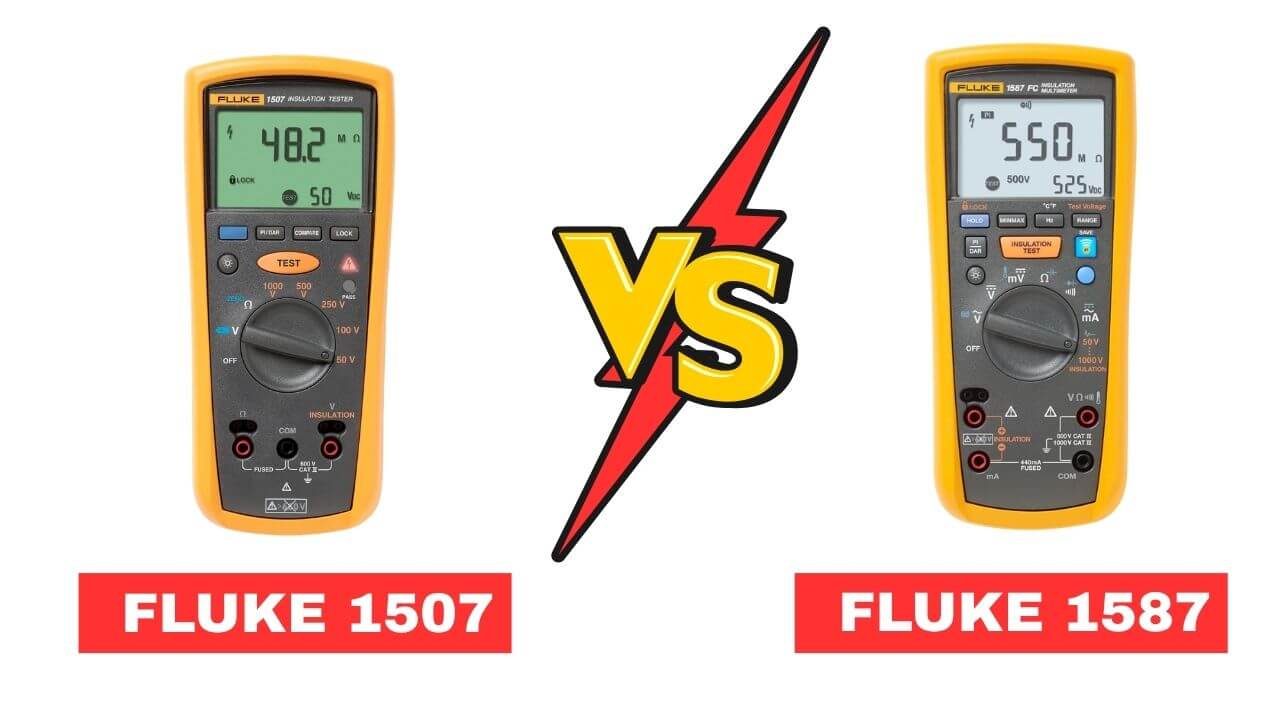
A long insulation test can get tiring fast. The wrong meter can also add extra steps. The Fluke 1507 Vs 1587 comes down to a simple choice. One tool focuses on insulation work. The other adds full meter functions. This guide shows the key gaps, so you can pick with less guesswork.
Fluke 1507 Review
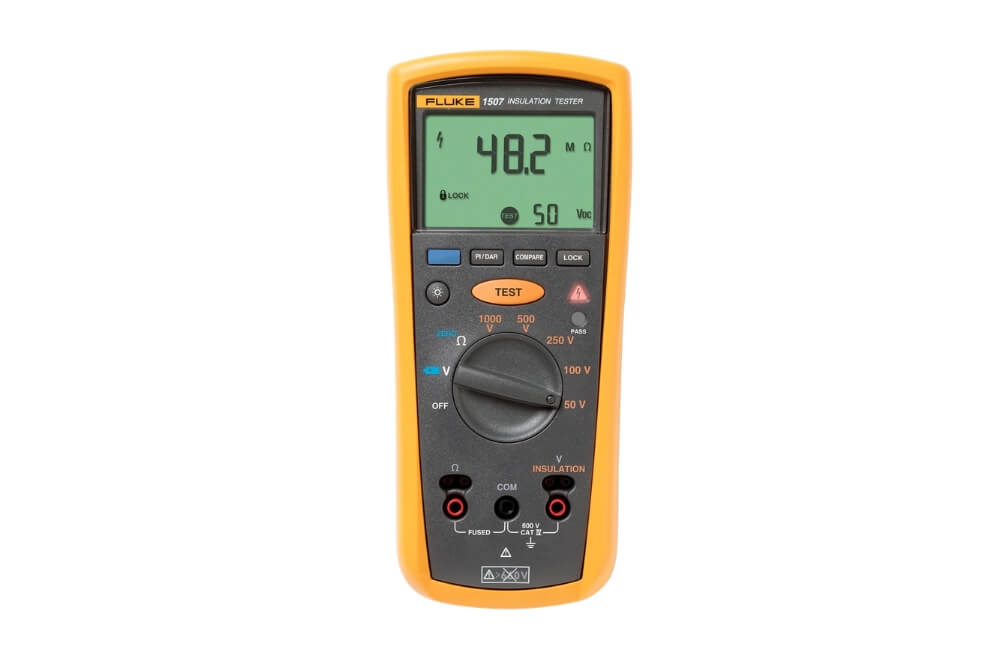
The 1507 is built for insulation checks. It gives you five test voltages from 50 V to 1000 V. It also measures insulation from 0.01 MΩ to 10 GΩ. A large backlit screen helps in dim work areas.
Pros and Cons
The main draw is its focused design. There are also a few limits to note.
| Type | Feature | Practical Impact |
| Pro | Five test voltages | Fits many insulation jobs. |
| Pro | 10 GΩ insulation range | Handles high resistance tests. |
| Pro | Remote probe | Makes repeat tests easier. |
| Pro | 200 mA earth-bond test | Helps with low-ohm checks. |
| Con | No full DMM feature set | Less useful for broad fault work. |
| Con | 600 V meter input | Less range than the 1587. |
Daily Insulation Work
The 1507 feels most useful when insulation testing is the main task. The five voltage steps give you more choice for different checks. A remote probe can save a hand when space is tight. The backlight also helps when the panel area is dark. For repeat work, the Compare function can help sort pass and fail results. The unit also has live-circuit detection and auto discharge. That can make a test feel less stressful when work moves fast.
Recommendation
The best fit depends on how often other meter tasks come up.
| User Type | Recommendation | Reason |
| Insulation testers | Good Fit | Strong focus on insulation work. |
| Electricians | Good Fit | Covers many common test needs. |
| Maintenance teams | Good Fit | Useful for repeat checks. |
| DMM-heavy users | Not Ideal | Fewer meter functions. |
| Motor drive techs | Not Ideal | Lacks the 1587 filter tools. |
Fluke 1587 Review
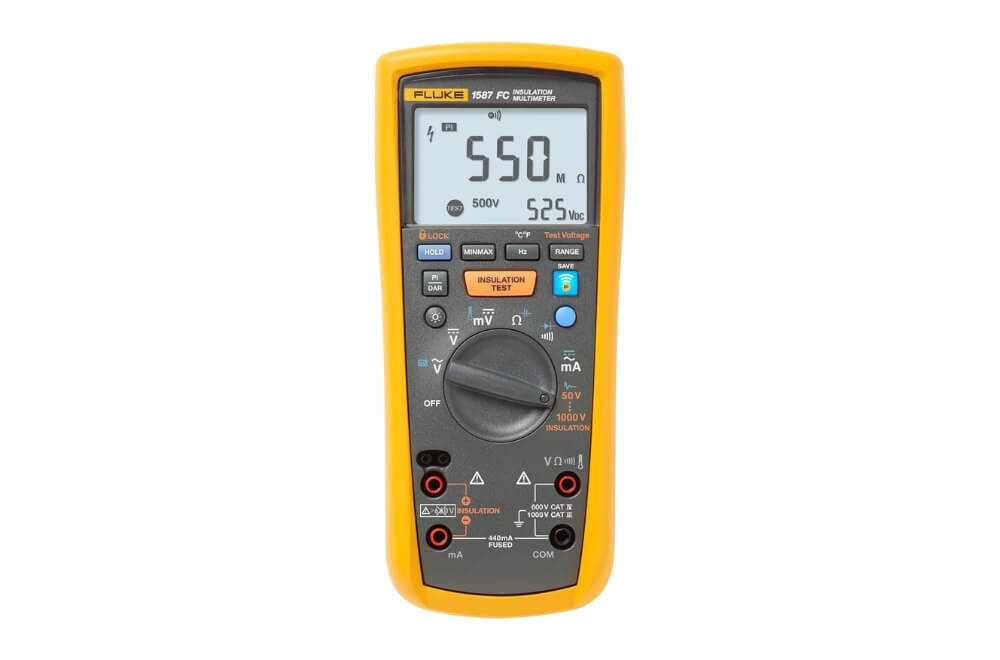
The 1587 combines an insulation tester with a true-RMS digital multimeter. It supports 50 V, 100 V, 250 V, 500 V, and 1000 V insulation tests. Its insulation range reaches 2 GΩ. It also adds voltage, current, resistance, capacitance, frequency, temperature, and diode tests.
Pros and Cons
The extra meter tools make the 1587 much more flexible. That extra range can also mean more controls to learn.
| Type | Feature | Practical Impact |
| Pro | True-RMS DMM | Handles more daily checks. |
| Pro | 2 GΩ insulation range | Covers most high-resistance tests. |
| Pro | VFD low-pass filter | Helps with motor drive work. |
| Pro | Temperature test | Adds a useful heat check. |
| Pro | 1000 V CAT III rating | Adds a higher input rating. |
| Con | More functions | Takes more time to learn. |
A Few Months of Use
Over a few months of regular work, the extra meter modes can save tool changes. A voltage check, resistance check, and insulation test can stay in one unit. That is handy when a fault moves from one test to another. The backlit display also helps during quick checks. The low-pass filter is useful around variable-speed drives. The meter also adds capacitance, frequency, and temperature functions. That makes it a stronger all-round tool, but not every job needs all of them.
Recommendation
The wider feature set helps some users more than others.
| User Type | Recommendation | Reason |
| Motor techs | Good Fit | Adds drive-related test help. |
| Maintenance teams | Good Fit | Covers many test types. |
| Fault finders | Good Fit | Works as a full DMM too. |
| Basic insulation users | Not Ideal | Extra tools may go unused. |
| Simple test jobs | Not Ideal | A focused tester may be enough. |
Detailed Comparison for Fluke 1507 Vs 1587
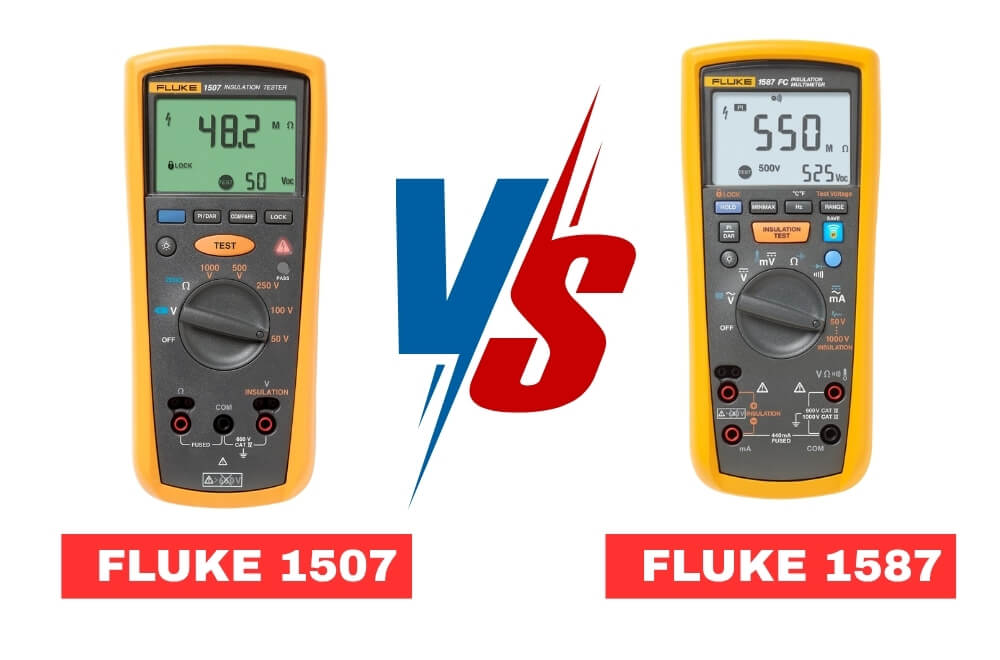
Both tools can test insulation at the same five voltage levels. The big split comes from the meter functions and the way each tool is used.
Performance: Fluke 1507 Vs 1587
The 1507 reaches 10 GΩ for insulation tests. The 1587 reaches 2 GΩ. So the 1507 has the higher top range for insulation resistance. The 1587 still does more outside the insulation test. It adds true-RMS voltage and current work. It also adds frequency, capacitance, and temperature checks.
| Feature | Fluke 1507 | Fluke 1587 |
| Insulation range | 0.01 MΩ–10 GΩ | 0.01 MΩ–2 GΩ |
| Test voltages | 50–1000 V | 50–1000 V |
| True-RMS DMM | No | Yes |
| Temperature | No | Yes |
-
Fluke 1507 Rating: 9/10
-
Fluke 1587 Rating: 9.5/10
Ease of Use: Fluke 1507 Vs 1587
The 1507 has a clear job. That can make it easier to pick up and use. The remote probe is also useful for repeat tests. The 1587 has more modes. That gives you more options, but the dial needs more attention. For users who switch between test types, the added range can still save time.
| Feature | Fluke 1507 | Fluke 1587 |
| Main focus | Insulation tests | Insulation plus DMM |
| Remote probe | Yes | Yes |
| Backlit display | Yes | Yes |
| Learning curve | Lower | Higher |
-
Fluke 1507 Rating: 9.5/10
-
Fluke 1587 Rating: 9/10
Build Quality: Fluke 1507 Vs 1587
Both tools use a compact handheld form. Both weigh about 550 g. Both use a rugged design for field work. The key difference is not size. The bigger gap is the job each tool is made to handle. The 1587 packs more functions into a similar handheld format.
| Feature | Fluke 1507 | Fluke 1587 |
| Weight | 550 g | 550 g |
| Size | 5.0 × 10.0 × 20.3 cm | 5.0 × 10.0 × 20.3 cm |
| Backlight | Yes | Yes |
| Field use | Strong | Strong |
-
Fluke 1507 Rating: 9/10
-
Fluke 1587 Rating: 9/10
Maintenance: Fluke 1507 Vs 1587
The 1507 uses four AA batteries. It can perform at least 1000 insulation tests with fresh alkaline cells under the stated test cycle. The 1587 also uses a compact handheld design. Its extra meter modes can reduce the need to carry another meter. That can make a tool bag simpler on mixed service jobs.
| Feature | Fluke 1507 | Fluke 1587 |
| Auto power off | Yes | Yes |
| Remote probe | Yes | Yes |
| Battery type | 4 AA | 4 AA |
| Main upkeep need | Leads and batteries | Leads and batteries |
-
Fluke 1507 Rating: 9/10
-
Fluke 1587 Rating: 9/10
Value for Money: Fluke 1507 Vs 1587
Value depends on the work, not just the price. A focused insulation tester can be a smart choice for repeat insulation jobs. The 1507 also offers a higher insulation range. The 1587 costs more to justify when its extra functions are useful. For mixed electrical work, those tools can reduce the need for a second meter. For insulation-only work, many of those modes may sit unused.
| Feature | Fluke 1507 | Fluke 1587 |
| Best value for | Insulation work | Mixed electrical work |
| Insulation range | Higher | Lower |
| DMM functions | Limited | Full-featured |
| Extra test tools | Few | Many |
-
Fluke 1507 Rating: 9.5/10
-
Fluke 1587 Rating: 9/10
Conclusion
The 1507 makes more sense when insulation testing is the main job. The 1587 makes more sense when one tool must cover insulation and wider meter work. The better pick depends on which tests fill most of your workday.
FAQs
1. Is the Fluke 1507 better than the 1587 for insulation testing?
The 1507 has the higher insulation resistance range at 10 GΩ. Both offer the same five test voltages from 50 V to 1000 V.
2. Does the Fluke 1587 work as a normal multimeter?
Yes. It combines insulation testing with true-RMS digital multimeter functions. It measures voltage, current, resistance, capacitance, frequency, and temperature.
3. Which tool is better for motor drive work?
The 1587 is the better fit. It includes a low-pass filter for motor drive measurements.
4. Does the Fluke 1507 measure voltage?
Yes. It measures AC and DC voltage up to 600 V. It also includes low-ohm earth-bond testing.
5. Which one should most users choose?
Choose the 1507 for focused insulation work. Choose the 1587 when insulation tests and wider electrical checks are both part of the job.