
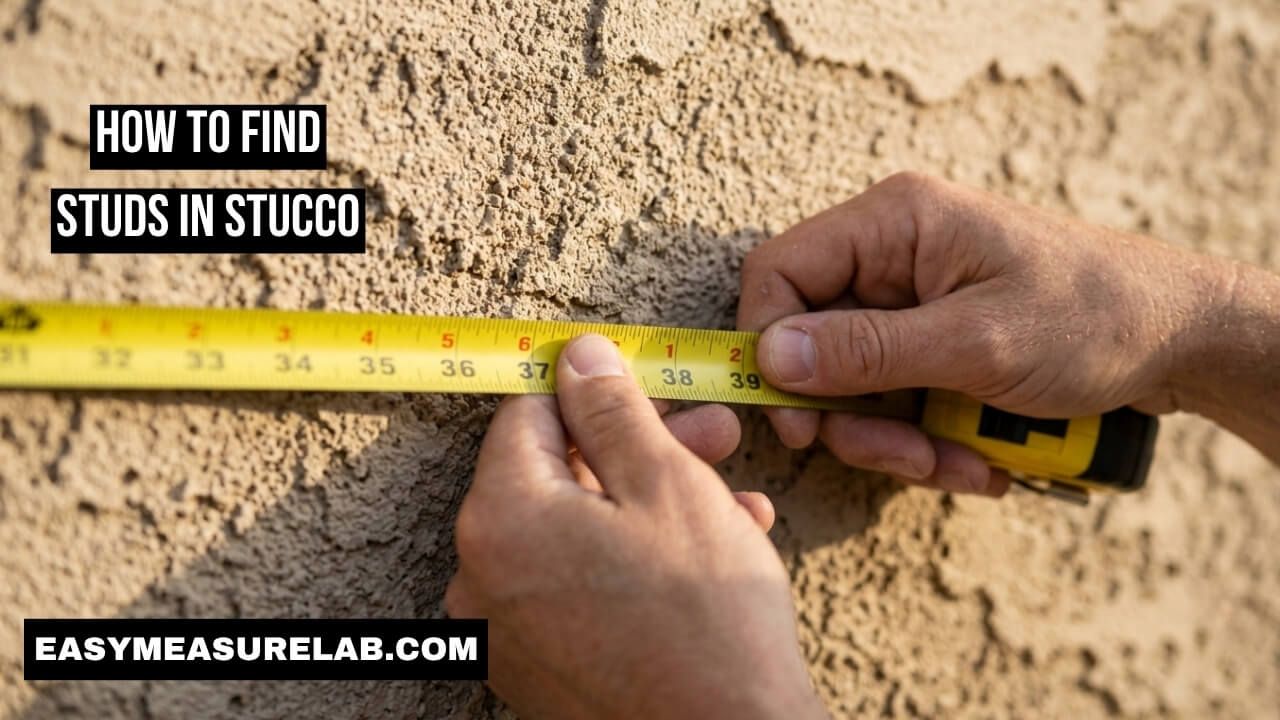
Have you ever tried to hang a heavy TV on a patio wall? I have. I thought it would be a fast job. I grabbed my basic wall scanner. I walked outside. I turned it on. It beeped at every single spot. The whole wall felt like one solid piece of wood. I was so confused.
I soon learned the hard truth. Figuring out how to find studs in stucco is a massive pain. The wall is very thick. It is basically hard rock. Worse, it has a metal wire net hidden inside. This metal net tricks normal tools. I drilled four bad holes before I found wood. I was so mad. I want to save you from that huge mess. Here is exactly what I learned about finding those hidden boards.
Why Learning How to Find Studs in Stucco is So Hard
Standard walls are easy. Drywall is thin. You run a scanner over it, and it finds the wood. Stucco is a totally different beast. It is built to stand up to wild weather.
To make it strong, builders use layers. They attach a thick metal wire net to the wood frame. This net is called lath. Then, they smear wet cement over that metal net. The metal holds the heavy cement in place. When a standard electronic scanner looks into the wall, it sees this huge metal net. It thinks the whole wall is a stud.
The Metal Wire Problem
That metal lath ruins everything. Magnetic tools grab onto the wire net. Radar tools get confused by the dense rock. You cannot just guess. If you guess, you hit empty space. Hanging heavy items on just the cement crust is a bad idea. The crust will break. Your heavy item will fall.
| Wall Type | Hidden Material | Why It Blocks Scanners |
| Inside Drywall | Paper and soft chalk | Very thin, easy to scan through. |
| Outside Stucco | Thick cement and sand | Very dense, blocks basic radar. |
| Stucco Core | Metal wire net (Lath) | Fools magnets and electric sensors. |
How to Find Studs Through Stucco: The Best Tools
You cannot use a cheap five-dollar tool here. I tried that. It failed. If you want to know how to find studs through stucco, you need the right gear.
Some new tools use deep radar. They look past the metal wire. They look deep into the wall. These tools cost more. But they save you from patching ugly holes.
Deep Scan Stud Finders
A deep-scanning tool is your best friend. Look for tools that say “deep scan” or “radar.” They shoot a strong signal. The signal goes past the thick rock. It goes past the wire net. It finds the solid wood behind it all. I bought one of these after my first big fail. It changed everything.
Rare Earth Magnets
You can also use a very strong magnet. I like neodymium magnets. Do not run it everywhere. The wire net will catch it. Instead, you want to find the strong nails. Builders use big nails to hold the metal net to the wood. Move the magnet very slowly up and down. When it sticks hard in a straight line, you found the nails. The wood is right behind those nails.
| Tool Type | Cost Range | Does It Actually Work? |
| Basic Scanner | Low | No. It beeps at the metal net. |
| Deep Radar | High | Yes. It sees past the thick rock. |
| Strong Magnet | Low | Yes, if you find the deep nails. |
Smart Tricks: How to Find a Stud Through Stucco
Maybe you do not want to buy a costly tool. I get that. You can use your eyes and a tape measure. Houses follow strict rules. Builders do not just put wood wherever they want. They follow a plan.
You can use the clues left behind. If you learn these clues, you learn how to find a stud through stucco for free.
The Wall Outlet Trick
Look at your wall. Do you see an electric outlet? Do you see a light switch? This is a huge clue. Builders almost always nail electric boxes directly to a wood stud.
Take off the plastic cover plate. Look inside the box with a flashlight. You will usually see which side is nailed to the wood. Now you know exactly where one solid piece of wood is. Draw a small mark above the box.
The 16-Inch Math Rule
Once you find one piece of wood, the rest is easy math. In most homes, builders place wood studs exactly 16 inches apart. Some use 24 inches, but 16 is normal.
Take your tape measure. Start at the outlet. Measure out exactly 16 inches to the left or right. Mark that spot. Measure another 16 inches. Mark it again. You just mapped your wall. Always check with a small drill bit first, but this math trick is very reliable.
| Starting Point | Action to Take | Expected Result |
| Wall Outlet | Look inside the box sides. | You find the first wood stud. |
| First Stud | Measure exactly 16 inches. | You find the second wood stud. |
| Window Edge | Measure 16 inches away. | You find the next wall stud. |
My Favorite Trick: How to Find Stud Behind Stucco
Sometimes the math trick fails. Maybe a window throws the spacing off. When I really need to know how to find stud behind stucco, I use the wire probe method. This is my secret weapon.
It sounds a little scary, but it works perfectly. You make one tiny hole. You use that hole to look around inside the wall.
The Tiny Wire Probe Method
Here is what I do. I drill a very small hole through the rock crust. I use a cheap masonry bit. Once I break through, I stop. I take a stiff wire coat hanger. I cut a piece of the wire. I bend it into an “L” shape.
I push the short end of the wire into the hole. I spin the wire in a circle. If the wire hits wood right away, I found the stud! If it spins freely, I measure how far the wire reaches before it hits wood. This tells me exactly where to drill my real hole.
| Bad Mistake | A Much Better Approach |
| Guessing and drilling big holes. | Drill one tiny hole and use a bent wire. |
| Trusting a cheap sensor tool. | Start at an outlet and measure 16 inches. |
| Giving up and using weak glue. | Take your time and find the solid wood. |
What Fails When Finding Studs Behind Stucco
People share a lot of bad advice online. I tried some of these bad tips. They just wasted my time. I want to warn you about them. Knowing what fails is just as vital as knowing how to find studs behind stucco.
Do not trust every trick you read. Stucco does not act like inside walls.
The Knock Test
Inside your house, you can tap on the drywall. It sounds hollow. When you tap over wood, it sounds solid. This is the knock test.
Do not try the knock test outside. Stucco is basically a sheet of rock. If you knock on it, it all sounds the same. You will just hurt your knuckles. It sounds solid everywhere. It will not help you find anything.
Fixing Your Mistakes
Even with great tips, you might miss once. I still miss sometimes. It happens. Do not panic. You just need to fix the small hole.
Keep some exterior caulk or stucco patch ready. If you drill a hole and hit empty air, fill the hole right away. Use a waterproof patch. Water is the enemy of your house. If water gets in that small hole, it rots the wood frame. Experts at Family Handyman always say to seal outside holes on the very same day.
| The Problem | The Quick Fix |
| Drilled and hit empty air. | Fill the hole with waterproof caulk fast. |
| Wood stud is too far away. | Use heavy toggle bolts as a backup plan. |
| Scanner beeps everywhere. | Turn it off. Switch to a strong magnet. |
Important Advice for Heavy Items
When you finally find the wood, use the right screws. Standard screws will rust outside. The rust will bleed down your wall. It looks awful.
Buy exterior-grade lag screws. They cost a bit more, but they never rust. Also, experts at Bob Vila remind us to squirt a little silicone caulk into the hole before putting the screw in. This seals the hole perfectly. It stops rain from getting inside the wall.
Final Thoughts
Figuring out how to find studs in stucco takes patience. It frustrated me a lot at first. The thick cement and metal wire make it a tough job. But once you know the tricks, it is not scary.
Skip the cheap scanners. Use your wall outlets to find the first piece of wood. Trust the 16-inch math rule. If all else fails, use the bent wire trick. Take your time, measure twice, and you will mount your TV or hose reel safely on the first try.
FAQs
Can I use a regular stud finder on stucco?
No. Regular finders get tricked by the metal wire net inside the wall. They will beep everywhere and give you false spots.
How far apart are studs behind exterior walls?
Most homes place them exactly 16 inches apart from the center of one to the center of the next. Some older homes use 24 inches.
What is the best way to find a stud without a tool?
Look for an electrical outlet. The plastic box is almost always nailed directly to the side of a solid wood stud.
Will a magnet find studs in a stucco wall?
Yes, but you need a very strong rare earth magnet. Move it slowly to find the deep nails holding the metal lath to the wood.
What should I do if I drill and miss the stud?
Stop immediately. Fill the hole with waterproof exterior caulk or stucco patch. This stops rain from getting in and rotting the house.