
I still remember the first time I tried to hang a heavy shelf in my living room. I drove a long screw right into the drywall. The shelf fell immediately. It left a huge hole in my wall. That day, I desperately typed, “how do i find a stud in the wall” into my phone. I had absolutely no idea what I was doing.
Now, years later, I know much better. Finding a stud does not have to be hard or scary. You do not always need a fancy or expensive tool. In this guide, I will share the exact steps I use every single time. You will learn how to find the solid wood behind your drywall quickly and safely.
Why Asking “How Do I Find a Stud in the Wall?” Matters
You might wonder if you really need to find a stud at all. Yes, you absolutely do. Drywall is mostly just chalky dust pressed between thin paper. It breaks very easily under pressure.
Heavy things will rip right out of empty drywall. Big televisions, heavy mirrors, and loaded book shelves need strong support. A wall stud is a thick, solid piece of wood. It forms the actual frame of your house. When you anchor a screw deeply into this wood, it stays put forever. Your heavy items stay safely on the wall.
The Biggest Mistakes I Made Early On
I made a lot of silly errors at first. I trusted my eyes way too much. I simply assumed studs were exactly where I wanted them to be. I was very wrong.
I also bought a cheap plastic tool that just beeped at everything. It drove me crazy. I drilled five holes in a row. I found zero wood. I quickly learned that you need the right method for your specific wall type.
| Mistake | Better Approach |
| Guessing based on wall center | Measuring from a known corner |
| Trusting a very cheap tool | Using a strong rare-earth magnet |
| Drilling a huge test hole | Poking a tiny hole with a sewing pin |
Method 1: Use an Electronic Stud Finder
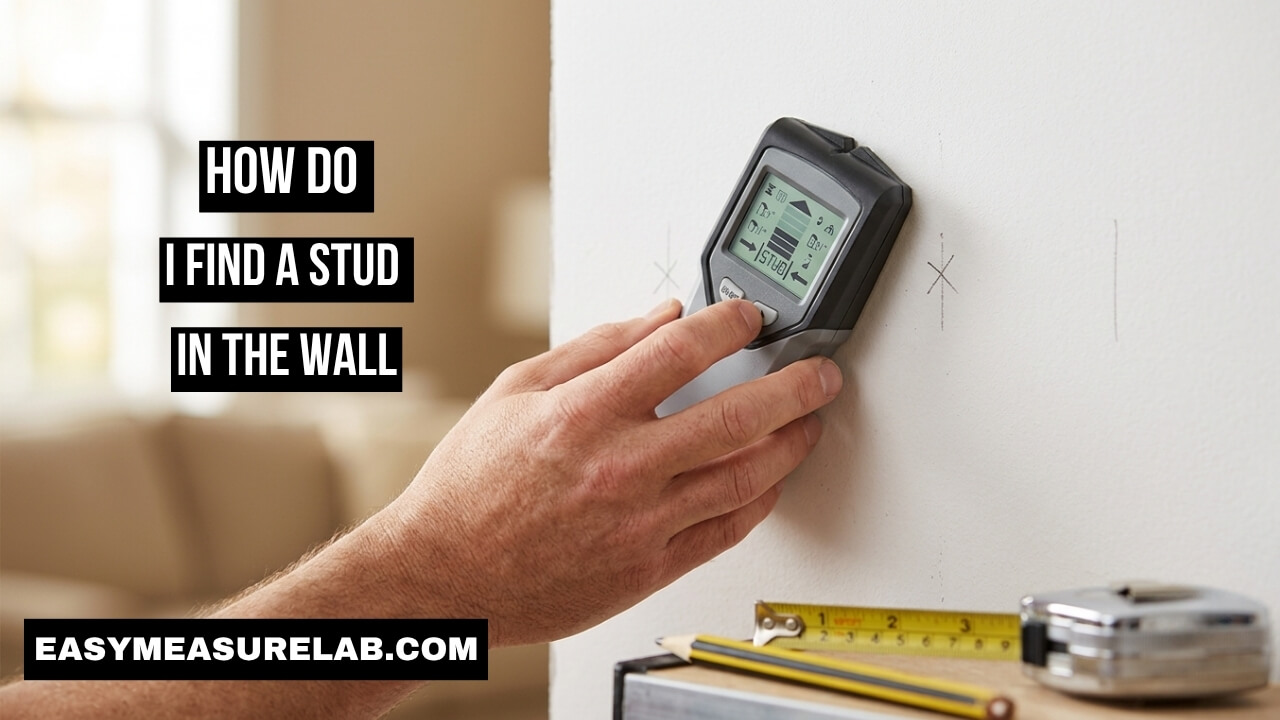
This is the most common way people search for wood. An electronic tool senses changes in the wall density. When it slides over solid wood, it lights up and beeps.
I like this method for fast, simple jobs. But you have to use it right. If you move it too fast, it gets confused. The sensors need time to read the wall density. According to Family Handyman, a slow, steady sweep is the best technique.
How to Use the Tool Right
Place the tool completely flat against the wall. Press the side button. Wait a full second. Then slide it very slowly to the left.
When it beeps, mark that exact spot with a pencil. Now, go past it. Come back from the right side. Mark the new edge. The true center is exactly between your two marks. This trick helps you hit the middle of the wood every time.
Method 2: The Strong Magnet Trick
I love this simple trick. It is my favorite backup plan. You do not actually look for wood. Instead, you look for hidden metal.
Builders use metal screws to hold the drywall tight to the wood frame. If you find a screw, you found the wood. It is basic logic.
Why Magnets Work So Well
A strong magnet sticks right to the wall when it hits a hidden metal screw. You can buy these rare-earth magnets at any local hardware store.
Tie a string to the magnet. Dangle it closely near the wall. Slowly sweep it around in circles. When the magnet violently grabs the wall, mark it. Now you know where the vertical wood beam is hiding.
| Feature | Benefit |
| Cost | Very cheap, usually under five dollars |
| Accuracy | Extremely high |
| Battery Life | Never dies or needs charging |
Method 3: The Classic Knock Test
My grandpa taught me this old method. It takes a little practice to get right. You just use your bare knuckles.
Tap on the wall gently. Listen closely to the sound it makes. The wall speaks to you if you listen.
Listening for the Dull Thud
Empty drywall sounds very hollow. It booms a tiny bit. It echoes inside the room.
When you tap directly over solid wood, the sound changes fast. It becomes a sharp, dull thud. It sounds firm and tight. Move your hand left and right. Tap until the hollow sound turns flat.
| Sound | What It Means |
| Hollow and loud | Empty space (just drywall) |
| Flat and dull | Solid wood frame |
| Rattling noise | Loose pipe or wire inside |
Method 4: Looking for Visual Clues
Sometimes the wall tells you its secrets. You just need to look very closely. Home builders leave visual clues behind.
You can easily spot these clues if you know what to seek. You do not need tools for this.
Baseboards, Outlets, and Dimples
Look down at your floor baseboards. You might see tiny filled holes. Those are finish nails. Nails must go into solid studs.
Also, look at your electrical outlets. Electricians nail plastic outlet boxes directly to the side of a stud. If you find an outlet, there is wood on the left or right side of it. Look at the wall in bright light. You might see tiny bumps or dimples. These are hidden drywall screws.
| Visual Clue | What It Means |
| Electrical outlet | Wood is touching the left or right side |
| Baseboard nail | Wood runs straight up from this spot |
| Wall dimple | A hidden screw is holding the drywall |
Method 5: Measuring from the Corner
Houses follow strict building rules. Builders use standard measurements every day. This makes our lives much easier.
Once you find one stud, you can easily find the rest of them. They sit in a pattern. As This Old House notes, residential framing relies on reliable spacing.
The 16-Inch Rule Explained
In most modern homes, studs sit exactly 16 inches apart. Sometimes, in older homes, they are 24 inches apart.
Start at a corner of the room. Measure exactly 16 inches out. You will likely find wood there. Check it with a gentle knock or a strong magnet. Once you confirm it, just measure another 16 inches for the next one. It feels like absolute magic.
What If I Have Plaster and Lath Walls?
Old houses are very tricky. If your house is older than 1950, you might have plaster walls. These walls are hard as a rock.
I lived in a house built in 1920. Standard tools did not work there at all. I was very frustrated. Plaster walls require extra patience. Bob Vila recommends using extreme care when drilling into these historic walls.
The Magnet Fails Here
Plaster walls have a thick layer of hard rock over thin wooden strips. The thin wooden strips are called lath. The lath is nailed to the main studs.
Electronic sensors get confused by the lath. Magnets stick to the thousands of tiny lath nails. It is a huge mess. For old plaster, you must use a heavy-duty deep-scan tool. Or, use the magnet to find exact vertical rows of nails, not horizontal ones.
| Wall Type | Best Method |
| Standard Drywall | Electronic tool or strong magnet |
| Old Plaster | Deep-scan tool or outlet trick |
| Tiled Wall | Measure 16 inches from corner |
How Do I Find a Stud in the Wall Without Tools?
People ask me this question a lot. Sometimes you just have a hammer and a nail. You have no fancy gear at all.
You can still succeed. You just have to be smart about it.
The Coat Hanger Trick
This is a great secret. Take an old wire coat hanger. Cut a piece about six inches long. Bend it into an L shape.
Poke a tiny hole in the drywall. Spin the wire inside the hole. The wire will spin freely until it hits solid wood. Pull it out. Note the exact direction. Now you know exactly where the edge of the wood sits. You can easily patch the tiny hole with a dab of pink spackle.
Common Problems and Quick Fixes
Things do not always go perfectly. You will hit snags along the way. That is totally normal for home projects.
Here are some issues I run into often. I will show you how to fix them easily.
| Problem | Solution |
| Tool beeps everywhere | Wall is too thick. Use a strong magnet instead. |
| Screw hits metal, not wood | Stop drilling immediately. It might be a pipe guard. |
| No studs at 16 inches | Try measuring at 24 inches instead. |
Things to Avoid Hitting Inside Walls
Finding wood is great. Hitting water pipes is terrible. I once drilled right into a drain pipe. It ruined my entire week.
Walls hide wet water lines. Walls hide hot electrical wires. Walls hide dangerous gas lines. You must be careful every time you drill.
Drill Carefully and Slowly
Never push a drill bit deep into a blind wall. Most drywall is exactly half an inch thick. The stud is right behind it.
You only need to drill slightly past the drywall. If you feel sudden hard resistance, stop instantly. Builders use thick metal plates to protect pipes. If you hit a metal plate, move your hole. Do not force the drill.
What If I Miss the Stud Completely?
It happens to everyone. You measure twice. You drill once. You hit nothing but empty air. I still do this sometimes.
Do not panic. You have a few easy options to fix this mistake.
Using Heavy Duty Wall Anchors
If you miss the wood, you can use an anchor. A toggle bolt is very strong. It has metal wings that open up behind the drywall.
Toggle bolts can hold heavy items. They grab the back of the wall tightly. But remember, they are never as strong as real wood. Always try to find the wood first. Use anchors only as a last resort.
Final Thoughts
Learning how to find a stud gave me a lot of pride. I used to fear hanging heavy things in my home. Now, I do it all the time with a big smile.
My biggest lesson is to always verify my work. I never trust just one method anymore. If I use an electronic tool, I verify it with a strong magnet. I tap the wall with my knuckles. I look for an electrical outlet.
Take your time. Do not rush the job. Make small marks with a light pencil. Your walls will stay safe and clean. Your heavy items will stay up high. You will feel like a true pro in your own home.
FAQs
1. How do I find a stud in the wall with a smartphone?
You can download a magnetic sensor app. Most smartphones have a built-in compass. The app uses this compass to find hidden metal drywall screws.
2. Are all wall studs exactly 16 inches apart?
No, not always. Most modern homes use 16-inch spacing. However, some homes use 24-inch spacing. Always measure carefully to be sure.
3. Can I mount a heavy TV without finding a stud?
It is highly risky. You can use strong toggle bolts, but hitting real wood is always the safest choice for heavy televisions.
4. What happens if I miss the stud?
Your drill will spin freely in the empty space. Your screw will not grip anything tight. You must remove it and try a new spot or use a wall anchor.
5. Why does my electronic stud finder give false readings?
If you move the tool too fast, it gets confused. Also, thick paint, textured walls, or hidden pipes can cause a cheap tool to beep wildly. Move slowly for better results.