
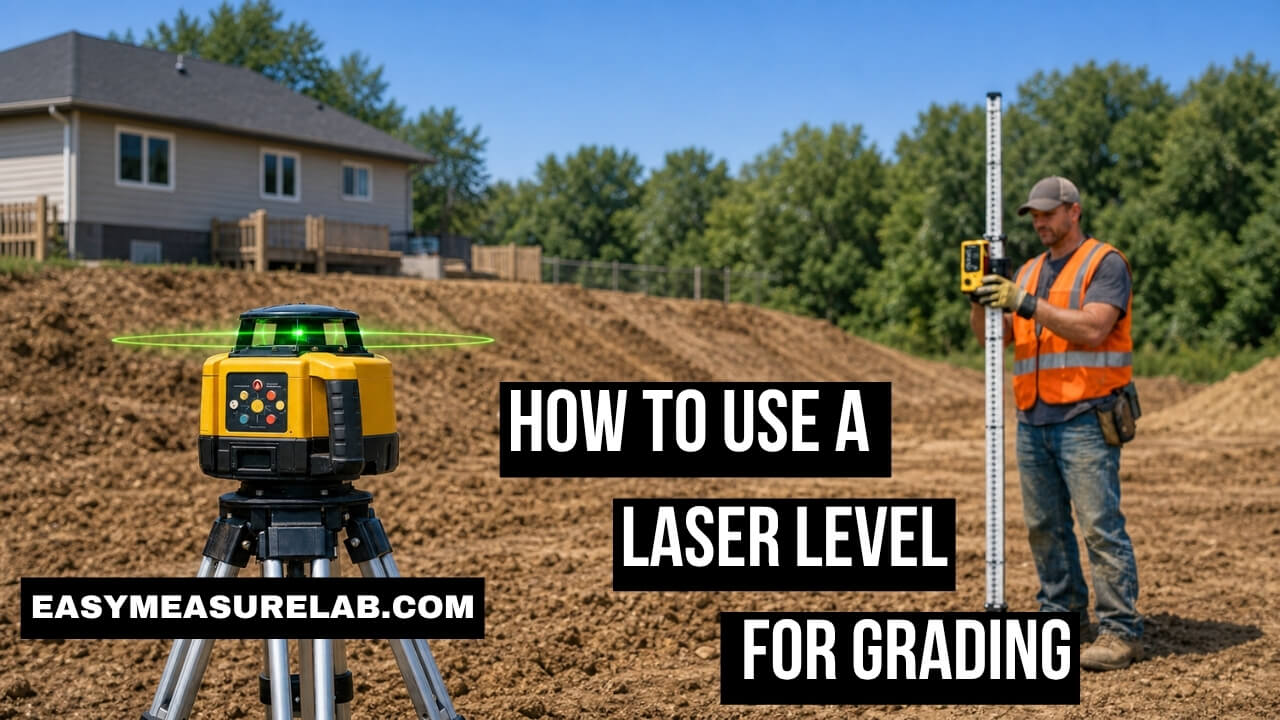
I used to have a very wet yard. Every time it rained, water pooled near my house. It almost ruined my foundation. I tried fixing the dirt by eye. I just guessed the slope. That was a big mistake. The water still pooled. I felt so stuck.
Then, I rented a new tool. I learned how to use a laser level for grading. It changed everything for me. I fixed my yard in one weekend. The water runs away from my house now. In this guide, I will show you exactly how to do it. You will save money. You will keep your house dry. You will feel proud of your work.
Why Learning How to Use a Laser Level for Grading Saves Money
Water is your home’s worst enemy. It will crack your concrete. It will rot your wood. It will flood your basement.
Paying a pro to fix your dirt costs a lot. They charge thousands of dollars. But you can do it yourself. You just need the right tool. This tool takes away all the guesswork. It gives you perfect math.
The high cost of a bad yard slope
If you guess the slope, you will fail. Dirt settles over time. A bad slope sends water back to your walls. This leads to mold. Mold is very costly to fix.
| The Problem | The Result | The Cost |
| Bad slope | Flooded basement | Very high |
| Guessing heights | Uneven patio | Wasted time |
| Using the laser | Perfect runoff | Low cost |
The Gear You Need for Dirt Work
You cannot use a cheap indoor tool for this. Indoor tools are too weak. The sun will hide the beam.
You need heavy-duty outdoor gear. I tried using a cheap tool once. I wasted a whole day. Get the right gear first. The experts at Pro Tool Reviews say outdoor tools are a must for yard work.
A rotary laser on a sturdy tripod is the most important tool for outdoor dirt work.
Rotary lasers vs. line lasers
A line tool shoots a straight beam. A rotary tool spins a beam in a full circle. For dirt work, you want a rotary tool. It covers your whole yard at once.
| Tool Type | Best Used For | My Thought |
| Indoor Line Tool | Hanging small shelves | Bad for yards |
| Rotary Tool | Big dirt jobs | The best choice |
| Bubble Tool | Tiny flat spots | Too much work |
Step-by-Step: How to Use a Laser Level for Grading
Now we get to the real work. This is how you actually do the job. Follow these simple steps.
Do not rush. I rushed my first job. I had to move tons of dirt twice. My back hurt for days. Take your time. Measure everything twice.
Finding your benchmark height
A benchmark is your starting point. It is a spot that never moves. Most times, this is the floor of your house. It can also be an old concrete step.
You need to match all your dirt to this spot. You will measure down from this mark. If you lose this mark, you lose your whole project. Mark it with a dark pen.
Setting up the tripod and tool
Find a spot in the middle of your yard. Set up your tall tripod. Push the metal legs deep into the dirt. They must be tight.
Screw the rotary tool on top. Turn the power on. Let it spin. Make sure it has a clear path to your benchmark. Keep dogs away from the tripod. If a dog bumps it, you have to start over.
Using the Grade Rod and Detector
You cannot see the beam outside. The sun is just too bright. You need a grade rod and a detector box.
A grade rod is a tall stick with numbers. A detector is a small plastic box. It beeps when it finds the laser beam. This is the secret to outdoor grading.
The detector box senses the invisible laser beam and beeps to guide you.
How to read the detector sounds
You slide the box up and down the tall stick. The box makes different sounds. You must learn these sounds.
| Box Sound | What It Means | What You Do |
| Slow beep | You are too low | Slide box up |
| Fast beep | You are too high | Slide box down |
| Solid beep | You are perfect | Lock the box |
Calculating the Perfect Slope
Water needs gravity to move. You must slope the dirt away from your house. Flat dirt is bad. Sloped dirt is good.
But how much slope do you need? There is a golden rule for this. I use it every single time. It never fails me.
The one inch per ten feet rule
You want the ground to drop away from your house. A good drop is one inch for every ten feet of distance.
If you walk ten feet away, the dirt should be one inch lower. If you walk twenty feet away, it should be two inches lower. This makes the water run fast. The pros at This Old House teach this same rule.
| Distance from House | Needed Drop Amount |
| 10 feet away | 1 inch lower |
| 20 feet away | 2 inches lower |
| 30 feet away | 3 inches lower |
Measuring Your Yard
Now you have your rule. Now you have your rod. It is time to measure.
Walk to your house. Put the rod on your benchmark spot. Slide the box until you hear a solid beep. Look at the number on the rod. Write it down. This is your magic number.
Finding the high and low spots
Now, walk ten feet away from your house. Put the rod on the dirt. Do not move the box on the rod.
Listen to the beep. If it is a solid beep, the dirt is flat. If it is flat, you have a problem. You need it to be lower. You need to dig. If the box gives a fast beep, the dirt is too high. You really need to dig.
Mistakes I Made When Grading My First Patio
I messed up a lot on my first job. I want to save you from my pain.
Dirt work is heavy. Every mistake means more shoveling. Read these mistakes. Do not do what I did.
Always double-check your measurements with the grade rod before digging big holes.
Forgetting to lock the stick
The grade rod has parts that slide up. I slid my stick up to reach the beam. But I forgot to lock it tight.
While I was walking, the stick slid down. My numbers changed. I dug a huge hole in the wrong spot. Always lock the stick tight. Check the lock twice.
| My Mistake | The Bad Result | The Easy Fix |
| Loose rod lock | Wrong numbers | Check locks often |
| Rushing the math | Bad water flow | Write numbers down |
| Working in rain | Mud everywhere | Wait for dry days |
Working in high winds
Wind is very bad for this job. A strong wind will shake the tall tripod.
If the tripod shakes, the beam shakes. If the beam shakes, the box cannot read it. The box will beep wildly. I tried to work in a storm once. I gave up after ten minutes. Pick a calm day.
Advanced Tips on How to Use a Laser Level for Grading
Once you get the basics, you can do big jobs. You can grade a whole driveway. You can build a huge shed base.
These big jobs take extra steps. You have to plan ahead. You have to be smart about your tools.
Moving the tripod mid-job
Sometimes your yard is too big. The beam will not reach the back fence. You have to move the tripod.
This is tricky. If you move the tool, your beam height changes. You have to find a new benchmark.
First, drive a wood stake in the ground. Measure it with the tool. Write that height down. Now, move the tripod. Set it up again. Use that new wood stake as your new starting point. Match your new beam to the stake. Now you can keep going.
Digging and Checking Your Work
Knowing how to use a laser level for grading is only half the job. The other half is digging.
You will use a shovel or a machine. You will move the dirt. Then you will check it. Then you will move more dirt. It is a slow loop.
Why you must check twice
Never dig a whole yard without checking. Dig a small area. Grab your tall stick. Put it on the new dirt. Listen for the solid beep.
Did you hit your goal? If yes, keep digging the rest. If no, fix that spot first. I check my dirt every five feet. It keeps me on track. The folks at Family Handyman suggest checking often to save your back.
| Work Step | What to Do | Why It Matters |
| Step 1 | Dig a little dirt | Keeps work easy |
| Step 2 | Check with rod | Finds errors fast |
| Step 3 | Fix the spot | Stops huge mistakes |
Final Thoughts
Learning how to use a laser level for grading takes a little time. The math can feel odd at first. The beeps can be loud. But it is the best way to fix a yard.
Take your time. Set up your tripod on solid ground. Learn the detector sounds. Follow the one inch drop rule. If you do these things, your yard will drain perfectly. Your house will stay dry. You will save a lot of money. You can do this job. Just grab the tool and start measuring.
5 SEO-Friendly FAQs
What is the best tool for grading a yard?
You need a rotary tool for a big yard. It spins a flat beam 360 degrees. You also need a tall grade rod and a beep detector box.
How do I use a laser level in the bright sun?
You cannot see the beam in the sun. You must use a detector box. You clip it to a stick. It will beep when the invisible beam hits it.
How much should dirt slope away from a house?
The rule is one inch of drop for every ten feet of distance. This is called a safe grade. It makes rain run far away from your walls.
Can I move my laser tripod while working?
Yes, but you must be careful. Before you move it, mark a spot on the ground with your current beam. Move the tool. Then match the new beam back to that spot.
Why does my detector box keep beeping fast?
A fast beep usually means the box is too high on the stick. You need to slide the box down. Slide it down until you hear a solid, steady beep.