
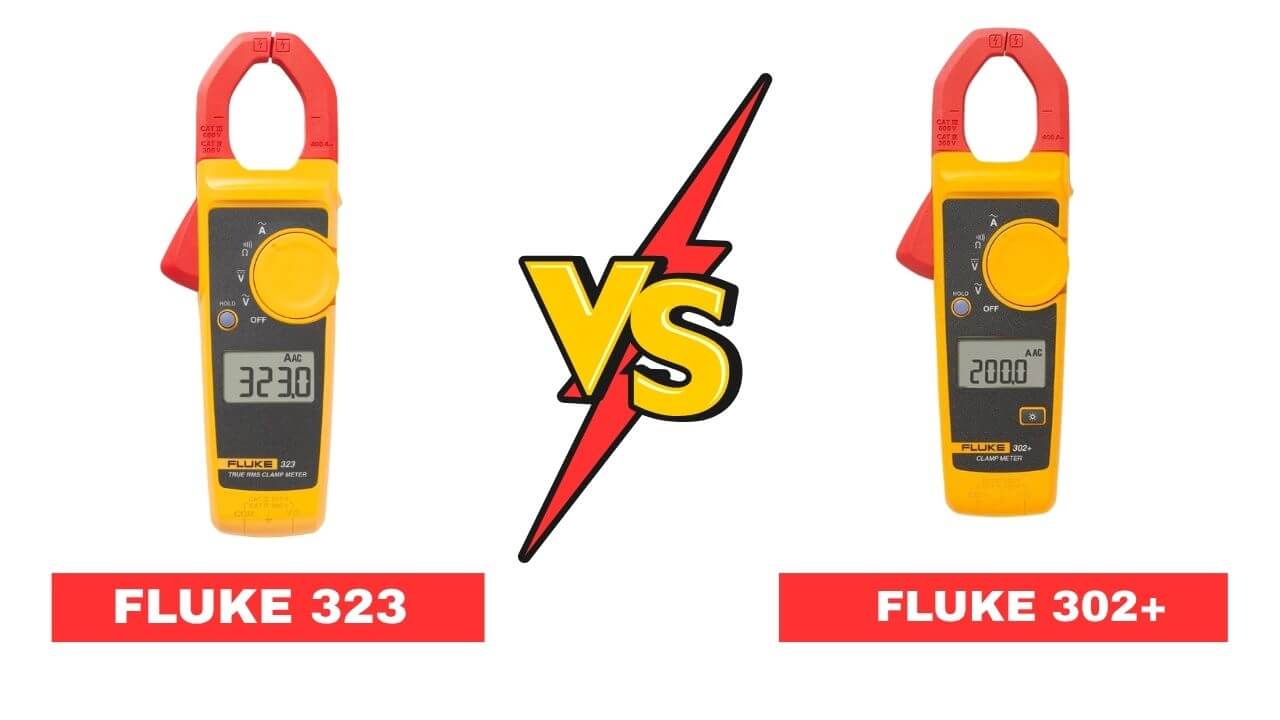
A tight cable space can make a quick check feel slow. That is where the Fluke 323 vs 302+ choice starts to matter. Both can measure AC current up to 400 A, but they are not built for the same type of work. True-RMS, display design, size, and daily use can help you see which one fits your needs.
Fluke 323 Review
Check Price on Amazon
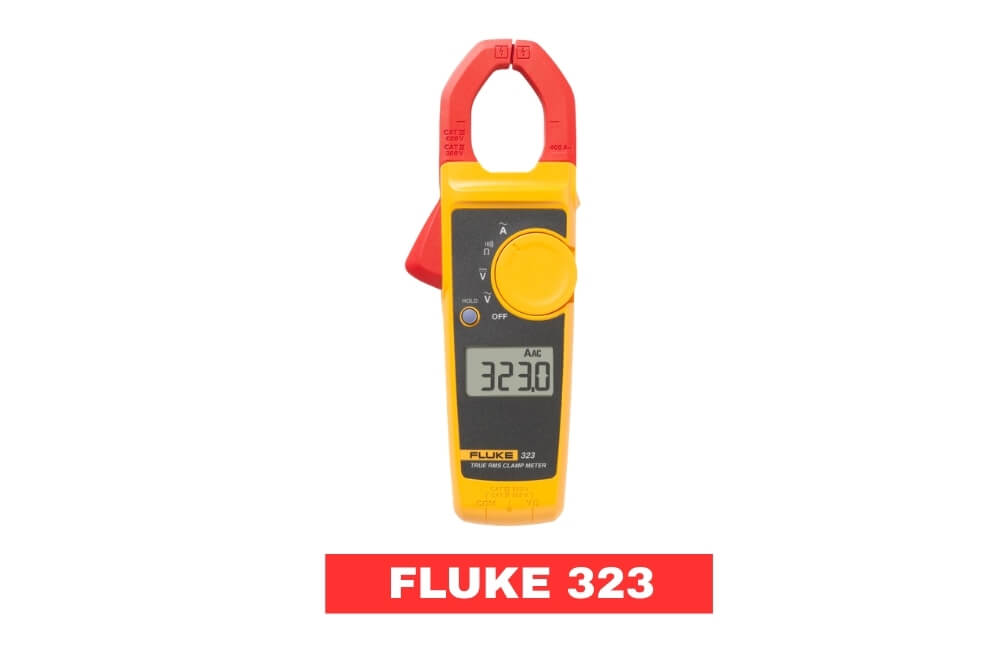
The Fluke 323 is made for basic electrical checks. It measures AC current up to 400 A and AC/DC voltage up to 600 V. Its True-RMS system helps give better AC readings on non-linear signals.
Pros and Cons
The 323 keeps the core tool set simple. Its main strength is True-RMS AC work, while the lack of a backlight can be a small trade-off.
| Type | Feature | Practical Impact |
|---|---|---|
| Pro | True-RMS AC | Helps with non-linear AC signals |
| Pro | 400 A AC current | Covers many daily current checks |
| Pro | 30 mm jaw | Fits many common cables |
| Con | No backlight | Reading is harder in poor light |
| Con | No DC current | Cannot clamp-measure DC amps |
Daily Use Feel
The slim body helps when space is tight. The 30 mm jaw can fit many common wires with less fuss. The hold function also keeps a reading on the screen during a check.
A small trade-off is the display. There is no backlight, so dim work areas can make reading harder. Still, the 323 keeps the core test set simple and focused.
Recommendation
The right fit depends on the type of work. True-RMS AC measurement is the main reason to choose this model.
| User Type | Recommendation | Reason |
|---|---|---|
| Electricians | Good Fit | Strong basic AC testing |
| HVAC users | Good Fit | Useful for AC current checks |
| Non-linear load work | Good Fit | True-RMS support helps |
| Dark work areas | Not Ideal | No backlit display |
| DC current users | Not Ideal | No DC current range |
Fluke 302+ Review
Check Price on Amazon
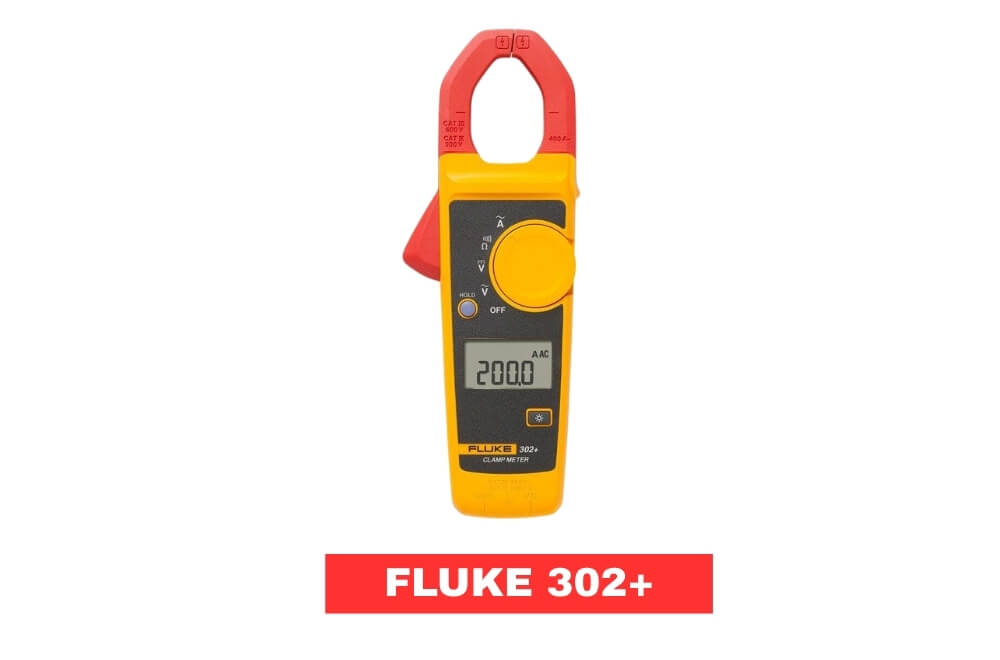
The Fluke 302+ takes a more compact path. It measures AC current up to 400 A and AC/DC voltage up to 600 V. It also measures resistance and continuity.
Its 30 mm jaw is close to the 323 in size. The main practical plus is the backlit display. That can make readings easier in dim areas. The unit also uses two AAA batteries and has a data hold function.
Pros and Cons
The 302+ is aimed at simple daily checks. It is compact and adds a useful lighted screen.
| Type | Feature | Practical Impact |
|---|---|---|
| Pro | Backlit display | Easier reading in dim areas |
| Pro | 400 A AC current | Covers common current checks |
| Pro | 30 mm jaw | Fits many standard cables |
| Pro | Compact body | Easy to carry in a tool bag |
| Con | No True-RMS | Less suited to non-linear AC loads |
| Con | No DC current | Cannot clamp-measure DC amps |
Everyday Work
The compact body is easy to carry from one task to the next. The backlight can make the screen easier to read when light is poor. Data hold also keeps the measured value visible.
The main limit is AC signal type. The official specifications do not list True-RMS response for the 302+. The official product page also says it is aimed at daily use where True-RMS accuracy is not needed.
Recommendation
The 302+ makes more sense when simple checks matter most. The backlight also gives it a clear edge in dim work areas.
| User Type | Recommendation | Reason |
|---|---|---|
| Beginners | Good Fit | Simple daily test set |
| General users | Good Fit | Covers common AC checks |
| Dim work areas | Good Fit | Backlit display helps |
| Non-linear load work | Not Ideal | No True-RMS response |
| DC current users | Not Ideal | No DC clamp current |
Detailed Comparison for Fluke 323 vs 302+
Check Price on Amazon
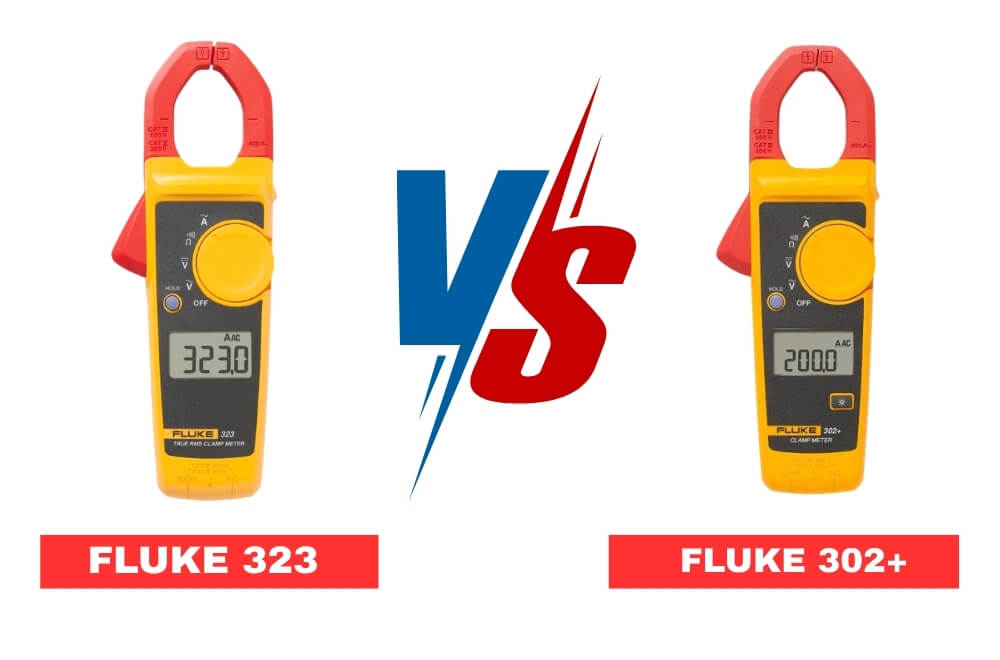
Both meters cover many of the same basic jobs. The useful differences appear when AC signal type, display use, size, and daily needs matter.
Performance: Fluke 323 vs 302+
The biggest technical gap is AC response. The 323 uses True-RMS AC measurement. That helps with non-linear signals where a basic AC reading may not give the same result.
The 302+ is made for everyday work where True-RMS is not needed. Both reach 400 A AC, so the current range is not the main difference. The type of AC signal matters more here.
| Feature | Fluke 323 | Fluke 302+ |
|---|---|---|
| AC current | 400 A | 400 A |
| AC response | True-RMS | Standard |
| AC current accuracy | 2% ±5 digits at 45–65 Hz | 1.8% ±5 |
| AC voltage | 600 V | 600 V |
| DC voltage | 600 V | 600 V |
Fluke 323 Rating: 9/10
Fluke 302+ Rating: 8.5/10
Ease of Use: Fluke 323 vs 302+
Both models keep the controls simple. That helps during quick checks. Both also have data hold, so a reading can stay on the display.
The 302+ gets one clear advantage here. Its display has a backlight. The 323 does not, so poor light can make the screen harder to read.
| Feature | Fluke 323 | Fluke 302+ |
|---|---|---|
| Data hold | Yes | Yes |
| Backlight | No | Yes |
| Display use | Simple | Easier in low light |
| Main style | Basic troubleshooting | Simple daily checks |
Fluke 323 Rating: 8.5/10
Fluke 302+ Rating: 9/10
Build Quality: Fluke 323 vs 302+
Both are compact tools made for electrical work. The 323 has a slim body and a listed size of 207 × 75 × 34 mm. Its listed weight is 265 g.
The 302+ is narrower and thinner. Its listed size is 208 × 58.5 × 28 mm. It also weighs 265 g. Both use a 30 mm jaw, so cable size is similar.
| Feature | Fluke 323 | Fluke 302+ |
|---|---|---|
| Body size | 207 × 75 × 34 mm | 208 × 58.5 × 28 mm |
| Weight | 265 g | 265 g |
| Jaw size | 30 mm | 30 mm |
| Carry style | Slim | More compact |
Fluke 323 Rating: 9/10
Fluke 302+ Rating: 9/10
Maintenance: Fluke 323 vs 302+
Neither model has a long list of complex functions. That keeps basic care and daily use simple. Both also come with a two-year warranty.
The 302+ uses two AAA batteries. The 323 also uses a battery-powered design. For routine work, both keep maintenance needs fairly simple.
| Feature | Fluke 323 | Fluke 302+ |
|---|---|---|
| Warranty | 2 years | 2 years |
| Battery | Replaceable battery | 2 AAA batteries |
| Data hold | Yes | Yes |
| Routine care | Basic | Basic |
Fluke 323 Rating: 8.5/10
Fluke 302+ Rating: 9/10
Value for Money: Fluke 323 vs 302+
Value depends on the type of work. The 323 adds True-RMS AC measurement, which can matter when non-linear signals are part of the job.
The 302+ focuses on simple checks. Its backlit display and compact body may matter more when basic troubleshooting is the main goal. The better value comes from matching the tool to the work.
| Feature | Fluke 323 | Fluke 302+ |
|---|---|---|
| Best strength | True-RMS AC | Simple daily checks |
| Display | No backlight | Backlit |
| AC current | 400 A | 400 A |
| Best use | More demanding AC checks | General troubleshooting |
Fluke 323 Rating: 9/10
Fluke 302+ Rating: 8.5/10
Conclusion
The Fluke 323 vs 302+ choice is fairly clear once the work type is known. Choose the 323 when True-RMS AC measurement matters. Choose the 302+ when a compact body and backlit screen matter more.
Official References:
- Official Fluke 323 product page
- Official Fluke 302+ product page
- Official 320 Series product brochure
- Official 302+ / 303 / 305 data sheet
FAQs
1. What is the main difference between Fluke 323 vs 302+?
The main difference is AC response. The 323 uses True-RMS AC measurement. The 302+ is designed for everyday work where True-RMS is not needed.
2. Do both meters measure up to 400 A AC?
Yes. Both models have a 400 A AC current range.
3. Does the Fluke 323 measure DC current?
No. The official specifications show no DC current range for the 323. It does measure DC voltage up to 600 V.
4. Does the Fluke 302+ have a backlight?
Yes. The 302+ has a backlit display. The 323 does not list a backlight in its official specifications.
5. Which is better for non-linear AC loads?
The 323 is the better fit because it uses True-RMS AC measurement. The official product page states that this helps with accurate measurements on non-linear signals.